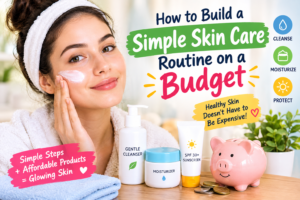

How to Build a Simple Skin Care Routine on a Budget: Affordable Tips for Healthy Skin
Introduction
Taking care of your skin does not have to be expensive. Many people believe that healthy, glowing skin requires luxury creams, expensive serums, and complicated beauty routines. However, a simple skin care routine using a few affordable products can help keep your skin clean, hydrated, and protected.
The secret to good skin care is to use products that are appropriate for your skin type on a regular basis. Regardless of your skin type—oily, dry, mixed, or sensitive—you can create a useful regimen without going over budget.
This tutorial will teach you how to make a basic skin care regimen on a tight budget, what products are worth purchasing, what ingredients to look for, and how to cut back on needless skincare costs.
Why a Simple Skin Care Routine Is Important
Your skin protects your body from environmental irritants, pollution, and moisture loss. A consistent skincare routine supports the skin barrier, helps maintain hydration, and protects your skin from everyday environmental damage.
Using too many products can make skincare more expensive and may increase the risk of irritation, especially if several products contain strong active ingredients.
A basic routine generally focuses on three essential steps: cleansing, moisturizing, and sun protection. These steps can provide a useful foundation for most people without requiring a large collection of beauty products.
Step 1: Choose an Affordable Gentle Cleanser
A cleanser removes excess oil, sweat, dirt, and makeup from the skin. You do not need an expensive facial cleanser to keep your face clean.
Look for a gentle cleanser that suits your skin type. If your skin is dry or sensitive, choose a fragrance-free formula that does not leave your face feeling tight. If your skin is oily, consider a gentle gel cleanser that removes excess oil without making your skin feel stripped.
People with acne-prone skin may benefit from a cleanser containing salicylic acid, although this ingredient can cause dryness or irritation in some individuals.
Youtube Video
How to Use a Cleanser Correctly
Wash your face with lukewarm water and gently massage the cleanser over your skin using your fingertips. Rinse thoroughly and pat your face dry with a clean towel.
For many people, cleansing in the evening is especially important because it removes sunscreen, makeup, and daily buildup. You can also cleanse in the morning if your skin needs it. Avoid washing your face excessively, as this may cause irritation.
Budget tip: Compare the price per ounce rather than choosing a product based only on its packaging or brand name.
Step 2: Use a Budget-Friendly Moisturizer
Moisturizer is an important part of an affordable skincare routine. It helps reduce water loss and supports the skin barrier, keeping the skin comfortable and soft.
You do not need a separate moisturizer for every part of your face. A single suitable product may be enough for your daily routine.
Look for ingredients such as glycerin, ceramides, and hyaluronic acid. These ingredients help attract or retain moisture and support skin hydration.
Choosing a Moisturizer for Your Skin Type
Dry skin: Choose a cream-based moisturizer that helps reduce moisture loss. Ingredients such as ceramides and petrolatum can be useful.
Oily skin: Consider a lightweight lotion or gel moisturizer that feels comfortable without leaving a heavy residue.
Combination skin: A lightweight moisturizer may work well across most areas of the face. Apply a little extra to dry areas when necessary.
Sensitive skin: Look for fragrance-free products with a short, straightforward ingredient list.
Remember that oily skin still needs hydration. Skipping moisturizer may leave your skin feeling uncomfortable and can make it harder to maintain a healthy skin barrier.
Step 3: Make Sunscreen a Daily Priority
Sunscreen is one of the most valuable products in a basic skincare routine. Regular sun protection helps reduce sunburn, premature skin aging, and the risk of skin cancer.
For everyday use, choose a broad-spectrum sunscreen with SPF 30 or higher. Select a formula that feels comfortable enough to use consistently.
Affordable sunscreens are available in many drugstores and online stores. You do not necessarily need a luxury sunscreen to get effective protection. Check the label, expiration date, and whether the product offers broad-spectrum protection.
How to Apply Sunscreen
Apply sunscreen generously to exposed skin as the final step of your morning skincare routine. Follow the product directions, and reapply at least every two hours when outdoors and after swimming, sweating, or towel drying.
Do not forget commonly missed areas, such as the ears, neck, and the backs of your hands.
Money-saving tip: Compare the cost per ounce of several sunscreens and choose one that you enjoy wearing. A reasonably priced sunscreen used consistently is more useful than an expensive product that stays unused.
Step 4: Add Extra Products Only When Needed
After establishing a basic routine, you may consider adding one additional product to address a specific concern. However, extra products are optional rather than essential.
For example, someone concerned about uneven skin tone may consider a product containing niacinamide. People with certain types of acne may benefit from salicylic acid or another evidence-based acne treatment.
Start with one new product at a time. Follow its instructions, introduce it gradually when appropriate, and monitor your skin for irritation.
Avoid purchasing multiple serums simply because they are trending on social media. More products do not automatically mean better results.
If you have persistent acne, a significant rash, or ongoing skin irritation, consult a qualified healthcare professional or dermatologist for personalized advice.
Step 5: Build a Simple Morning Skin Care Routine
A morning routine can be short, affordable, and easy to follow.
Morning Routine
- Cleanse: Wash with a gentle cleanser if needed.
- Moisturize: Apply a moisturizer suitable for your skin type.
- Protect: Finish with broad-spectrum SPF 30 or higher sunscreen.
Allow each product to settle according to its instructions before applying the next one.
If your skin is dry or sensitive, avoid adding unnecessary exfoliants or strong active ingredients to your morning routine. Keeping the routine simple may help reduce irritation.
Step 6: Follow a Basic Nighttime Skin Care Routine
Your evening routine helps remove the day’s buildup and maintain skin hydration.
Night Routine
- Remove makeup and sunscreen: Use a suitable cleanser or makeup remover when needed.
- Cleanse gently: Avoid harsh scrubbing and very hot water.
- Apply moisturizer: Use a comfortable layer to support your skin barrier.
If you use a prescribed skin treatment, follow your healthcare professional’s directions.
You do not need a separate night cream, sleeping mask, eye cream, and several serums unless there is a specific reason for using them. A basic moisturizer can be sufficient for many people.
Step 7: Create a Skin Care Budget
Planning your purchases helps prevent unnecessary spending. Instead of buying an entire skincare collection, start with the products you actually need.
A simple budget can prioritize the following items:
| Product | Priority | Why It Matters |
|---|---|---|
| Gentle cleanser | Essential for many routines | Removes dirt, oil, makeup, and sunscreen |
| Moisturizer | Essential for most routines | Supports hydration and the skin barrier |
| Broad-spectrum sunscreen | Essential daytime protection | Helps protect against UV damage |
| Targeted treatment | Optional | Addresses a specific skin concern |
The exact cost will depend on the brand, product size, location, and how frequently you use each product. You can check local drugstores and reputable online retailers to compare current prices.
Ways to Save Money on Skin Care
Buy fewer products. Begin with the basic three-step routine rather than purchasing a large set.
Compare ingredient lists. A less expensive product may contain similar useful ingredients to a premium alternative.
Avoid unnecessary trends. Products advertised as miracle treatments may not offer benefits that justify their price.
Use products as directed. Applying more than the recommended amount does not necessarily improve results and may increase irritation.
Check expiration dates. Avoid buying more products than you can reasonably use before they expire.
Be careful with discounts. A sale is not a saving if you buy something your skin does not need.
Step 8: Avoid Common Budget Skin Care Mistakes
Some habits can waste money or make skin problems worse.
Using Too Many Active Ingredients
Combining several exfoliating acids, retinoids, or acne treatments without a suitable plan can cause redness, dryness, peeling, and irritation. Introduce active ingredients carefully and seek professional guidance if you are unsure which treatment is appropriate.
Using Harsh DIY Remedies
Lemon juice, baking soda, toothpaste, and abrasive scrubs can irritate the skin. Natural ingredients are not automatically safe for facial use.
Choose products formulated for skin rather than experimenting with harsh household ingredients.
Expecting Overnight Results
Most skincare products require consistent use before their benefits can be assessed. The time needed depends on the product and the concern being treated.
Take a gradual approach instead of switching products every few days. If a product causes significant burning, swelling, or a worsening rash, stop using it and seek appropriate medical advice.
Ignoring Sunscreen
Buying expensive serums while skipping sunscreen may undermine your efforts to protect your skin from sun damage. If you have a limited budget, prioritize a suitable sunscreen for daytime use.
Step 9: Adjust Your Routine to Your Skin Type
A budget-friendly routine should reflect your individual needs.
For oily skin: Use a gentle cleanser, lightweight moisturizer, and non-comedogenic sunscreen if suitable for your skin.
For dry skin: Focus on gentle cleansing, a richer moisturizer, and regular sun protection.
For acne-prone skin: Choose products labeled non-comedogenic when appropriate. Avoid picking pimples, which can increase inflammation and the risk of scarring.
For sensitive skin: Prefer fragrance-free products and introduce new items individually. Patch-test according to product guidance, while remembering that a patch test cannot guarantee that irritation will not occur.
For mature skin: Moisturizer and daily sunscreen remain useful basics. Additional ingredients can be considered based on your skin concerns, tolerance, and budget.
Step 10: Give Your Routine Time to Work
Consistency matters more than having a large number of products. Use your basic routine regularly and observe how your skin responds.
While issues like acne or uneven pigmentation may take longer to improve, you might notice benefits in comfort and hydration rather immediately. The underlying cause and the products employed determine the results.
Simplify your regimen and, if necessary, seek professional guidance if your skin becomes unusually sensitive, uncomfortable, or irritated on a regular basis.
Frequently Asked Questions
1. What is the cheapest effective skin care routine?
A basic routine generally includes a gentle cleanser, moisturizer, and broad-spectrum SPF 30 or higher sunscreen. Choose affordable products that suit your skin type rather than purchasing many unnecessary treatments.
2. Can I have healthy skin without expensive skincare products?
Yes. Expensive products are not automatically more effective than affordable alternatives. Consistent cleansing, moisturizing, sun protection, and appropriate treatment of skin concerns are more important than the price of a product.
3. How many skincare products do I really need?
Many people can start with three basic products: cleanser, moisturizer, and sunscreen. Additional products may help with particular concerns but are not necessary for everyone.
4. Should I moisturize if I have oily skin?
Yes. Oily skin can still experience dehydration and irritation. A lightweight moisturizer may help maintain skin comfort without feeling overly heavy.
5. How can I get glowing skin on a budget?
Follow a consistent routine, protect your skin from the sun, get adequate sleep, and maintain a balanced diet. Avoid harsh scrubs and unproven home remedies. Healthy-looking skin does not require expensive beauty products.
6. How long does it take to see results from a skincare routine?
Hydration may improve relatively quickly, but acne, pigmentation, and other skin concerns can take several weeks or longer. The timeline depends on the condition and the treatment. Seek professional advice if a skin problem persists or worsens.
7. Is sunscreen necessary when following a budget routine?
Yes. Sunscreen is an important part of daytime skin protection. Choose broad-spectrum SPF 30 or higher and apply it according to the label directions.
Conclusion
Building a simple skin care routine on a budget is possible without sacrificing the essentials. Start with a gentle cleanser, a suitable moisturizer, and broad-spectrum sunscreen. Add targeted treatments only when they address a genuine skin concern and fit comfortably within your budget.
Avoid unnecessary purchases, compare product ingredients and prices, and give your routine enough time to work. With consistent care and realistic expectations, you can support healthier-looking skin while keeping your skincare spending under control.