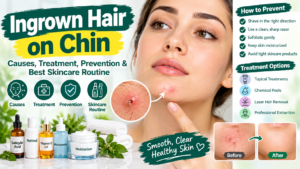

Ingrown Hair on Chin: Causes, Treatment, Prevention & Best Skincare Routine
An ingrown hair on the chin can look like a small red bump, pimple, dark spot, or painful area under the skin. It happens when a hair curls back or grows sideways into the skin instead of growing normally through the surface. Ingrown hairs are particularly common after shaving, waxing, tweezing, or other hair-removal methods.
Although most ingrown hairs are not serious, they can cause redness, itching, swelling, tenderness, and sometimes pus-filled bumps. Repeated irritation can also lead to dark marks or changes in skin texture.
The good news is that most mild ingrown hairs can improve with gentle skin care and proper hair-removal techniques. This guide explains the causes of ingrown hairs on the chin, how to treat them safely, how to prevent them, and which skincare ingredients may help.
What Is an Ingrown Hair on the Chin?
An ingrown hair develops when a hair becomes trapped beneath the skin or grows back into the skin instead of emerging normally through the hair follicle.
On the chin, an ingrown hair may appear as:
- A small red or pink bump
- A pimple-like spot
- A dark bump under the skin
- Itching or tenderness
- Mild swelling
- A visible hair trapped beneath the skin
- A pus-filled bump if inflammation develops
Ingrown hairs can occur with any skin type, but people with coarse, curly, or tightly curled hair may be more prone to developing them.
What Causes Ingrown Hairs on the Chin?
Understanding the cause can make prevention much easier.
1. Shaving
Shaving is one of the most common triggers for ingrown hairs.
When a razor cuts the hair very close to the skin, the sharp end of the hair may curve back toward the skin as it grows. This can result in an ingrown hair, especially when the hair is naturally curly or coarse.
Shaving against the direction of hair growth or repeatedly going over the same area can increase irritation.
2. Waxing
Waxing removes hair from the root. As the hair grows back, it can sometimes become trapped beneath dead skin cells or grow in an abnormal direction.
Waxing can also temporarily irritate the skin, potentially contributing to inflammation around the hair follicle.
3. Tweezing
Tweezing can occasionally cause irritation around the follicle, particularly when hairs are repeatedly pulled or broken rather than removed cleanly.
4. Dead Skin Cell Buildup
Excess dead skin cells can block the opening of a hair follicle. When a new hair attempts to grow through the surface, it may become trapped underneath.
Gentle exfoliation can help reduce buildup, although aggressive scrubbing should be avoided.
5. Curly or Coarse Hair
Curly hair naturally has a greater tendency to bend back toward the skin.
This does not mean that ingrown hairs are unavoidable, but hair texture can increase the likelihood of developing them.
6. Tight or Irritating Skincare Products
Heavy products or friction around the chin may contribute to clogged follicles and irritation in some people.
Using non-comedogenic skincare and avoiding unnecessary friction can help reduce problems.
Ingrown Hair vs. Pimple: How to Tell the Difference
Ingrown hairs can look very similar to acne, which sometimes makes them difficult to identify.
An ingrown hair is more likely when:
- The bump appears after shaving or waxing
- You can see a hair trapped under the skin
- The bump develops directly around a hair follicle
- The same area repeatedly develops bumps after hair removal
A pimple may instead be associated with clogged pores, excess oil, acne, or other breakouts.
Sometimes both conditions can occur at the same time.
If a bump is painful, persistent, repeatedly returns, or does not look like a typical ingrown hair, consider having it evaluated by a dermatologist.
How to Treat an Ingrown Hair on the Chin
Most mild ingrown hairs improve without aggressive treatment. The main goal is to reduce inflammation and allow the hair to emerge naturally.
1. Stop Hair Removal Temporarily
If possible, stop shaving, waxing, or tweezing the affected area until the irritation improves.
Continuing to remove hair from an already irritated follicle can make inflammation worse.
2. Apply a Warm Compress
A warm, clean compress can be placed gently over the affected area for several minutes.
Warmth can soften the skin and may help reduce discomfort while allowing a trapped hair to move closer to the surface.
Avoid squeezing the bump.
3. Use Gentle Cleansing
Clean the chin with a mild cleanser once or twice daily.
Avoid harsh soaps and aggressive scrubbing because irritated skin can take longer to recover.
4. Consider Salicylic Acid
Salicylic acid is a beta hydroxy acid that can help exfoliate the skin and clear buildup around pores.
A low-strength salicylic acid product may be useful for people who frequently develop ingrown hairs, particularly when clogged pores or dead skin buildup are contributing factors.
Start gradually and stop if significant burning or irritation develops.
5. Glycolic or Lactic Acid
Alpha hydroxy acids such as glycolic acid and lactic acid can help remove dead skin cells from the surface.
They may be useful as part of a prevention routine, but they should not be applied aggressively to an inflamed or broken area.
Avoid using multiple exfoliating acids at the same time unless your skin can tolerate them.
6. Use a Gentle Moisturizer
A lightweight moisturizer can help support the skin barrier and reduce dryness.
Look for ingredients such as:
- Ceramides
- Glycerin
- Hyaluronic acid
- Panthenol
Keeping the skin comfortable can make it less vulnerable to irritation from shaving and other hair-removal methods.
Should You Pull Out an Ingrown Hair?
Avoid digging into the skin with needles, tweezers, or other sharp objects.
If the hair is already clearly visible above the skin and can be gently lifted without digging or breaking the skin, a clean tool may sometimes be used carefully. However, forcing a deeply trapped hair out can increase inflammation, infection risk, and the chance of scarring.
When an ingrown hair is deeply embedded or repeatedly inflamed, professional treatment is safer.
Don’t Squeeze or Pop the Bump
An ingrown hair can look like a pimple, but squeezing it may damage the surrounding skin.
Picking or squeezing can:
- Increase inflammation
- Introduce bacteria
- Cause bleeding
- Increase the risk of scarring
- Leave a dark mark behind
Allow the area to settle naturally whenever possible.
Best Skincare Routine for Chin Ingrown Hairs
A consistent routine can help prevent recurring ingrown hairs.
Morning Routine
Step 1: Gentle Cleanser
Wash the face with a mild cleanser.
Avoid aggressive scrubbing around the chin.
Step 2: Hydrating Serum or Niacinamide
A hydrating serum or niacinamide product may support the skin barrier and overall skin appearance.
Step 3: Moisturizer
Use a non-comedogenic moisturizer suitable for your skin type.
Step 4: Sunscreen
Apply broad-spectrum SPF 30 or higher.
Sunscreen is particularly important if previous ingrown hairs have left dark marks because UV exposure can make post-inflammatory pigmentation more noticeable.
Evening Routine
Step 1: Cleanse
Remove makeup, sunscreen, oil, and daily buildup with a gentle cleanser.
Step 2: Exfoliating Treatment
If your skin tolerates it, use salicylic acid or another appropriate exfoliant a few times per week.
Do not exfoliate an area that is actively inflamed, open, or painful.
Step 3: Moisturizer
Finish with a barrier-supporting moisturizer.
If you use retinol or other active ingredients for acne or aging, introduce them carefully rather than combining several irritating treatments.
How to Prevent Ingrown Hairs on the Chin
Prevention is especially important for people who regularly remove facial hair.
1. Shave in the Direction of Hair Growth
Shaving in the direction that the hair naturally grows may reduce irritation and decrease the chance of cutting hairs too close to the skin.
2. Use a Clean, Sharp Razor
A dull or dirty razor can increase irritation.
Replace disposable blades regularly and keep reusable razors clean.
3. Don’t Shave Too Closely
A very close shave may increase the likelihood of hairs curling back into the skin.
If you frequently experience ingrown hairs, leaving the hair slightly longer may help.
4. Use Shaving Gel or Cream
Apply a moisturizing shaving product before shaving.
This helps soften the hair and reduce friction between the razor and skin.
5. Avoid Repeated Razor Passes
Going over the same area repeatedly can cause irritation.
Try to use as few passes as necessary.
6. Don’t Dry Shave
Dry shaving can increase friction and irritation.
Use water and a suitable shaving cream or gel before removing facial hair.
7. Exfoliate Gently
Regular but gentle exfoliation can help remove dead skin cells that may contribute to blocked follicles.
However, excessive exfoliation can damage the skin barrier and make irritation worse.
Can Ingrown Hairs Leave Dark Spots?
Yes. An inflamed ingrown hair can sometimes leave behind post-inflammatory hyperpigmentation, especially in people with medium to deeper skin tones.
The dark mark may remain after the original bump has disappeared.
Helpful prevention and treatment strategies include:
- Avoid picking the bump
- Use daily sunscreen
- Treat inflammation early
- Avoid aggressive exfoliation
- Consider ingredients such as niacinamide or azelaic acid for lingering discoloration
Dark marks often fade gradually, but the process can take weeks or months.
Professional Treatment Options
If you regularly develop painful or persistent ingrown hairs, a dermatologist can recommend more effective treatment.
Prescription Treatments
Depending on the cause, a dermatologist may recommend topical medications to reduce inflammation, treat follicular blockage, or address secondary infection.
Do not use prescription steroid or antibiotic products without professional guidance.
Laser Hair Removal
For people who repeatedly develop ingrown hairs because of facial hair removal, laser hair removal may be an option.
Laser treatment reduces hair growth over time, which can reduce the number of hairs available to become ingrown.
The number of sessions required varies depending on hair color, skin type, treatment area, and the specific laser used.
People with darker skin should seek a provider experienced in treating their skin tone because the choice of laser and settings matters for safety.
Professional Extraction
A dermatologist or trained medical professional can sometimes safely remove a deeply trapped hair without unnecessary trauma to the surrounding skin.
This is preferable to repeatedly digging at the bump yourself.
When Should You See a Dermatologist?
Most mild ingrown hairs can be managed at home, but professional evaluation is recommended if you experience:
- Severe pain or swelling
- Increasing redness
- Significant pus or drainage
- Fever
- Repeated infections
- Large or deep bumps
- Scarring
- Ingrown hairs that keep returning
- A bump that does not improve
Persistent bumps should not automatically be assumed to be ingrown hairs. Acne, folliculitis, cysts, and other skin conditions can sometimes look similar.
Common Mistakes to Avoid
Picking the Hair Out With Your Fingernails
This can introduce bacteria and damage the skin.
Using Harsh Scrubs
Aggressive physical exfoliation can increase inflammation.
Shaving Against the Grain
Although this can produce a closer shave, it may increase irritation and ingrown hairs for some people.
Using Too Many Acids
Combining salicylic acid, glycolic acid, retinol, and other active products without a plan can irritate the chin.
Ignoring Dark Marks
Repeated inflammation and UV exposure can make pigmentation last longer.
How Long Does an Ingrown Hair Take to Heal?
A mild ingrown hair may improve within several days to a couple of weeks, depending on the amount of inflammation and whether the area continues to be irritated.
Deeper or repeatedly inflamed bumps can take longer.
Avoiding further hair removal and picking can give the skin a better chance to recover.
Final Thoughts
An ingrown hair on the chin is usually caused by a hair growing back into the skin or becoming trapped beneath the surface. Shaving, waxing, tweezing, curly hair, dead skin cell buildup, and repeated irritation can all contribute.
The safest approach is to avoid squeezing or digging at the bump, pause hair removal while the area heals, cleanse gently, and use appropriate exfoliating and moisturizing products when the skin is not inflamed.
For prevention, shave in the direction of hair growth, use a clean and sharp razor, avoid very close shaving, use shaving cream or gel, and maintain a gentle skincare routine.
If ingrown hairs are frequent, painful, infected, or leaving significant scars and dark marks, a dermatologist can discuss prescription treatments or longer-term options such as laser hair removal.
Frequently Asked Questions
What is the fastest way to get rid of an ingrown hair on the chin?
Avoid further hair removal, use a warm compress, keep the area clean, and avoid squeezing or digging at the bump. Mild cases often improve on their own.
Can I pop an ingrown hair like a pimple?
It is better not to. Squeezing can increase inflammation, introduce bacteria, and increase the risk of scarring or dark spots.
Is salicylic acid good for chin ingrown hairs?
Salicylic acid can help exfoliate dead skin cells and reduce follicular buildup. It may be useful for prevention, but it should not be applied excessively to irritated or broken skin.
How can I shave my chin without getting ingrown hairs?
Use warm water and shaving gel, use a clean sharp razor, shave in the direction of hair growth, avoid repeated passes, and do not shave extremely close to the skin.
Why do I keep getting ingrown hairs on my chin?
Recurring ingrown hairs may be related to hair texture, shaving technique, frequent hair removal, follicular blockage, or skin irritation. A dermatologist can help identify the specific cause.
Can laser hair removal prevent chin ingrown hairs?
Laser hair removal can reduce hair growth over time and may help people who frequently develop ingrown hairs because of facial hair removal. Treatment should be performed by an experienced professional.