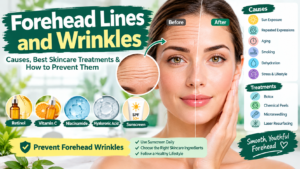

Forehead Lines and Wrinkles: Causes, Best Skincare Treatments & How to Prevent Them
Forehead lines and wrinkles are among the most common visible signs of skin aging. They can appear as fine horizontal lines across the forehead or become deeper and more noticeable over time. While forehead wrinkles are a normal part of aging, factors such as repeated facial expressions, sun exposure, smoking, dehydration, and reduced collagen production can make them appear earlier or more prominent.
The good news is that a consistent skincare routine and healthy daily habits can help reduce the appearance of forehead lines and prevent them from becoming more noticeable. Ingredients such as retinoids, sunscreen, vitamin C, niacinamide, and moisturizing ingredients can play an important role. Professional treatments may also provide additional improvement when wrinkles become deeper.
This guide explains the causes of forehead lines and wrinkles, the best skincare treatments, prevention strategies, and professional options to consider.
What Are Forehead Lines and Wrinkles?
Forehead lines are horizontal creases that develop across the forehead. They are often considered dynamic wrinkles because they become more visible when the forehead muscles contract during facial expressions such as raising the eyebrows.
Over time, repeated muscle movement combined with natural skin aging can cause these lines to remain visible even when the face is relaxed.
Common signs include:
- Fine horizontal lines across the forehead
- Deeper forehead wrinkles
- Lines that become more noticeable when raising the eyebrows
- Loss of skin firmness
- Dry or rough skin around the forehead
- Wrinkles that remain visible when the face is relaxed
Some people begin noticing fine forehead lines in their 20s or 30s, while others develop them later. Genetics, lifestyle, skin type, and sun exposure all influence when wrinkles become visible.
What Causes Forehead Lines and Wrinkles?
Several factors can contribute to forehead wrinkles. Usually, more than one factor is involved.
1. Repeated Facial Expressions
One of the primary causes of forehead lines is repeated movement of the forehead muscles.
Raising your eyebrows, concentrating, showing surprise, and making other facial expressions repeatedly fold the skin. When the skin is younger and more elastic, it usually returns to its original position easily.
As collagen and elastin gradually decrease with age, repeated folding can eventually create lines that remain visible.
2. Sun Exposure
UV radiation is one of the most important environmental contributors to premature skin aging.
Collagen and elastin can be harmed by prolonged sun exposure, which can result in wrinkles, uneven pigmentation, rough texture, and loss of firmness.
For this reason, using sunscreen every day is one of the most crucial ways to prevent wrinkles on the forehead.
3. Natural Aging
As we age, the skin gradually produces less collagen and elastin. Cell turnover can also slow, while the skin may become thinner and drier.
These changes make existing expression lines more noticeable and can contribute to the development of deeper wrinkles.
4. Dehydrated Skin
Dehydration does not necessarily cause permanent wrinkles, but it can make existing fine lines look more noticeable.
When the outer layer of the skin lacks water, it can appear dry, dull, and less smooth. Proper moisturizing can temporarily make fine lines appear softer.
5. Smoking
Smoking can contribute to premature skin aging by increasing oxidative stress and affecting normal skin structure and circulation.
People who smoke may develop wrinkles and other signs of aging earlier than they otherwise would.
6. Genetics
Genetics can influence skin thickness, elasticity, collagen production, and how quickly visible wrinkles develop.
If close family members developed forehead wrinkles early, you may also be more likely to notice them earlier.
7. Stress and Poor Lifestyle Habits
Chronic stress, inadequate sleep, an unbalanced diet, smoking, and excessive alcohol consumption can negatively affect overall skin health.
These factors may not be the sole cause of forehead wrinkles, but improving lifestyle habits can support healthier-looking skin.
Best Skincare Treatments for Forehead Lines
A good anti-aging skincare routine should focus on preventing further damage while supporting hydration and skin renewal.
1. Sunscreen
If you want to prevent forehead wrinkles from becoming worse, sunscreen should be one of your highest priorities.
Choose a broad-spectrum SPF 30 or higher and apply it every morning to the face, forehead, ears, and neck.
Reapply when spending extended periods outdoors, especially after sweating or swimming.
Sunscreen helps protect the skin from UV-related collagen damage and is an essential part of any anti-aging routine.
2. Retinol and Retinoids
Retinoids are among the most studied topical ingredients for improving signs of skin aging.
Retinol, which is available in many over-the-counter skincare products, can support skin cell turnover and collagen-related processes. With regular use, it may improve the appearance of fine lines, uneven texture, and other signs of photoaging.
For certain issues, a dermatologist may suggest prescription retinoids, which can be more potent.
Beginners should introduce retinoids gradually because they can cause dryness and irritation.
Applying a tiny amount at nite two or three times a week and increasing the frequency as tolerated is a common strategy.3. Vitamin C
Vitamin C is an antioxidant that can help protect skin from oxidative stress caused by environmental factors.
It can also support a brighter, more even-looking complexion and complement a sunscreen-based anti-aging routine.
Vitamin C is generally used in the morning before moisturizer and sunscreen.
4. Hyaluronic Acid
Hyaluronic acid is a humectant that attracts and holds water in the skin.
It does not remove permanent wrinkles, but increasing skin hydration can make fine lines appear temporarily less noticeable and help the skin look smoother and more supple.
5. Niacinamide
Niacinamide, or vitamin B3, is another useful ingredient for an anti-aging skincare routine.
It supports the skin barrier and may help improve the appearance of uneven tone and texture.
It can also be a useful option for people whose skin does not tolerate stronger active ingredients well.
6. Peptides
Peptides are commonly included in anti-aging skincare products because certain peptide formulations may support the appearance of firmer, smoother skin.
Although results vary depending on the formulation, peptides can be incorporated into a broader skincare routine focused on maintaining healthy-looking skin.
7. Ceramides
Ceramides help support the skin barrier and reduce moisture loss.
A moisturizer containing ceramides can be especially helpful when the forehead feels dry or tight. Keeping the skin barrier healthy can make the complexion look smoother and more comfortable.
Best Morning Routine for Forehead Wrinkles
A simple morning routine can help protect the skin throughout the day.
Step 1: Gentle Cleanser
Use a mild cleanser that removes oil and impurities without leaving the skin tight or dry.
Step 2: Antioxidant Serum
A vitamin C serum can provide antioxidant support. Niacinamide is another option.
Step 3: Moisturizer
Choose a moisturizer appropriate for your skin type. Dry skin may benefit from a richer formula, while oily skin may prefer a lightweight, non-comedogenic moisturizer.
Step 4: Sunscreen
Finish with broad-spectrum SPF 30 or higher.
This final step is particularly important because UV exposure can accelerate the skin aging process.
Best Night Routine for Forehead Lines
Nighttime is a good opportunity to use ingredients that support skin renewal.
A simple routine may include:
- Gentle cleanser
- Retinol or another appropriate retinoid
- Moisturizer
If retinoids cause dryness, use them less frequently and apply moisturizer regularly.
Avoid immediately adding several other strong active ingredients. A simple routine can be easier to tolerate and maintain.
Can Moisturizer Get Rid of Forehead Wrinkles?
Moisturizer cannot permanently erase forehead wrinkles, but hydration can improve the appearance of fine lines.
When the outer skin layer is properly hydrated, it can appear smoother and more plump. This can temporarily reduce the visibility of dehydration-related fine lines.
For best results, look for moisturizers containing ingredients such as:
- Ceramides
- Hyaluronic acid
- Glycerin
- Squalane
- Panthenol
How to Prevent Forehead Lines From Getting Worse
Prevention is easier than trying to reverse deeper wrinkles later.
Wear Sunscreen Daily
Make SPF part of your everyday routine, not just something you use during vacations.
Wear Sun-Protective Accessories
A wide-brimmed hat and sunglasses can provide additional protection when you spend significant time outdoors.
Avoid Tanning
Intentional tanning and tanning beds expose the skin to UV radiation and can accelerate photoaging.
Don’t Smoke
Quitting smoking can benefit overall health and may help reduce continued exposure to factors associated with premature skin aging.
Keep Skin Moisturized
A healthy skin barrier helps reduce dryness and supports smoother-looking skin.
Get Enough Sleep
Consistent, adequate sleep supports overall health and may contribute to a healthier-looking complexion.
Eat a Balanced Diet
A diet containing vegetables, fruits, whole grains, healthy fats, and adequate protein provides nutrients needed for normal skin function.
Professional Treatments for Forehead Wrinkles
Skincare products can help with early fine lines, but deeper forehead wrinkles may respond better to professional treatments.
Botox for Forehead Lines
Botulinum toxin injections, commonly known by the brand name Botox, temporarily reduce activity in targeted muscles.
Because repeated muscle contraction contributes to dynamic forehead wrinkles, reducing muscle movement can make these lines less noticeable.
Results are temporary, and treatment should be performed by an appropriately qualified medical professional.
Chemical Peels
Chemical peels use controlled exfoliation to improve the appearance of the skin.
Depending on the type and strength, a peel may help with:
- Fine lines
- Uneven texture
- Sun damage
- Dullness
- Uneven pigmentation
The appropriate peel depends on your skin type and individual concerns.
Microneedling
Microneedling creates controlled micro-injuries in the skin and stimulates the body’s healing response.
It may improve the appearance of fine lines, uneven texture, and certain types of acne scarring.
Multiple treatments are often needed for noticeable results.
Laser Resurfacing
Certain laser treatments can improve wrinkles, pigmentation, and skin texture by targeting damaged skin and stimulating remodeling.
Laser treatment varies considerably in intensity, so consultation with a qualified professional is important, particularly for people with darker skin tones who may have a higher risk of post-inflammatory pigmentation with some procedures.
Can Forehead Wrinkles Be Reversed Naturally?
Natural lifestyle changes can help support healthy skin, but they generally cannot completely erase established wrinkles.
Helpful habits include:
- Protecting the skin from sunlight
- Eating a balanced diet
- Staying adequately hydrated
- Avoiding smoking
- Getting sufficient sleep
- Managing stress
- Using a consistent skincare routine
These steps can help prevent additional damage and maintain healthier-looking skin, but deeper wrinkles may require topical or professional treatments.
Common Mistakes When Treating Forehead Wrinkles
Using Too Many Products
More skincare products do not necessarily mean better results. Combining several strong ingredients can cause irritation.
Skipping Sunscreen
Using expensive anti-aging products while regularly exposing the skin to unprotected UV radiation can undermine your routine.
Applying Retinol Too Frequently
Using retinol every night from the beginning can cause unnecessary irritation. Start slowly and increase frequency as your skin adjusts.
Expecting Overnight Results
Most anti-aging ingredients require consistent use over weeks or months.
Ignoring the Neck
The neck can also develop visible signs of aging. Apply moisturizer and sunscreen to the neck as part of your daily routine.
When Should You See a Dermatologist?
Consider consulting a dermatologist if forehead wrinkles are becoming deep or if you want professional treatment options.
A dermatologist can assess your skin and discuss whether treatments such as prescription retinoids, neuromodulators, laser resurfacing, chemical peels, or microneedling may be appropriate.
Professional advice is particularly useful if you have sensitive skin, persistent irritation, significant pigmentation, or a history of unusual reactions to skincare products.
Final Thoughts
Forehead lines and wrinkles are a normal part of aging, but sun exposure, repeated facial movements, smoking, dehydration, and other factors can make them appear earlier or become more noticeable.
A consistent routine focused on daily sunscreen, retinoids, antioxidants, hydration, and barrier-supporting ingredients can help reduce the appearance of fine lines and protect the skin from further damage.
For deeper forehead wrinkles, professional options such as Botox, chemical peels, microneedling, and laser resurfacing may provide more noticeable results.
The most important strategy is consistency. Protecting your skin every day and choosing treatments that match your skin’s needs can help maintain a smoother, healthier-looking complexion over time.
Frequently Asked Questions
What is the best skincare ingredient for forehead wrinkles?
Retinoids such as retinol are among the most established topical options for improving the appearance of fine lines. Daily sunscreen is equally important because it helps prevent UV-related skin aging.
Can forehead wrinkles go away?
Fine lines may become less noticeable with consistent skincare, hydration, sun protection, and appropriate treatments. Deeper wrinkles may require professional procedures for more significant improvement.
Does retinol help forehead lines?
Yes. Retinol can support skin renewal and collagen-related processes and may gradually improve the appearance of fine lines and wrinkles.
Is Botox better than retinol for forehead wrinkles?
They work differently. Retinol works gradually on the skin, while botulinum toxin temporarily reduces targeted muscle activity. A qualified professional can help determine which option is appropriate.
How can I prevent forehead wrinkles naturally?
Daily sun protection, avoiding tanning and smoking, getting adequate sleep, eating a balanced diet, moisturizing, and maintaining a consistent skincare routine can all support healthier-looking skin.
At what age should you start treating forehead wrinkles?
There is no single correct age. Preventive habits such as sunscreen and moisturizing can begin early, while active anti-aging ingredients can be introduced according to individual skin needs and tolerance.