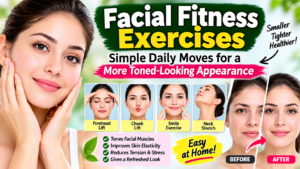

Facial Fitness Exercises: Simple Daily Moves for a More Toned-Looking Appearance
Introduction
Many people are interested in facial fitness exercises as a simple addition to their skincare and wellness routine. Just as body exercises target different muscle groups, facial exercises involve controlled movements of the muscles around the cheeks, lips, jaw, forehead, and neck.
Face yoga or facial muscle exercise are other names for facial fitness. Generally speaking, the objective is to enhance awareness and mobility of facial muscles and may produce a momentarily more toned or rejuvenated appearance rather than drastically altering the anatomy of the face.
In contrast to cosmetic surgeries, facial exercises may typically be done at home and don’t require any specific equipment. Expectations should be reasonable, though. facial facial facial facial facial facial facial facial facial facial facial facial facial facial facial facial facial facial facial facial facial facial structure.
The possible advantages of facial fitness exercises, beginner-friendly daily workouts, safety advice, and things to consider before incorporating them into your routine are all covered in this book.
What Are Facial Fitness Exercises?
Facial fitness exercises are controlled movements designed to engage the muscles of the face and neck. They may involve smiling, lifting the cheeks, gently stretching the lips, moving the jaw, or making specific facial expressions.
The concept is based on exercising muscles through repeated, controlled movements. Facial muscles are relatively small compared with major body muscles, so exercises should be gentle rather than forceful.
Common areas targeted by facial exercises include:
- Cheeks
- Jawline
- Lips
- Chin
- Forehead
- Neck
- Areas around the eyes
A short routine may take only five to ten minutes and can be incorporated into a daily self-care routine.
Can Facial Exercises Make Your Face More Toned?
Facial exercises may help you become more aware of and actively engage certain facial muscles. Some people feel that consistent practice makes their face look temporarily more lifted, refreshed, or defined.
However, facial appearance depends on many factors, including genetics, age, skin elasticity, facial fat distribution, muscle structure, hydration, and overall body composition.
There is limited scientific evidence that facial exercises can produce major or permanent changes in facial appearance. Therefore, it is better to think of facial fitness as a gentle wellness and muscle-awareness practice, rather than a replacement for medical or cosmetic treatments.
Benefits of Facial Fitness Exercises
Although research is still developing, gentle facial exercises may offer several practical benefits.
1. Increased Facial Muscle Awareness
Facial exercises encourage you to consciously move individual muscles. This can help you become more aware of tension and movement in areas such as the jaw, cheeks, and forehead.
2. A Simple Self-Care Routine
Facial exercises require little or no equipment. You can perform many movements while sitting at home, making them convenient for people who prefer simple wellness routines.
3. Gentle Muscle Engagement
Like other forms of exercise, controlled movement can engage muscles. Facial movements may help you become more aware of how different muscles work together when you smile, speak, chew, or make expressions.
4. Relaxation and Tension Awareness
Slow, controlled movements can encourage you to pay attention to areas where you hold tension. This can be especially useful for people who frequently clench their jaw or tense their forehead.
5. Complementary Approach to Skincare
Facial fitness can be combined with basic skincare habits such as daily sunscreen, gentle cleansing, adequate hydration, and moisturizer.
10 Simple Facial Fitness Exercises for Beginners
If you want to try facial fitness, start slowly. Perform each movement comfortably and avoid pulling or stretching the skin aggressively.
1. Cheek Lift
Start by sitting comfortably and relaxing your face.
Smile gently without forcing the expression. While smiling, try to lift your cheek muscles upward. Hold the position for approximately five seconds and then relax.
Repeat 8–10 times.
This exercise focuses on engaging the muscles around the cheeks.
2. Gentle Jaw Release
Keep your shoulders relaxed and your mouth closed.
Slowly open your jaw as if you are beginning to say “ah.” Do not force the movement. Hold briefly, then slowly close your mouth.
Repeat 5–10 times.
This movement can help you become more aware of jaw movement.
3. Chin Lift
Sit or stand with your back straight.
Gently tilt your head upward while keeping your shoulders relaxed. Look toward the ceiling without overextending your neck.
You may gently move your lower jaw forward and hold for a few seconds.
Return to a neutral position and repeat 5–8 times.
Stop if you experience neck pain or discomfort.
4. Lip Press
Relax your face and keep your lips together.
Gently press your lips together for several seconds without clenching your teeth. Relax and repeat.
Perform approximately 8–10 repetitions.
This simple movement engages muscles around the mouth.
5. Cheek Resistance Exercise
Place clean fingers gently against the upper part of your cheeks.
Try to smile while applying very light resistance with your fingers. The resistance should be minimal and comfortable.
Hold for three to five seconds and release.
Repeat 5–8 times.
Avoid pressing hard against the skin.
6. Forehead Relaxation Exercise
Place your fingertips gently on your forehead.
Instead of trying to create a strong expression, focus on relaxing the forehead muscles. Slowly raise your eyebrows and then release them.
Repeat 5–10 times.
The goal is controlled movement rather than forceful stretching.
7. Eye Area Gentle Movement
Close your eyes comfortably without squeezing them.
Gently relax the muscles around your eyes and then slowly open your eyes.
Repeat several times.
Avoid rubbing or pulling the delicate skin around the eyes.
8. Smile and Relax
Create a natural, comfortable smile and hold it for about five seconds.
Relax completely afterward.
Repeat 8–10 times.
This is one of the easiest facial exercises for beginners because it requires no equipment.
9. Neck Stretch
Sit upright with your shoulders relaxed.
Slowly tilt your head to one side, keeping the movement gentle. Return to the center and repeat on the opposite side.
Hold each comfortable stretch for approximately 10 seconds.
This is more of a neck mobility movement than a facial-toning exercise, but it can complement a facial wellness routine.
10. Facial Relaxation Routine
Finish your routine by taking several slow breaths.
Relax your jaw, soften your forehead, and allow your cheeks and lips to rest naturally.
Spend one to two minutes simply noticing where you hold facial tension.
This relaxation component can make your routine feel more comfortable and balanced.
How Often Should You Do Facial Exercises?
Consistency is generally more practical than performing an intense routine occasionally.
A week can start start start start start start. In the event that you are able to feel comfortable.
Dozens of repetitions are not necessary. Overuse of the face can cause discomfort or muscular strain.
The most crucial guideline is to pay attention to your body. Facial workouts should be mild.
Facial Exercises vs. Face Yoga
The terms facial exercises and face yoga are often used interchangeably.
Face yoga generally combines facial movements, controlled expressions, breathing, relaxation, and sometimes massage techniques. Facial fitness can be broader and may focus specifically on muscle engagement.
Neither approach should be considered a guaranteed method for permanently changing facial shape.
Can Facial Exercises Remove Face Fat?
No exercise can reliably target fat loss from one specific area of the body.
If someone loses overall body fat, facial fat may also decrease depending on individual genetics and body composition. However, performing facial exercises does not mean that fat will selectively disappear from the cheeks, chin, or jawline.
A healthy diet, regular physical activity, adequate sleep, and an overall healthy lifestyle are more relevant to general body composition.
Facial Fitness Exercises and Anti-Aging
Aging naturally affects the skin, muscles, and underlying facial structures. Skin gradually loses collagen and elasticity, while facial volume and fat distribution can change.
Facial exercises may help with muscle awareness, but they should not be considered a proven anti-aging treatment.
For protecting the skin from premature aging, evidence-based habits are more important. These include:
- Wearing broad-spectrum sunscreen
- Avoiding excessive sun exposure
- Using a gentle moisturizer
- Avoiding smoking
- Maintaining a balanced diet
- Getting adequate sleep
- Following a consistent skincare routine
Facial exercises can be viewed as an optional addition rather than a replacement for established skincare practices.
Safety Tips for Facial Exercises
Facial exercises are generally gentle when performed correctly, but they are not appropriate for everyone in every situation.
Keep these safety tips in mind:
Avoid painful movements. Facial exercise should never cause significant pain.
Do not pull the skin aggressively. Excessive pulling or rubbing may irritate sensitive skin.
Use clean hands. If you touch your face, wash your hands first.
Avoid excessive repetition. More exercise does not necessarily mean better results.
Stop if you develop discomfort. Persistent jaw, facial, or neck pain should be evaluated by an appropriate healthcare professional.
If you have recently had facial surgery, cosmetic injections, dental procedures, or treatment for a facial or jaw condition, ask your healthcare professional when it is appropriate to resume facial exercises.
Common Mistakes to Avoid
One of the biggest mistakes is expecting dramatic results within a few days.
Facial appearance is influenced by many factors, so exercise alone cannot completely change your face.
Other common mistakes include:
- Exercising too aggressively
- Pulling the skin repeatedly
- Holding expressions for too long
- Ignoring jaw or neck pain
- Expecting spot fat reduction
- Replacing skincare or medical care with facial exercises
A gentle and realistic approach is usually better.
How to Create a 5-Minute Facial Fitness Routine
If you are short on time, try this simple routine:
Minute 1: Gentle cheek lifts
Minute 2: Lip presses and relaxed smiles
Minute 3: Gentle jaw movements
Minute 4: Forehead and eye-area relaxation
Minute 5: Neck mobility and facial relaxation
Perform each movement slowly and comfortably.
The purpose of this routine is to create a simple habit rather than push the facial muscles to exhaustion.
Frequently Asked Questions
Do facial exercises really work?
Facial exercises can engage facial muscles and increase awareness of facial movement, but evidence for significant, permanent changes in facial appearance is limited. Results can vary considerably between individuals.
How long does it take to see results from facial exercises?
There is no guaranteed timeline. Some people may notice that their face feels more relaxed or that they are more aware of facial muscles, while visible changes may be minimal.
Can facial exercises sharpen the jawline?
Facial exercises may engage muscles around the jaw, but they cannot selectively remove fat from the jawline. Jawline appearance depends on factors such as genetics, bone structure, muscle, skin elasticity, and body composition.
Can face exercises reduce wrinkles?
There is not enough evidence to conclude that facial exercises can reliably reduce wrinkles. Sun protection and a consistent skincare routine remain important for protecting skin from premature aging.
Are facial exercises safe every day?
Gentle exercises may be comfortable for many people when performed correctly. However, doing them excessively or forcefully can cause muscle fatigue or discomfort. Stop if an exercise causes pain.
What is the best facial exercise for beginners?
Simple cheek lifts, gentle smiles, lip presses, and relaxed jaw movements are easy starting points. Beginners should focus on controlled movements rather than intensity.
Final Thoughts
Facial fitness exercises can be a simple, equipment-free addition to a daily wellness routine. Gentle cheek lifts, controlled smiles, jaw movements, and relaxation exercises can help you become more aware of your facial muscles and how they move.
However, facial exercises should be approached with realistic expectations. They cannot permanently reshape facial bones, selectively burn facial fat, or replace professional medical or cosmetic treatments.
For a healthier-looking appearance, combine facial fitness with proven habits such as sun protection, balanced nutrition, adequate sleep, hydration, and consistent skincare. Most importantly, perform facial movements gently and stop if you experience pain or persistent discomfort.
With a simple, consistent routine, facial fitness can become an easy part of your overall self-care practice.