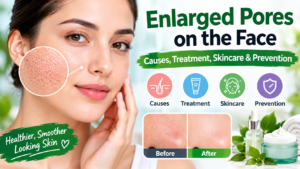

Enlarged pores are a common skin concern that can make the face look uneven, textured, or less smooth. They are especially noticeable around the nose, cheeks, forehead, and chin. Although pores are a normal and necessary part of healthy skin, some people naturally have pores that appear larger than others.
Pores do not function like doors that can open and close, despite the claims made by many skincare products to “close” or permanently reduce pores. They can be affected by changes in the way in the way.
The good news is that regular skincare and the right medical procedures can frequently lessen the appearance of enlarged pores on the face.
What Are Facial Pores?
Pores are tiny openings in the skin. Some are connected to hair follicles and contain sebaceous glands that produce sebum, the natural oil that helps keep skin lubricated.
Everyone has pores. They are not a sign that your skin is dirty or unhealthy.
Pores may simply become more visible when they contain excess oil, dead skin cells, or buildup. Changes in collagen and skin elasticity can also make them appear larger over time.
What Causes Enlarged Pores on the Face?
Several factors can contribute to the appearance of large pores.
1. Genetics
Genetics is one of the most important factors affecting pore size.
If large or visible pores are common in your family, you may naturally have more noticeable pores. Skincare can improve their appearance, but it cannot completely change your genetic pore size.
2. Excess Oil Production
People with oily or combination skin often notice more visible pores.
When sebaceous glands produce more oil, pores can become filled with sebum and cellular debris. This can make them look larger, particularly around the nose and central face.
Managing excess oil with gentle, consistent skincare can make pores look less noticeable.
3. Clogged Pores
A mixture of oil, dead skin cells, and other debris can accumulate inside pores.
Blackheads and other types of congestion can make pores appear more prominent. Picking or squeezing these areas can further irritate the skin and may make the problem look worse.
4. Aging Skin
As skin ages, it gradually loses some collagen and elasticity.
When the surrounding skin becomes less firm, pores may appear larger or more stretched. Reduced skin elasticity is one reason pore visibility can increase with age.
5. Sun Damage
Long-term ultraviolet exposure can contribute to collagen breakdown and changes in skin texture.
As the supporting structure around pores becomes less firm, pores may become more noticeable.
Daily sunscreen is therefore an important part of a pore-friendly skincare routine.
6. Hormonal Changes
Hormonal changes can affect oil production.
During puberty and other periods of hormonal fluctuation, increased sebum production may contribute to clogged and more visible pores.
7. Poor Skin-Care Habits
Harsh cleansers, aggressive scrubbing, frequent picking, and skipping sunscreen can negatively affect the skin barrier and overall texture.
A simple, consistent routine is usually more helpful than using many strong products.
Can You Permanently Shrink Enlarged Pores?
Pores cannot usually be permanently eliminated or completely closed.
However, you can make enlarged pores on the face look less noticeable by addressing factors such as excess oil, clogged pores, sun damage, and reduced skin firmness.
The goal of pore-focused skincare is therefore not to remove pores, but to improve the appearance and texture of the surrounding skin.
Best Skincare Ingredients for Enlarged Pores
Certain ingredients can be particularly useful for managing oil, congestion, and uneven skin texture.
Salicylic Acid
Salicylic acid is a beta hydroxy acid that can help exfoliate inside pores.
It may be useful for people with oily or acne-prone skin because it can help reduce buildup that contributes to visible pores.
Start with a lower concentration and avoid overusing it, especially if your skin is sensitive.
Niacinamide
Niacinamide, a form of vitamin B3, is widely used in skincare for supporting the skin barrier and helping regulate excess oil.
A niacinamide product may help improve the overall appearance of oily skin and make pores look less prominent over time.
Retinoids
Retinoids can support skin cell turnover and collagen production.
They may improve uneven texture and help keep pores from becoming congested. Retinoids can be irritating when first introduced, so gradual use is important.
People who are pregnant or trying to become pregnant should discuss retinoid use with a healthcare professional.
Alpha Hydroxy Acids
Ingredients such as glycolic acid and lactic acid exfoliate the skin’s surface.
They can help improve rough texture and dullness, which may make pores appear less noticeable.
Avoid combining multiple exfoliating products at once unless your skin is known to tolerate them.
Clay
Clay masks can temporarily absorb excess oil from the surface of the skin.
They may be useful for oily areas such as the forehead, nose, and chin. However, using clay masks too frequently can cause dryness or irritation.
A Simple Skincare Routine for Enlarged Pores
A consistent routine is more important than using numerous products.
Morning Routine
Step 1: Gentle cleanser
Use a mild cleanser to remove overnight oil without stripping the skin.
Step 2: Niacinamide or another suitable serum
If your skin tolerates it, a niacinamide serum can be included to support oil control and skin-barrier health.
Step 3: Moisturizer
Even oily skin needs hydration. Choose a lightweight, non-comedogenic moisturizer if you are prone to clogged pores.
Step 4: Sunscreen
Apply broad-spectrum SPF 30 or higher every morning.
Sunscreen is particularly important because UV exposure contributes to premature skin aging and collagen breakdown.
Evening Routine
Step 1: Cleanse
Remove sunscreen, makeup, oil, and daily buildup with a gentle cleanser.
Step 2: Treatment
Depending on your skin needs, you may use salicylic acid or a retinoid on appropriate nights.
Do not start several active ingredients at the same time.
Step 3: Moisturize
Finish with a moisturizer to help maintain a healthy skin barrier.
How to Minimize the Appearance of Pores Naturally
While there is no natural remedy that permanently shrinks pores, several healthy habits can improve the overall appearance of your skin.
Keep Your Face Clean
Cleanse gently twice daily or after heavy sweating. Avoid repeatedly washing your face throughout the day because excessive cleansing can cause irritation.
Avoid Picking Your Pores
Squeezing blackheads or repeatedly pressing on pores can cause inflammation and potentially contribute to marks or scarring.
Stay Consistent With Sunscreen
UV exposure can accelerate visible skin aging. Daily sunscreen can help protect collagen and maintain smoother-looking skin.
Use Non-Comedogenic Products
Look for skincare and makeup labeled non-comedogenic if you frequently experience clogged pores.
Keep Your Routine Simple
Using too many exfoliating acids, scrubs, masks, and active ingredients can damage the skin barrier.
A simple routine that you can follow consistently is often more practical.
Professional Treatments for Enlarged Pores
If skincare does not provide the improvement you want, a dermatologist or qualified skin professional may discuss treatment options.
Chemical Peels
Professional chemical peels use controlled exfoliating ingredients to improve skin texture and surface irregularities.
The appropriate peel depends on your skin type and concerns.
Microneedling
Microneedling uses very small needles to create controlled micro-injuries in the skin.
This can stimulate a wound-healing response and collagen production. It may improve skin texture and the appearance of pores over a series of treatments.
Laser Treatments
Certain laser procedures can improve skin texture and stimulate collagen remodeling.
The specific laser and treatment plan depend on skin type, pigmentation risk, and the desired result.
Radiofrequency Treatments
Some radiofrequency-based treatments use controlled energy to heat deeper layers of the skin and stimulate collagen.
These procedures should be performed by appropriately trained professionals after assessing the individual’s skin.
Professional Extraction
For significant blackheads or congestion, professional extraction may be an option.
It is generally safer than repeatedly squeezing pores at home, particularly when performed by a qualified professional.
What Not to Do for Enlarged Pores
Some popular skincare habits can actually make skin irritation worse.
Do Not Use Harsh Scrubs
Rough physical scrubs can irritate the skin and may worsen redness and inflammation.
Do Not Use Extremely Hot Water
Hot water can strip the skin’s protective barrier and cause dryness or irritation.
Do Not Squeeze Your Pores
Trying to physically “empty” every pore can damage surrounding skin and increase the risk of inflammation.
Do Not Overuse Acids
Using several exfoliating products together can lead to burning, dryness, peeling, and increased sensitivity.
Do Not Skip Moisturizer
Oily skin still needs hydration. A lightweight moisturizer can help maintain the skin barrier without necessarily making skin oilier.
Does Facial Steaming Shrink Pores?
Facial steaming may temporarily soften surface oil and debris, but it does not permanently shrink pores.
Warmth can make the skin feel softer and may temporarily change its appearance. However, pores naturally remain present.
If you enjoy facial steaming, keep the temperature comfortable and the session short. Avoid very hot steam, especially if you have sensitive or redness-prone skin.
How Long Does It Take to See Results?
The timeline depends on the cause of visible pores and the products being used.
A basic routine may improve oiliness and congestion over several weeks. Ingredients such as retinoids and exfoliating acids may require consistent use over a longer period.
Professional treatments may produce more noticeable changes, but several sessions are sometimes needed.
Consistency is more important than expecting overnight results.
When Should You See a Dermatologist?
Consider seeing a dermatologist if enlarged pores occur alongside:
- Persistent acne
- Severe blackheads
- Painful or inflamed breakouts
- Significant skin texture changes
- Scarring
- Persistent redness or irritation
- Sudden changes in your skin
A dermatologist can determine whether the appearance of your pores is mainly related to oil production, congestion, aging, sun damage, acne, or another skin concern.
Frequently Asked Questions
What causes large pores on the face?
Genetics, oily skin, clogged pores, aging, sun exposure, and reduced skin elasticity can all contribute to more visible pores.
Can ice close enlarged pores?
Ice can temporarily reduce swelling and make skin feel tighter, but it does not permanently close or shrink pores.
Does drinking water reduce large pores?
Adequate hydration supports overall skin health, but drinking extra water does not directly shrink pore size.
Is niacinamide good for enlarged pores?
Niacinamide can be useful for oily and combination skin and may help improve the appearance of pores by supporting oil regulation and the skin barrier.
Is salicylic acid good for large pores?
Salicylic acid can help remove oil and dead skin cell buildup within pores, making it particularly useful for oily or congested skin.
Does sunscreen help enlarged pores?
Sunscreen does not directly shrink pores, but protecting skin from UV damage helps preserve collagen and may reduce changes that make pores appear more prominent over time.
Can enlarged pores disappear naturally?
Pores are a normal part of the skin and do not disappear completely. However, their appearance can often be reduced through appropriate skincare and professional treatments.
Final Thoughts
Enlarged pores on the face are completely normal, and everyone has them. Their visibility can be influenced by genetics, oil production, clogged pores, sun exposure, aging, and changes in skin elasticity.
A regular routine can make pores appear smoother and less noticeable, but no skincare product can completely eliminate them. Moisturizer, daily sunscreen, appropriate retinoid use, gentle cleansing, and ingredients like salicylic acid or niacinamide can all be helpful.
Steer clear of picking, excessive exfoliation, harsh scrubbing, and extremely hot water. A dermatologist can suggest skin-type-specific treatments if visible pores are accompanied by scarring, chronic acne, or noticeable skin changes.
The goal should not be pore-free skin. Healthy skin naturally has pores—the aim is to keep the skin balanced, protected, and healthy-looking.