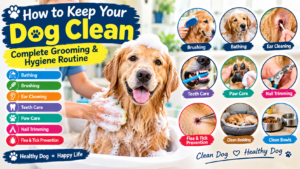

How to Keep Your Dog Clean: Complete Grooming & Hygiene Routine
Keeping your dog clean is an important part of responsible pet care. A regular dog grooming and hygiene routine can help keep your pet’s coat, skin, ears, teeth, paws, and nails healthy. It can also help you notice problems such as skin irritation, parasites, infections, lumps, wounds, or unusual odors at an early stage.
Dogs benefit from routine grooming and basic hygienic maintenance, but they do not require daily bathing. Your dog’s breed, coat type, age, lifestyle, degree of exercise, and general health all influence the best routine.
This comprehensive book covers how to maintain your dog’s cleanliness, including how frequently to bathe and brush them, how to clean their teeth and ears, how to take care of their paws and nails, and how to set up a basic grooming routine at home.
Why Is Dog Hygiene Important?
Good hygiene is about more than making your dog smell fresh. Regular grooming helps remove dirt, loose hair, dead skin, and debris from the coat.
A proper hygiene routine can help:
- Keep the coat clean and manageable
- Reduce mats and tangles
- Support healthy skin
- Reduce unpleasant odors
- Keep paws clean
- Support dental health
- Prevent overgrown nails
- Help identify skin problems early
- Make veterinary examinations easier
- Improve your dog’s overall comfort
Regular grooming also gives you an opportunity to become familiar with your dog’s normal skin, coat, ears, paws, and body.
How Often Should You Groom Your Dog?
There is no single grooming schedule that works for every dog.
A short-haired dog may need brushing only once or twice a week, while a long-haired or curly-coated dog may require brushing much more frequently.
Your dog’s grooming needs can depend on:
- Coat length
- Coat thickness
- Breed
- Shedding level
- Outdoor activity
- Swimming habits
- Skin condition
- Age
- Season
Dogs that spend a lot of time outdoors may need more frequent cleaning than dogs that spend most of their time indoors.
1. Brush Your Dog Regularly
Brushing is one of the easiest ways to keep a dog’s coat clean between baths.
Regular brushing removes loose hair, dirt, and debris. It can also help prevent mats and tangles, especially in dogs with long or curly coats.
How to Brush Your Dog
Start slowly and make the experience comfortable. Use a brush appropriate for your dog’s coat type.
Brush gently in the direction of hair growth. Pay particular attention to areas that commonly develop tangles, such as behind the ears, around the legs, under the belly, and near the tail.
Do not pull aggressively on mats because this can hurt your dog or damage the skin.
If severe matting has developed, professional grooming may be safer than attempting to remove it yourself.
2. Bathe Your Dog When Necessary
Bathing helps remove dirt, allergens, odors, and buildup from the skin and coat.
However, bathing your dog too frequently can sometimes dry or irritate the skin. The ideal bathing frequency depends on your dog’s coat, lifestyle, skin condition, and veterinary recommendations.
How to Bathe a Dog
Before bathing:
- Brush the coat.
- Prepare lukewarm water.
- Use a dog-specific shampoo.
- Keep towels nearby.
- Make sure the bathing area is secure.
Wet the coat thoroughly, avoiding unnecessary water around the eyes and inside the ears. Apply dog shampoo and gently massage it through the coat.
Rinse very thoroughly because leftover shampoo can irritate the skin.
After the bath, gently towel-dry your dog. If you use a pet dryer, use an appropriate setting and avoid excessive heat.
Can You Use Human Shampoo on Dogs?
Human shampoo is generally not the best choice for routine dog bathing because dogs have different skin characteristics from humans.
Use a shampoo formulated specifically for dogs. If your dog has itchy, sensitive, or medically affected skin, ask your veterinarian which product is appropriate.
3. Keep Your Dog’s Ears Clean
Ear hygiene is another important part of a dog grooming routine.
Some dogs, particularly those with floppy ears or allergies, may be more prone to ear problems.
Check your dog’s ears regularly for:
- Excessive wax
- Redness
- Swelling
- Bad odor
- Discharge
- Scratching
- Frequent head shaking
If the ears appear healthy, your veterinarian may recommend an appropriate dog ear-cleaning solution when cleaning is needed.
Never push cotton swabs deep into the ear canal. Also avoid using household products or home remedies inside your dog’s ears without veterinary advice.
If your dog has pain, significant discharge, swelling, or a strong unpleasant odor, veterinary examination is recommended.
4. Brush Your Dog’s Teeth
Dental hygiene is often overlooked, but it is an important part of keeping your dog healthy.
Plaque can accumulate on teeth and contribute to dental disease. Regular brushing with a dog-safe toothbrush and toothpaste can help support oral hygiene.
Never use human toothpaste unless specifically directed by a veterinarian because some ingredients can be unsafe for dogs.
Introduce tooth brushing gradually. Allow your dog to become comfortable with the toothbrush and toothpaste before attempting a complete brushing session.
Your veterinarian can also check your dog’s teeth and gums during routine examinations.
5. Keep Your Dog’s Paws Clean
Dogs walk through grass, dirt, sidewalks, and other surfaces every day. Their paws can collect mud, dust, plant material, and other debris.
After outdoor walks, especially in dirty or wet conditions, check the paws.
Look between the toes and around the paw pads for:
- Mud
- Small stones
- Plant material
- Cuts
- Cracks
- Redness
- Swelling
Wipe dirty paws with a clean damp cloth or use a pet-safe paw cleaning method.
Dry the paws afterward, particularly between the toes, to help prevent excessive moisture.
6. Trim Your Dog’s Nails
Overgrown nails can become uncomfortable and may affect the way a dog walks.
How frequently nails need trimming varies from dog to dog. Active dogs that regularly walk on appropriate hard surfaces may naturally wear down some nail length, while less active dogs may need more frequent trimming.
If you are comfortable doing it, use dog-specific nail clippers or a suitable nail grinder.
Be careful not to cut into the quick, which contains blood vessels and nerves. If you are unsure how to trim your dog’s nails, ask a veterinarian or professional groomer to demonstrate the correct technique.
7. Clean Around the Eyes
Some dogs develop tear staining or small amounts of discharge around their eyes.
You can gently wipe the area with a clean, damp cloth or a veterinarian-recommended eye-cleaning product.
Avoid putting soaps, shampoos, or unapproved products directly into the eyes.
Contact a veterinarian if your dog develops excessive tearing, redness, swelling, squinting, cloudiness, or persistent discharge.
Eye problems can sometimes require prompt treatment.
8. Keep Your Dog’s Bedding Clean
Your dog’s hygiene routine should include the areas where your dog sleeps.
Wash bedding regularly according to the manufacturer’s instructions. Remove loose hair and debris between washes.
A clean sleeping environment can help reduce buildup of dirt, hair, and odors.
If your dog has fleas or another parasite problem, cleaning the environment may also be an important part of controlling the infestation.
9. Wash Food and Water Bowls Regularly
Food and water bowls should also be included in your dog’s hygiene routine.
Wash bowls regularly with appropriate dish soap and rinse them thoroughly.
Water bowls can accumulate saliva, food particles, and buildup, so they should be cleaned frequently and supplied with fresh water.
Stainless steel or other easily washable bowls can be convenient for maintaining cleanliness.
10. Check Your Dog for Fleas and Ticks
Parasite prevention is an important part of keeping your dog clean and healthy.
Regularly check your dog’s coat and skin, particularly after outdoor activities.
Common areas to check include:
- Around the ears
- Neck
- Under the legs
- Between the toes
- Around the tail
- Belly area
Ask your veterinarian about an appropriate flea and tick prevention program for your dog’s age, weight, lifestyle, and region.
Do not use a parasite treatment intended for another animal unless a veterinarian confirms that it is safe.
11. Grooming After Outdoor Activities
Dogs that play outside, hike, swim, or spend time in muddy areas may need additional cleaning.
After outdoor activities, check your dog’s coat and paws for dirt, burrs, grass seeds, mud, and other debris.
If your dog has been swimming, rinse the coat with clean water if appropriate and dry it thoroughly.
Dogs that frequently swim may require special attention to their ears and skin, particularly if they are prone to ear problems.
12. Use the Right Grooming Products
Choosing the right products is important for safe dog grooming.
Basic grooming supplies may include:
- Dog brush or comb
- Dog shampoo
- Dog toothbrush
- Dog-safe toothpaste
- Towels
- Nail clippers or grinder
- Ear-cleaning solution recommended for dogs
- Clean grooming cloths
- Flea and tick prevention recommended by your veterinarian
Avoid using household cleaning products, harsh chemicals, or unapproved human skincare products on your dog.
How to Make Grooming Easier for Your Dog
Some dogs love grooming, while others become nervous.
Start when your dog is relaxed. Keep grooming sessions short at first and gradually increase the duration.
Reward calm behavior with praise, affection, or appropriate treats.
Never force your dog through a grooming procedure when they are showing significant fear or aggression. A veterinarian or professional groomer can help you develop a safer approach.
Making grooming a positive experience from an early age can make future hygiene care much easier.
Simple Weekly Dog Hygiene Routine
A basic weekly routine might include checking the coat, brushing as appropriate for the coat type, inspecting the ears, checking the paws, looking at the nails, and checking the skin for unusual changes.
Daily care can include checking paws after outdoor activities, providing fresh water, and observing your dog’s overall cleanliness and behavior.
Bathing does not necessarily need to happen every week. It should be based on your dog’s individual needs.
When Should You See a Veterinarian?
Grooming is not a substitute for veterinary care.
Contact your veterinarian if you notice:
- Persistent itching
- Hair loss
- Red or inflamed skin
- Bad-smelling ears
- Ear discharge
- Persistent eye discharge
- Skin lumps
- Open wounds
- Swollen paws
- Severe nail problems
- Persistent body odor
- Fleas or ticks that are difficult to control
A sudden change in your dog’s coat, skin, behavior, or mobility can sometimes indicate an underlying medical problem.
Final Thoughts
Learning how to keep your dog clean does not require complicated grooming procedures. A consistent routine that includes brushing, appropriate bathing, dental care, ear checks, paw cleaning, nail trimming, parasite prevention, and clean bedding can make a significant difference in your dog’s comfort and overall hygiene.
The most important thing is to adjust the routine to your dog’s individual needs. A short-haired indoor dog may require less grooming than a long-haired dog that spends a lot of time outdoors.
Regular grooming also allows you to notice changes early. If you see persistent itching, redness, unusual odors, discharge, wounds, or other concerning symptoms, contact your veterinarian rather than trying to treat the problem with unapproved products.
With patience, appropriate grooming tools, and regular veterinary care, keeping your dog clean can become a simple and positive part of everyday pet care