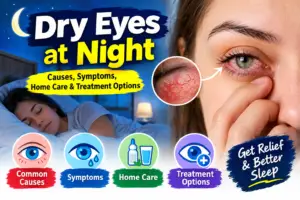

Dry Eyes at Night: Causes, Symptoms, Home Care & Treatment Options
Waking up with dry, irritated, or gritty eyes can be uncomfortable and frustrating. Some people experience dryness only at night, while others notice symptoms when they wake up in the morning. This condition is often related to reduced tear production, increased tear evaporation, environmental factors, medications, or problems with the eyelids.
Although occasional dry eyes at night may not be serious, frequent or severe symptoms can affect sleep, comfort, and vision. Understanding the possible causes can help you choose appropriate home care and know when professional treatment may be necessary.
What Are Dry Eyes at Night?
Dry eye occurs when the eyes do not have enough healthy tears to remain properly lubricated. Tears protect the surface of the eye, provide moisture, and help maintain clear vision.
At night, several factors can make dryness more noticeable. Tear production naturally changes during sleep, and some people may not completely close their eyelids. Air from fans, air conditioners, heaters, or other sources can also increase moisture loss from the eye surface.
People with nighttime dry eyes may experience symptoms before going to bed, while sleeping, or immediately after waking.
Common Symptoms of Dry Eyes at Night
The symptoms of nighttime dry eye can vary from person to person. Common signs include:
- Burning or stinging sensations
- Gritty or sandy feeling in the eyes
- Redness
- Itching or irritation
- Excessive watering
- Sensitivity to light
- Blurred or fluctuating vision
- Feeling as though something is stuck in the eye
- Difficulty keeping the eyes comfortable while sleeping
- Sticky or crusty eyelids in the morning
- Eye fatigue or discomfort after waking
Interestingly, watery eyes can also be a symptom of dry eye. When the eye becomes irritated, it may produce reflex tears. However, these tears may not provide the same long-lasting lubrication as normal tears.
What Causes Dry Eyes at Night?
There are several possible causes of dry eyes while sleeping. Identifying the underlying trigger can make treatment more effective.
1. Reduced Tear Production
Your eyes need a continuous tear film to stay comfortable. If your eyes produce fewer tears, dryness can become more noticeable during the night.
Age can also affect tear production. Dry eye is more common as people get older, although it can occur at any age.
2. Incomplete Eyelid Closure
Some people do not completely close their eyelids during sleep. This condition is sometimes called nocturnal lagophthalmos.
When part of the eye remains exposed for several hours, tears can evaporate more quickly. People with this issue may wake up with significant dryness, redness, or irritation.
3. Fans and Air Conditioning
Sleeping directly under a ceiling fan, near an air conditioner, or close to a heater can increase airflow around the eyes. This may accelerate tear evaporation.
Moving the fan away from your face or reducing direct airflow may help decrease nighttime dryness.
4. Excessive Screen Time
Phones, computers, tablets, and televisions can contribute to dry eye symptoms. When concentrating on a screen, people tend to blink less frequently.
Reduced blinking can destabilize the tear film and cause irritation. Using screens for long periods before bedtime may make existing symptoms more noticeable.
5. Contact Lens Use
Wearing contact lenses for too long or sleeping in lenses that are not specifically approved for overnight wear can increase eye irritation and dryness.
Always follow your eye-care professional’s instructions for contact lens use and cleaning.
6. Medications
Some medications can contribute to dry eyes as a side effect. Examples may include certain antihistamines, antidepressants, blood pressure medications, and other medicines.
If you suspect that a medication is causing your symptoms, do not stop taking it on your own. Ask your healthcare professional whether an alternative or additional treatment may be appropriate.
7. Environmental Conditions
Dry weather, smoke, dust, pollution, and low indoor humidity can contribute to nighttime eye dryness.
People who live in dry climates or spend considerable time in air-conditioned environments may notice symptoms more frequently.
8. Eyelid or Oil Gland Problems
The eyelids contain tiny glands that release oils that help prevent tears from evaporating too quickly. Problems affecting these glands can contribute to dry eye.
Meibomian gland dysfunction is one condition associated with an unstable tear film and increased tear evaporation.
9. Certain Health Conditions
Some medical conditions can be associated with dry eye symptoms. These may include autoimmune conditions and disorders affecting the eyelids or tear glands.
Persistent or unexplained symptoms should be evaluated by an eye-care professional.
How to Relieve Dry Eyes at Night at Home
If your symptoms are mild and occasional, several simple measures may help.
Use Artificial Tears
Lubricating eye drops, commonly called artificial tears, can provide temporary relief from dryness and irritation.
If you need eye drops frequently, preservative-free artificial tears may be preferable for some people because frequent exposure to preservatives can irritate sensitive eyes.
Use a Humidifier
A humidifier can add moisture to dry indoor air. This may be particularly useful during winter or when heating and air conditioning make the air dry.
Keep the humidifier clean and follow the manufacturer’s instructions to reduce the risk of microbial growth.
Avoid Direct Airflow
Try not to sleep with a fan or air conditioner blowing directly toward your face.
Changing the direction of airflow may reduce overnight tear evaporation.
Apply a Warm Compress
A warm compress over closed eyelids may help loosen oils around the eyelid margins and improve comfort for some people.
Use comfortably warm—not hot—water and avoid applying excessive heat around the eyes.
Practice Good Screen Habits
If you spend many hours using digital devices, take regular breaks and consciously blink more often.
The 20-20-20 rule is commonly used for digital eye comfort: every 20 minutes, look at something about 20 feet away for at least 20 seconds.
Stay Hydrated
Adequate fluid intake supports overall health and may help maintain normal tear production. However, drinking more water alone will not treat every cause of dry eye.
Remove Contact Lenses Before Sleeping
Unless your eye-care professional has specifically prescribed an approved overnight lens-wearing schedule, remove contact lenses before going to sleep.
Medical Treatment for Dry Eyes at Night
When home care does not provide enough relief, an eye doctor can evaluate the cause and recommend treatment.
Possible treatment options include:
Prescription or Over-the-Counter Eye Drops
Depending on the cause and severity, your eye-care professional may recommend lubricating drops or prescription medications designed to reduce inflammation or improve tear production.
Lubricating Eye Ointments
Eye ointments are thicker than artificial tears and may provide longer-lasting lubrication. They can temporarily blur vision, so they are often used before bedtime.
Treatment for Eyelid Problems
If eyelid inflammation or blocked oil glands are contributing to symptoms, treatment may focus on eyelid hygiene, warm compresses, medications, or procedures recommended by an eye specialist.
Treatment for Incomplete Eyelid Closure
If you do not fully close your eyes during sleep, an eye-care professional can recommend appropriate strategies to protect the exposed eye surface.
Treatment should be individualized because the cause of incomplete eyelid closure can vary.
How to Prevent Dry Eyes at Night
Preventive habits can help reduce recurring symptoms.
- Avoid sleeping directly under a fan.
- Keep air conditioning from blowing toward your face.
- Take regular breaks from screens.
- Blink frequently when using digital devices.
- Remove contact lenses as directed.
- Keep your eyelids clean.
- Consider using a humidifier in very dry environments.
- Follow your eye doctor’s treatment plan.
- Avoid using eye drops marketed solely to “remove redness” unless recommended by a professional.
When Should You See an Eye Doctor?
Occasional mild dryness may improve with simple measures, but persistent symptoms deserve professional evaluation.
Make an appointment with an eye-care professional if you experience:
- Frequent nighttime dry eye
- Persistent redness or irritation
- Recurrent blurred vision
- Eye pain
- Significant light sensitivity
- Symptoms that interfere with sleep
- Symptoms that do not improve with basic care
- Frequent need for lubricating eye drops
Seek urgent medical attention if you develop sudden vision loss, severe eye pain, a serious eye injury, marked swelling, or significant changes in vision.
Frequently Asked Questions About Dry Eyes at Night
Why are my eyes so dry when I wake up?
Morning dryness can result from reduced tear production during sleep, increased tear evaporation, environmental factors, or incomplete eyelid closure. Persistent morning dryness should be evaluated by an eye-care professional.
Can sleeping with a fan cause dry eyes?
Yes. Direct airflow from a fan can increase evaporation from the eye surface and may make nighttime dryness worse.
How can I stop dry eyes while sleeping?
Reducing direct airflow, using appropriate lubricating eye products, maintaining comfortable indoor humidity, and addressing underlying eyelid or tear-film problems may help. If symptoms continue, an eye examination can identify the cause.
Are dry eyes at night serious?
Mild occasional dryness is often manageable, but persistent or severe symptoms should not be ignored. Ongoing dryness can cause significant discomfort and may affect the surface of the eye.
Can dehydration cause dry eyes?
Not drinking enough fluids may contribute to overall dryness, but dry eye usually has multiple possible causes. Increasing fluids alone may not resolve persistent symptoms.
Can screens cause nighttime dry eyes?
Extended screen use can reduce blinking and contribute to tear-film instability. This can make dry-eye symptoms more noticeable, particularly after prolonged digital-device use.
Final Thoughts
Reduced tear production, inadequate eyelid closure, environmental dryness, screen use, contact lenses, medications, and eyelid problems are only a few of the causes of dry eyes at nite. Mild symptoms may be relieved by taking easy steps like avoiding direct airflow, taking screen breaks, using the right artificial tears, and keeping the humidity at a suitable level.
However, frequent or severe dryness, pain, persistent redness, or vision abnormalities should be checked by an eye-care expert. Finding the underlying cause is vital because the most effective dry eye therapy depends on what is causing the symptoms.
Medical Disclaimer: This article is for general educational purposes only and is not a substitute for professional medical or eye-care advice. If you have persistent, severe, or worsening symptoms, consult a qualified healthcare or eye-care professional.