
Nail Discoloration: Causes, Types, Treatment & When to See a Doctor
Nail discoloration is a common problem that can affect the fingernails or toenails. Nails may turn yellow, white, brown, blue, green, or even develop dark streaks. Sometimes the change is harmless and caused by nail polish, minor trauma, or aging. In other cases, nail discoloration can be a sign of a fungal infection, nutritional problem, medication side effect, or an underlying health condition.
Persistent or inexplicable changes should not be disregarded because nails can occasionally reveal information about general health. You can determine when home care is reasonable and when a professional evaluation is required by being aware of the various types of nail discoloration, their potential causes, and available treatment options.
What Is Nail Discoloration?
Nail discoloration refers to any noticeable change in the normal color of the nail plate. Healthy nails are generally smooth and appear pinkish because the nail bed underneath contains blood vessels.
Discoloration can affect the entire nail or appear as spots, lines, bands, or patches. The color and pattern may provide useful clues about the possible cause, although nail color alone cannot confirm a diagnosis.
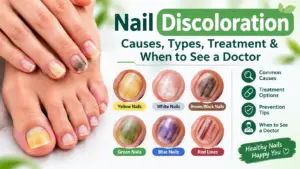
Common nail colors associated with different conditions include:
- Yellow nails
- White nails
- Brown or black nails
- Green nails
- Blue or purple nails
- Red or reddish-brown nail changes
Some discoloration grows out naturally as the nail grows, while other changes remain until the underlying problem is treated.
Common Causes of Nail Discoloration
There are many possible causes of discolored nails. Some are temporary and cosmetic, while others require medical treatment.
1. Nail Polish and Cosmetic Products
Frequent use of dark nail polish can leave nails with a yellow, orange, or brownish tint. This happens because pigments can stain the nail plate.
Acetone-based removers and other nail products may also contribute to dryness and changes in nail appearance.
If staining is caused by nail polish, the discoloration usually becomes less noticeable as the nail grows.
2. Fungal Nail Infection
A fungal nail infection, also called onychomycosis, is one of the most common medical causes of nail discoloration.
Infected nails may become:
- Yellow or white
- Thickened
- Brittle
- Crumbly
- Distorted
- Separated from the nail bed
Toenails are particularly susceptible because fungi thrive in warm, moist environments.
Treatment depends on the severity of the infection. Mild cases may sometimes be treated with topical antifungal medications, while more extensive infections may require prescription oral antifungal treatment.
3. Nail Trauma
Injury to a fingernail or toenail can cause temporary discoloration. For example, hitting your nail or wearing shoes that repeatedly put pressure on a toenail can cause bleeding underneath the nail.
This may produce a red, purple, brown, or black area called a subungual hematoma.
As the nail grows, the discolored area usually moves toward the tip. However, significant trauma, severe pain, or a nail that is lifting from the nail bed may require medical evaluation.
4. Nutritional Deficiencies
Certain nutritional deficiencies may affect nail appearance. Iron deficiency, for example, can sometimes be associated with changes in nail shape or texture.
Other nutrients, including zinc and certain vitamins, are important for normal nail growth.
However, nail discoloration by itself does not prove that you have a nutritional deficiency. Taking supplements without identifying a deficiency may not correct the problem and can sometimes cause harm.
5. Aging
Nails naturally change as people get older. They may become thicker, more brittle, or develop a yellowish appearance.
Slower nail growth and changes in nail structure can also make discoloration more noticeable.
Although some age-related changes are normal, a new or rapidly changing dark streak should still be evaluated.
6. Smoking
Tobacco smoke can stain fingernails and fingertips yellow or brown. The discoloration may become more noticeable with long-term smoking.
Reducing or stopping smoking can prevent further staining and provides many other health benefits.
7. Bacterial Infections
Some bacterial infections can cause unusual nail colors. For example, certain bacteria can produce a greenish discoloration, particularly when the nail has separated from the nail bed or is frequently exposed to moisture.
A green nail should not automatically be assumed to be fungal. Different infections require different treatments.
8. Medical Conditions
Certain systemic conditions can sometimes affect nail color or appearance.
Examples include:
- Psoriasis
- Eczema
- Liver disease
- Kidney disease
- Thyroid disorders
- Diabetes
- Circulation problems
- Certain respiratory conditions
Nail changes are usually not enough to diagnose these conditions, but persistent changes combined with other symptoms may warrant medical evaluation.
Types of Nail Discoloration
The color and pattern of nail discoloration can provide clues about what is happening.
Yellow Nails
Yellow nails can result from nail polish staining, fungal infections, smoking, aging, or certain medical conditions.
When yellow nails are also thick and crumbly, a fungal infection becomes more likely.
White Nails
White spots are often caused by minor trauma to the nail. These spots typically grow out naturally.
However, larger areas of white discoloration or changes affecting several nails can have different causes and should be assessed if persistent.
Brown or Black Nails
Dark discoloration can occur after an injury when blood collects underneath the nail.
However, a new dark vertical streak that does not appear to be related to trauma deserves medical attention, especially if it changes in size, color, or shape.
Rarely, dark pigmentation under a nail can be associated with melanoma of the nail unit.
Green Nails
Green discoloration can occur with certain bacterial infections, particularly when moisture becomes trapped underneath or around the nail.
Keeping the affected area dry and getting an appropriate diagnosis can help prevent the problem from worsening.
Blue or Purple Nails
Blue or purple nails can sometimes occur after cold exposure or injury.
Persistent blue discoloration, especially when several nails or the lips and skin are also turning blue, can indicate reduced oxygen or circulation and requires prompt medical assessment.
Red or Reddish-Brown Lines
Small reddish-brown lines underneath the nail can sometimes occur after trauma. These are known as splinter hemorrhages.
When multiple nails are affected without an obvious injury, a doctor may recommend further evaluation depending on the overall clinical picture.
Nail Discoloration Treatment
Treatment depends entirely on the underlying cause.
For Nail Staining
If cosmetic products are responsible, taking a break from dark nail polish may allow the discoloration to grow out.
Avoid aggressively buffing the nail because excessive filing can weaken the nail plate.
For Fungal Infections
Fungal nail infections may require antifungal treatment. Depending on the infection, treatment may include prescription topical medications or oral antifungal drugs.
Toenails grow slowly, so even after the infection is controlled, it can take many months for a healthy nail to completely replace the damaged portion.
For Bacterial Infections
Bacterial nail infections need appropriate diagnosis and treatment. Keeping nails clean and dry can help reduce moisture-related problems, but antibiotics or other treatment may sometimes be necessary.
After Nail Trauma
Minor bruising usually grows out with the nail. Do not attempt to puncture or drain a severely bruised nail yourself.
If there is severe pain, significant swelling, a deep cut, or suspected fracture, seek medical care.
For Underlying Medical Conditions
When nail changes are related to another health condition, treating the underlying problem may improve nail appearance over time.
A healthcare professional may perform an examination and, when appropriate, order blood tests or other investigations.
How to Prevent Nail Discoloration
You can reduce your risk of many nail problems with simple nail-care habits.
Keep Nails Clean and Dry
Wash your hands and feet regularly and dry them thoroughly, especially between the toes.
Avoid Sharing Nail Tools
Do not share nail clippers, files, or other personal grooming tools because infections can spread through contaminated equipment.
Wear Properly Fitting Shoes
Shoes that are too tight can repeatedly traumatize toenails. Choose footwear that gives your toes enough room.
Protect Your Nails
Wear gloves when working with cleaning chemicals, gardening materials, or substances that can irritate the skin and nails.
Limit Continuous Nail Polish Use
Giving your nails occasional breaks from polish can help you notice changes in nail color, texture, or shape.
Do Not Pick or Bite Your Nails
Picking, biting, or aggressively pushing back cuticles can damage the nail and surrounding skin, increasing the risk of infection.
When Should You See a Doctor?
Not every change in nail color is an emergency, but certain signs should be evaluated by a healthcare professional.
Make an appointment if:
- Nail discoloration persists without an obvious cause.
- A nail becomes increasingly thick, brittle, or distorted.
- Several nails suddenly change color.
- The nail becomes painful, swollen, or starts draining fluid.
- A dark streak appears without a known injury.
- A dark streak becomes wider or changes in appearance.
- The discoloration extends onto the surrounding skin.
- You have diabetes or another condition that increases the risk of foot complications.
- Nail changes occur together with other unexplained symptoms.
When Is Nail Discoloration an Emergency?
Seek urgent medical attention if a nail change occurs with severe injury, intense pain, significant bleeding, rapidly developing swelling, or signs of serious infection.
Persistent blue or purple discoloration affecting the nails together with breathing difficulty, chest pain, confusion, or blue lips also requires urgent medical attention.
Can Nail Discoloration Go Away on Its Own?
Some types of discoloration disappear naturally. For example, minor bruising may move toward the nail tip as the nail grows.
Staining caused by nail polish may also gradually disappear.
However, fungal infections, bacterial infections, and some medical conditions generally require treatment of the underlying cause.
If the discoloration continues to return or does not improve as the nail grows, professional evaluation can help determine why it is happening.
Frequently Asked Questions
Is nail discoloration always a sign of disease?
No. Nail discoloration can result from nail polish, minor trauma, aging, or other harmless causes. Persistent or unexplained changes should be evaluated because some nail changes can be associated with infections or medical conditions.
What causes yellow nails?
Yellow nails can be caused by nail polish staining, fungal infections, smoking, aging, and certain health conditions. Thick, crumbly yellow toenails are commonly associated with fungal infection.
Can nail fungus cause discoloration?
Yes. Nail fungus can make nails yellow, white, brownish, or sometimes darker. It may also cause thickening, brittleness, crumbling, and separation from the nail bed.
Is a black line on the nail always dangerous?
No. Dark lines can have several causes, including pigmentation and previous injury. However, a new or changing dark vertical streak should be examined by a healthcare professional because, in rare cases, it can be associated with nail melanoma.
How long does nail discoloration take to disappear?
The time varies depending on the cause. Even after an infection or injury has been treated, nails grow slowly, so normal color may take several months to return.
Final Thoughts
Nail discoloration can have many causes, ranging from simple cosmetic staining to fungal infections, trauma, and less common medical conditions. The color, pattern, number of nails affected, and other symptoms can provide useful clues, but nail appearance alone cannot establish a diagnosis.
Good nail hygiene, avoiding repeated trauma, keeping feet dry, and paying attention to new changes can help protect nail health. If discoloration is persistent, unexplained, painful, or associated with a changing dark streak, professional evaluation is the safest approach.