
Introduction
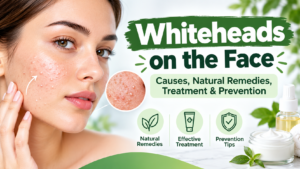
Whiteheads on the face are one of the most common types of acne and can affect teenagers and adults. They often appear as small, white or flesh-colored bumps on areas such as the forehead, nose, cheeks, chin, and jawline.
When oil, dead skin cells, and other debris clog a pore, whiteheads result. A whitehead appears white or skin-colored because, in contrast to blackheads, its opening stays closed.
Whiteheads can be annoying even though they are typically harmless, especially if they persist despite frequent cleaning. The good news is that they can be lessened with good habits, appropriate acne treatments, and a regular skincare regimen.
This guide explains the causes of whiteheads on the face, natural ways to support healthier skin, effective treatment options, and practical prevention tips.
What Are Whiteheads?
Whiteheads are a type of closed comedone. They form when oil and dead skin cells block a hair follicle or pore.
When the opening of the pore stays closed, the trapped material creates a small raised bump. Unlike blackheads, whiteheads do not turn dark because the contents are not exposed to air in the same way.
Whiteheads may be:
- Small and flesh-colored
- White or pale
- Smooth or slightly raised
- More noticeable under certain lighting
- Present individually or in clusters
They are different from inflamed acne such as papules and pustules, which are usually red, swollen, and sometimes painful.
What Causes Whiteheads on the Face?
Several factors can contribute to whiteheads.
1. Excess Oil Production
Sebum is an oily substance naturally produced by the skin. It helps keep the skin moisturized, but excess sebum can contribute to clogged pores.
People with naturally oily or combination skin may be more likely to develop whiteheads, particularly around the forehead, nose, and chin.
2. Dead Skin Cell Buildup
Skin naturally sheds dead cells. When dead skin cells accumulate and mix with sebum, they can block hair follicles.
Using appropriate exfoliating ingredients may help prevent this buildup without requiring aggressive physical scrubbing.
3. Hormonal Changes
Hormonal changes can influence oil production and acne.
Whiteheads may become more noticeable during puberty, menstrual cycles, pregnancy, or other periods of hormonal fluctuation.
Hormonal acne does not always appear as deep cysts. Some people may experience increased clogged pores and whiteheads instead.
4. Comedogenic Skincare Products
Some heavy skincare, makeup, sunscreen, and hair products may contribute to clogged pores in acne-prone individuals.
This does not mean every oily or moisturizing product causes acne. However, if whiteheads started appearing after introducing a new product, consider whether the product could be contributing.
Look for products labeled non-comedogenic when possible.
5. Makeup
Foundation, concealer, primer, and other cosmetic products can sometimes contribute to clogged pores.
Sleeping with makeup on may increase the amount of residue remaining on the skin.
Removing makeup thoroughly at the end of the day is an important part of an acne-friendly routine.
6. Sweat and Friction
Sweat, heat, and friction may aggravate acne in some people.
Tight hats, helmets, masks, sports equipment, and other items that repeatedly rub against the skin may contribute to clogged pores.
7. Stress
Stress is not necessarily the direct cause of whiteheads, but it may worsen acne in some people.
Stress can influence hormones and inflammatory processes. It may also lead to habits such as touching or picking the face more frequently.
Where Do Whiteheads Usually Appear?
Whiteheads can develop almost anywhere there are hair follicles, but they are especially common in areas with more oil glands.
Forehead
Whiteheads on the forehead may be associated with excess oil, sweat, hair products, or styling products.
Nose
The nose naturally contains many oil glands, making clogged pores common in this area.
Cheeks
Cheek whiteheads may be related to skincare products, makeup, friction, or hormonal changes.
Chin and Jawline
Whiteheads around the chin and jawline can sometimes occur alongside hormonal acne.
However, the location of acne alone cannot confirm a specific cause.
Natural Remedies for Whiteheads
Many people search for natural remedies for whiteheads. Gentle, low-risk habits can support skin health, but natural does not automatically mean safe or effective.
1. Use a Gentle Cleansing Routine
Wash your face with a gentle cleanser rather than harsh soap or abrasive scrubs.
Cleansing helps remove excess oil, sunscreen, makeup, and environmental debris.
Avoid washing the face excessively because over-cleansing can cause dryness and irritation.
2. Use a Warm Compress
A comfortably warm, clean washcloth can be placed on the face for a few minutes.
This can feel soothing and may soften surface buildup, but it does not permanently remove whiteheads or “open” pores.
Avoid very hot water because it can irritate the skin.
3. Choose Non-Comedogenic Moisturizers
Keeping the skin hydrated can make an acne routine easier to tolerate.
Choose a lightweight moisturizer that is labeled non-comedogenic and suitable for your skin type.
Ingredients such as glycerin and ceramides can support the skin barrier.
4. Keep Hair Products Away From the Face
Hair oils, pomades, conditioners, and styling products can transfer to the forehead and cheeks.
If whiteheads are concentrated around the hairline or forehead, consider reducing direct contact between styling products and facial skin.
5. Maintain Clean Skin-Contact Items
Regularly clean items that frequently touch your face, such as phones, makeup brushes, pillowcases, and reusable applicators.
This alone may not cure whiteheads, but reducing buildup and irritation can be a useful part of overall skincare.
Be Careful With DIY Remedies
Lemon juice, baking soda, toothpaste, undiluted essential oils, and harsh scrubs are popular online but can irritate or damage the skin.
A remedy being described as “natural” does not guarantee that it is appropriate for facial skin.
Effective Treatments for Whiteheads
If whiteheads continue despite basic skincare, evidence-based acne ingredients may help.
Salicylic Acid
Salicylic acid is a beta hydroxy acid that can help exfoliate inside pores.
It is particularly useful for clogged pores, blackheads, and whiteheads.
Start gradually if your skin is sensitive, and avoid combining multiple strong exfoliating products at once.
Adapalene
Adapalene is a topical retinoid that helps normalize the shedding of skin cells and prevent clogged pores.
It is commonly used for acne and can be particularly helpful when whiteheads repeatedly develop.
It may cause dryness or irritation when first introduced, so gradual use and moisturizer can improve tolerability.
If you are pregnant or planning pregnancy, speak with a healthcare professional before using topical retinoids.
Benzoyl Peroxide
Benzoyl peroxide is commonly used for inflammatory acne because it can reduce acne-associated bacteria and inflammation.
It is generally more useful when whiteheads occur alongside red or inflamed pimples rather than as the only treatment for simple clogged pores.
It may cause dryness and can bleach fabrics.
Azelaic Acid
Azelaic acid can help with acne and may also be useful for post-acne discoloration.
It can be an option for people who want a generally well-tolerated acne ingredient, although individual responses vary.
A Simple Skincare Routine for Whiteheads
You do not need a complicated routine to manage whiteheads.
Morning
- Gentle cleanser
- Acne treatment if appropriate
- Lightweight moisturizer
- Broad-spectrum SPF 30 or higher sunscreen
Evening
- Remove makeup and sunscreen
- Gentle cleanser
- Salicylic acid or another appropriate acne treatment
- Moisturizer
If using adapalene, follow the product directions or your healthcare professional’s instructions rather than layering it with numerous irritating active ingredients.
Introduce one new active product at a time so you can determine how your skin responds.
How to Prevent Whiteheads on the Face
Prevention focuses on keeping pores from repeatedly becoming clogged.
Avoid Heavy, Pore-Clogging Products
Choose non-comedogenic skincare and makeup products when possible.
Remove Makeup Before Bed
Makeup should be removed before sleeping. Follow with gentle cleansing rather than aggressive scrubbing.
Don’t Pick or Squeeze Whiteheads
It can be tempting to squeeze a small white bump, but picking can increase inflammation and potentially cause dark marks or scarring.
Professional extraction may be safer than trying to remove stubborn comedones yourself.
Wash After Heavy Sweating
After exercise or heavy sweating, gently cleanse the skin or rinse it when appropriate.
Keep Pillowcases Clean
Pillowcases can collect sweat, oil, hair products, and skincare residue. Washing them regularly is a simple hygiene habit.
Clean Makeup Brushes
Dirty makeup tools can accumulate product residue, oil, and microorganisms. Clean them regularly according to the type of product and tool.
Don’t Over-Exfoliate
More exfoliation does not necessarily mean clearer skin.
Using too many acids, scrubs, or active ingredients can damage the skin barrier and cause irritation. A simple, consistent routine is usually easier to maintain.
How Long Does It Take to Get Rid of Whiteheads?
Whiteheads generally do not disappear overnight.
Depending on the treatment and severity of acne, noticeable improvement may take several weeks. Consistency is more important than constantly changing products.
If a product causes significant burning, swelling, or severe irritation, stop using it and seek professional advice if symptoms persist.
When Should You See a Dermatologist?
Consider seeing a dermatologist if:
- Whiteheads persist despite consistent skincare
- Acne is spreading or becoming severe
- You develop painful nodules or cysts
- Acne is leaving scars
- Dark marks are accumulating
- Over-the-counter treatments are not helping
- You are unsure whether the bumps are actually acne
- Acne is affecting your confidence or daily life
A dermatologist can determine whether the bumps are whiteheads or another skin condition and recommend an appropriate treatment plan.
Whiteheads vs. Other Small Facial Bumps
Not every small white or flesh-colored bump is a whitehead.
Similar-looking bumps may include:
- Milia
- Folliculitis
- Irritant reactions
- Certain types of dermatitis
- Sebaceous hyperplasia
- Other benign skin growths
If bumps do not respond to normal acne treatment or have an unusual appearance, professional evaluation can help determine the correct diagnosis.
Frequently Asked Questions
What is the fastest way to get rid of whiteheads?
There is no guaranteed overnight solution. A consistent routine containing an appropriate acne ingredient such as salicylic acid or adapalene can help reduce whiteheads over time.
Can toothpaste remove whiteheads?
Toothpaste is not recommended as a facial acne treatment. It can contain ingredients that irritate or dry the skin and may make redness worse.
Does drinking more water remove whiteheads?
Adequate hydration is important for overall health, but simply drinking extra water is not a proven treatment for whiteheads.
Should I squeeze whiteheads?
It is better to avoid squeezing them. Picking can increase inflammation and raise the risk of dark marks and scarring.
Are whiteheads caused by dirty skin?
No. Whiteheads are primarily related to clogged hair follicles, oil production, and abnormal shedding of skin cells. Poor hygiene is not the sole cause of acne.
Can oily skin cause whiteheads?
Oily skin can contribute to clogged pores because excess sebum can mix with dead skin cells. However, people with dry or combination skin can also develop whiteheads.
Is salicylic acid good for whiteheads?
Yes, salicylic acid is commonly used for clogged pores and can be helpful for whiteheads. It should be introduced gradually to reduce the risk of irritation.
Final Thoughts
Whiteheads on the face are usually caused by clogged pores involving oil and dead skin cells. Hormonal changes, skincare products, makeup, sweat, friction, and other factors can contribute to recurring breakouts.
A gentle cleanser, non-comedogenic moisturizer, sunscreen, and a suitable acne treatment can form the foundation of an effective routine. Salicylic acid and adapalene are commonly used options for clogged pores, while azelaic acid may provide another treatment option depending on individual skin needs.
Natural skincare habits such as avoiding harsh DIY remedies, cleaning makeup tools, keeping hair products away from the face, and avoiding picking can also support healthier-looking skin.
Most importantly, give your skincare routine time to work. If whiteheads are persistent, severe, painful, or leaving scars, a dermatologist can help identify the cause and recommend treatment tailored to your skin.