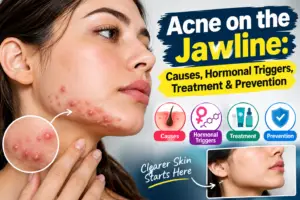

Acne on the jawline is a common skin concern that can be especially frustrating when breakouts keep returning in the same area. Jawline acne may appear as small bumps, blackheads, whiteheads, red pimples, or deeper and painful cysts.
Although jawline acne is frequently linked to hormonal shifts, hormones are not the sole potential cause. Breakouts can also be caused by skincare products, friction, excess oil, plugged pores, stress, drugs, and lifestyle choices.
It can be simpler to select the right treatment and avoid future flare-ups if you know why acne appears around the jawline. The common causes of jawline acne, hormonal triggers, successful treatments, preventative advice, and when to consult a dermatologist are all covered in this article.
What Is Acne on the Jawline?
Acne on the jawline refers to pimples and other acne lesions that develop along the lower face, including the jaw, chin, and sometimes the area below the cheeks.
Jawline acne can range from mild clogged pores to inflammatory pimples and painful cysts. Some people experience occasional breakouts, while others notice persistent acne that returns in the same locations.
The skin around the jawline contains oil-producing glands, so excess sebum can contribute to blocked pores. When oil mixes with dead skin cells, pores can become clogged, creating an environment where inflammation and acne can develop.
Common Causes of Jawline Acne
Several factors can contribute to breakouts around the jawline. Identifying the possible trigger can help you choose a more suitable skincare routine.
1. Hormonal Changes
Hormonal fluctuations are one of the most commonly discussed causes of jawline acne.
Androgens can stimulate the sebaceous glands to produce more oil. Increased oil production can contribute to clogged pores and inflammatory acne.
Hormonal acne may become more noticeable during:
- Puberty
- Menstrual cycles
- Pregnancy
- Perimenopause
- Menopause
- Starting or stopping certain hormonal medications
Some people notice that jawline pimples appear repeatedly at particular times of the month.
2. Excess Oil and Clogged Pores
The skin naturally produces sebum, an oily substance that helps protect the skin. However, excess oil can combine with dead skin cells and block pores.
Blocked pores may initially appear as blackheads, whiteheads, or small bumps. Some clogged pores can later become inflamed pimples.
If your jawline is oily or you frequently use heavy creams or makeup in this area, clogged pores may become more likely.
3. Hair and Skincare Products
Products that come into contact with the lower face can sometimes contribute to breakouts.
Some people who are prone to acne may have issues with heavy moisturisers, facial oils, cosmetics, sunscreen, beard products, hair styling products, and cleansing products.
This does not imply that acne is caused by all oily or moisturising products. However, if you frequently experience clogged pores, selecting non-comedogenic skincare products could be beneficial.
4. Friction and Touching
Repeated friction can irritate the skin and potentially contribute to acne.
Possible sources include:
- Tight face coverings
- Helmet straps
- Phone contact
- High collars
- Frequent touching
- Shaving irritation
Touching your face repeatedly can also transfer oil and other substances to the skin.
5. Shaving and Hair Removal
Shaving can irritate the skin around the jaw and chin. Ingrown hairs may also produce small red bumps that can sometimes be mistaken for acne.
Using a clean razor, avoiding excessive pressure, and shaving in a way that minimizes irritation may help reduce shaving-related bumps.
If bumps consistently appear after hair removal, a dermatologist can help determine whether they are acne, ingrown hairs, folliculitis, or another condition.
Is Jawline Acne Always Hormonal?
No. Acne on the jawline is not always caused by hormones.
Hormonal changes can play an important role, particularly when acne repeatedly appears around the chin and jawline or follows a menstrual pattern. However, clogged pores, cosmetics, friction, shaving, stress, and other factors can also contribute.
The location of acne alone cannot confirm that hormones are responsible.
If jawline acne is persistent, severe, painful, or accompanied by other symptoms, a healthcare professional can help determine whether hormonal factors or another condition may be involved.
Signs That Jawline Acne May Be Hormonal
Hormonal acne may have certain patterns, although these signs do not provide a diagnosis by themselves.
You may notice:
- Breakouts concentrated around the chin and jaw
- Deep or painful pimples
- Acne that repeatedly returns
- Breakouts that become worse around your menstrual period
- Persistent acne despite a consistent skincare routine
- Adult acne that develops or becomes more noticeable later in life
If you have sudden or persistent adult acne, especially alongside other hormonal symptoms, discuss it with a healthcare professional.
Best Treatments for Acne on the Jawline
Treatment depends on the type and severity of acne. Mild breakouts may improve with over-the-counter ingredients, while moderate or severe acne may require professional treatment.
Salicylic Acid
Salicylic acid helps exfoliate inside pores and can be useful for blackheads, whiteheads, and mild clogged-pore acne.
It can be introduced gradually to reduce the chance of dryness or irritation.
Benzoyl Peroxide
Benzoyl peroxide is commonly used for inflammatory acne. It can help reduce acne-associated bacteria and inflammation.
Because it may cause dryness and irritation, follow the product instructions and consider using a gentle moisturizer.
Benzoyl peroxide can also bleach fabrics, so be careful with towels, pillowcases, and clothing.
Adapalene
Adapalene is a topical retinoid that helps prevent clogged pores and treat acne.
Instead than merely using it when a pimple occurs, it is frequently utilised regularly. When starting treatment, some people feel dry or irritated.
Before using topical retinoids, talk to your doctor about treating acne if you are pregnant or intend to become pregnant.
Prescription Treatments
If over-the-counter products are not controlling persistent jawline acne, a dermatologist may recommend prescription treatment.
Depending on the type and severity of acne, options can include prescription topical medications, oral antibiotics for appropriate cases, hormonal treatments, or other therapies.
For severe nodular or cystic acne, a dermatologist may discuss stronger treatments such as isotretinoin.
Simple Skincare Routine for Jawline Acne
A consistent routine can help reduce irritation and support acne treatment.
Morning Routine
- Wash with a gentle cleanser.
- Apply an appropriate acne treatment if recommended.
- Use a lightweight, non-comedogenic moisturizer.
- Finish with broad-spectrum sunscreen.
Evening Routine
- Remove makeup and sunscreen.
- Cleanse gently.
- Apply your acne treatment.
- Use moisturizer.
Avoid introducing several strong acne products at the same time. If you add multiple active ingredients at once, it can become difficult to determine what is helping or causing irritation.
How to Prevent Jawline Acne
Preventing every breakout may not be possible, particularly when hormones or genetics play a role. However, several habits can help reduce unnecessary triggers.
Keep Your Skin Clean Without Overwashing
Wash your face gently, especially after sweating. Scrubbing harder does not remove acne more effectively and may irritate the skin.
Choose Non-Comedogenic Products
Look for moisturizers, sunscreen, makeup, and other skincare products labeled non-comedogenic when possible.
Keep Phones and Frequently Touched Items Clean
Your phone regularly touches your face and can accumulate oils and residue. Cleaning it regularly may help reduce unnecessary contact with the skin.
Avoid Picking Pimples
Squeezing or picking jawline acne can increase inflammation and may increase the risk of dark marks and scarring.
Allow pimples to heal rather than repeatedly touching them.
Change Pillowcases Regularly
Oil, sweat, skincare products, and hair products can accumulate on pillowcases. Regular washing can help maintain cleaner contact between your skin and bedding.
Be Careful With Hair Products
If you notice breakouts around your hairline and jaw, review the products that come into contact with your face. Keep heavy hair products away from acne-prone skin when possible.
Can Diet Cause Jawline Acne?
Diet may influence acne in some individuals, but acne usually has multiple contributing factors.
Research has explored possible associations between acne and dietary patterns, including high-glycemic diets and some dairy consumption. However, individual responses vary.
Rather than eliminating large numbers of foods without a clear reason, focus on an overall balanced diet. If you strongly suspect a particular food is contributing to your breakouts, discuss your concerns with a healthcare professional or registered dietitian.
How Long Does Jawline Acne Take to Improve?
Acne treatment usually takes time. A few days of treatment may not produce a noticeable change.
Before noticeable results are seen, many acne treatments must be used consistently for many weeks. Some patients may feel dryness or moderate discomfort while beginning medication.
Too many product changes can make it more difficult to assess the effectiveness of a treatment.
Stop using the irritating substance and consult a doctor if your skin becomes extremely irritated, swollen, painful, or blistered.
When Should You See a Dermatologist?
Consider seeing a dermatologist if your acne on the jawline continues despite consistent skincare or becomes increasingly difficult to control.
Professional evaluation is especially important if you have:
- Deep or painful acne
- Cysts or nodules
- Acne scars
- Frequent recurring breakouts
- Persistent dark marks
- Sudden adult-onset acne
- Acne that does not improve with over-the-counter treatment
- Breakouts that significantly affect your daily life or confidence
A dermatologist can determine the type of acne and recommend treatment based on your skin and medical history.
Can Jawline Acne Leave Scars?
Yes. Deep inflammatory acne can damage the skin and potentially result in permanent acne scars.
Picking, squeezing, or repeatedly irritating pimples can make inflammation worse and may increase the chance of marks or scars.
The best approach to reducing acne scars is often to control active acne early and avoid picking at breakouts.
If scars have already developed, dermatologists can evaluate options such as chemical peels, microneedling, laser procedures, or other treatments depending on the type and severity of scarring.
Frequently Asked Questions
Why am I suddenly getting acne on my jawline?
Sudden jawline acne can have several possible causes, including hormonal fluctuations, new skincare or hair products, friction, shaving, stress, medications, or changes in your usual routine.
Is jawline acne a sign of hormonal imbalance?
Not necessarily. Hormones can contribute to jawline acne, but the location of acne alone cannot confirm a hormonal imbalance.
How can I get rid of jawline acne quickly?
There is no guaranteed overnight treatment for acne. Consistent use of appropriate acne ingredients such as salicylic acid, benzoyl peroxide, or adapalene may help over time, depending on your skin and the type of acne.
Should I pop a jawline pimple?
It is better not to pop or squeeze pimples. Manipulating acne can increase inflammation and may contribute to dark marks or scarring.
When should I see a dermatologist for jawline acne?
See a dermatologist if acne is painful, deep, persistent, leaving scars, suddenly developing in adulthood, or not improving with appropriate over-the-counter treatment.
Final Thoughts
Acne on the jawline can have several causes, and hormonal changes are only one possible factor. Excess oil, clogged pores, skincare products, shaving, friction, stress, and other triggers may also contribute to recurring breakouts.
A gentle skincare routine, non-comedogenic products, appropriate acne treatments, and consistent habits can help manage mild jawline acne. Avoid picking or squeezing pimples, and give treatments enough time to work.
If your jawline acne is painful, persistent, severe, or leaving scars, professional evaluation can help identify the underlying factors and provide a personalized treatment plan.