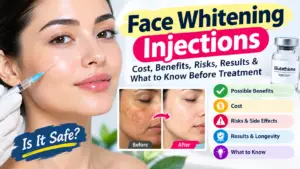

Face Whitening Injections: Cost, Benefits, Risks, Results & What to Know Before Treatment
Face Whitening Injections: An Overview
Face whitening injections are cosmetic treatments promoted for making the skin appear lighter, brighter, or more even-toned. They are often marketed as a quick solution for pigmentation, dull skin, dark spots, and uneven complexion. Many clinics and beauty providers promote injectable products containing glutathione, sometimes combined with vitamin C or other ingredients.
But it’s crucial to realize that skin-lightening injections are more than just a cosmetic procedure. The substance used, the patient’s health, and the manner in which the treatment is administered can all affect the safety, efficacy, appropriate dosage, and long-term effects.
The body naturally produces glutathione, an antioxidant. Although its possible effects on skin pigmentation have been investigated, there is still little evidence to support injectable glutathione specifically for cosmetic skin whitening. Concerns regarding the safety of unapproved injectable skin-lightening products have also been voiced by certain medical associations and health authorities.
Before making a choice, it is crucial to comprehend the possible advantages, risks, expenses, alternatives, and medical considerations of face whitening injections.
What Are Face Whitening Injections?
Face whitening injections are injectable cosmetic treatments marketed to reduce pigmentation and produce a lighter or brighter-looking complexion.
One of the most commonly promoted ingredients is glutathione. It is an antioxidant involved in several biological processes, including protection of cells from oxidative stress.
Some providers claim that glutathione can influence melanin production, potentially resulting in lighter-looking skin. Injections may be administered intravenously or intramuscularly depending on the product and provider.
Other ingredients may be included in some formulations, such as vitamin C. However, the composition of products can differ considerably, particularly when treatments are obtained from unregulated clinics or non-medical sources.
Because injectable products enter the body directly, they should not be treated like ordinary skincare products.
How Do Face Whitening Injections Work?
The proposed mechanism behind glutathione-based skin-lightening treatments involves the production of melanin, the pigment responsible for much of the color of the skin, hair, and eyes.
Glutathione may affect pathways involved in melanin production and has been investigated for its potential to shift pigmentation toward lighter forms of melanin.
The actual cosmetic outcomes, however, can differ greatly from person to person. Skin color and pigmentation can be influenced by a number of factors, including genetics, sun exposure, hormonal changes, pre-existing pigmentation disorders, medications, and general health.
Additionally, it’s critical to distinguish between permanently altering a person’s natural skin tone and brightening the appearance of uneven pigmentation. Claims that skin can be permanently whitened by injections should be treated with caution.
Potential Benefits of Face Whitening Injections
People seek whitening injections for several cosmetic reasons. Possible reported benefits include:
1. Brighter-Looking Skin
Some people report that their complexion appears brighter or more radiant after treatment. This effect may be related to changes in pigmentation or overall skin appearance.
2. Reduction in Hyperpigmentation
Glutathione-based treatments are sometimes promoted for reducing the appearance of pigmentation and dark areas. However, evidence for injectable glutathione as a reliable treatment for hyperpigmentation is not strong enough to guarantee results.
3. More Even Skin Tone
People with uneven pigmentation may seek treatment to create a more uniform complexion.
4. Antioxidant Effects
Glutathione is an antioxidant naturally produced by the body. However, the fact that glutathione has antioxidant functions does not automatically establish that injections are safe or effective for cosmetic whitening.
5. Cosmetic Confidence
Some people may feel more confident when pigmentation concerns improve. Nevertheless, cosmetic treatments should be approached with realistic expectations rather than promises of dramatic or permanent transformation.
Face Whitening Injection Cost
The cost of face whitening injections varies considerably depending on several factors, including the product used, dosage, number of sessions, clinic location, medical supervision, and whether additional treatments are included.
In Pakistan and other countries, clinics may advertise different packages ranging from individual sessions to multiple-session programs. Prices can therefore vary substantially.
Before paying for treatment, ask the provider:
- What exact medication or injectable product will be used?
- What is the dose?
- Is the product approved for the intended use?
- Who will administer the injection?
- How many sessions are recommended?
- Are consultation and follow-up included?
- What happens if you experience a side effect?
- Is the product sourced from a legitimate pharmaceutical supplier?
A very low price should not be the main reason for choosing an injectable cosmetic treatment. Product authenticity and medical safety are more important considerations.
Are Face Whitening Injections Safe?
Safety is one of the biggest concerns surrounding cosmetic skin-whitening injections.
Glutathione itself is naturally present in the body, but this does not mean that injecting glutathione for cosmetic purposes is automatically safe. The safety profile can depend on the formulation, route of administration, manufacturing quality, dose, and medical supervision.
There have also been reports and warnings concerning adverse reactions associated with injectable glutathione and improperly prepared or contaminated products.
Potential concerns include:
- Allergic reactions
- Skin reactions
- Breathing difficulties
- Abdominal discomfort
- Nausea
- Kidney-related complications
- Liver-related complications
- Infection from unsafe injection practices
- Contamination or poor-quality products
- Serious reactions to ingredients or additives
The risk may be greater when injections are purchased online, administered by unqualified individuals, or obtained from clinics that cannot provide reliable information about the product.
Side Effects of Face Whitening Injections
Possible side effects can range from mild to serious.
Some people may experience temporary discomfort at the injection site, nausea, headache, dizziness, or skin reactions.
More serious symptoms require immediate medical attention. These can include:
- Difficulty breathing
- Facial or throat swelling
- Severe rash
- Fainting
- Chest discomfort
- Severe abdominal pain
- Significant changes in urine output
- Signs of infection
Anyone experiencing a severe reaction after an injection should seek urgent medical care rather than waiting for the symptoms to disappear.
How Long Do Face Whitening Injection Results Last?
The duration of results is difficult to predict.
Some providers advertise long-lasting or permanent whitening, but such claims should be approached carefully. Skin pigmentation is influenced by genetics, ultraviolet exposure, hormones, inflammation, and other factors.
If a treatment produces a temporary change in pigmentation, the effect may diminish over time.
Sun exposure can also contribute to increased pigmentation, making consistent sun protection important for anyone dealing with hyperpigmentation.
There is no reliable guarantee that injectable whitening treatments will produce permanent changes in natural skin color.
Who Should Avoid Whitening Injections?
Injectable cosmetic treatments may not be appropriate for everyone.
A doctor should review your medical history before treatment, particularly if you:
- Are pregnant or breastfeeding
- Have kidney or liver disease
- Have a history of severe allergies
- Take multiple medications
- Have a chronic medical condition
- Have experienced reactions to injectable treatments
- Are considering treatment for an unexplained pigmentation problem
Children and teenagers should not receive cosmetic injections for skin whitening without a clear medical indication and appropriate specialist assessment.
What to Know Before Treatment
Before considering face whitening injections, schedule a consultation with a qualified medical professional.
Ask for the exact name and manufacturer of the product. You should also ask whether the product is approved by the relevant regulatory authority for the intended use.
Do not rely solely on before-and-after photographs. Lighting, camera settings, filters, makeup, and photo editing can make results look substantially different from real-life outcomes.
A qualified professional should also discuss alternatives and explain realistic expectations rather than promising guaranteed whitening.
Safer Alternatives for Uneven Skin Tone
If your main concern is dark spots, melasma, acne marks, or uneven pigmentation, there are several established approaches that may be considered depending on the cause.
Daily Sunscreen
Sun protection is one of the most important steps for preventing worsening pigmentation. A broad-spectrum sunscreen with adequate SPF can help reduce UV-related pigmentation.
Vitamin C
Topical vitamin C is commonly used in skincare routines aimed at improving the appearance of uneven pigmentation and supporting antioxidant protection.
Niacinamide
Niacinamide may help improve the appearance of uneven skin tone and is generally well tolerated by many people when used appropriately.
Retinoids
Topical retinoids can support skin cell turnover and may be useful for certain pigmentation concerns. They should be used appropriately because irritation can sometimes worsen pigmentation.
Professional Dermatological Treatments
Depending on the diagnosis, a dermatologist may recommend treatments such as chemical peels, prescription medications, or certain laser procedures.
The appropriate treatment depends on the underlying cause rather than simply the desire for lighter skin.
Face Whitening Injections vs. Topical Skincare
Injectable treatments and topical skincare are very different.
Topical products are applied to the surface of the skin and generally have a different safety profile from medications injected into the bloodstream or tissues.
For common concerns such as mild pigmentation, sun damage, or uneven tone, a dermatologist may recommend topical treatment and sun protection before considering more invasive procedures.
Injectables should never be considered automatically superior simply because they are more invasive.
How to Choose a Safe Clinic
If you are considering any injectable cosmetic treatment, choosing a qualified provider is extremely important.
Look for a properly licensed medical professional working in an appropriate clinical environment.
Before treatment, confirm:
- The provider’s medical credentials
- The product’s name and manufacturer
- Product packaging and expiration date
- Proper storage conditions
- Sterile injection equipment
- Emergency procedures
- Follow-up arrangements
Avoid providers who refuse to tell you what is being injected or who promise guaranteed results.
You should also be cautious about treatments advertised through social media with dramatic claims such as “permanent whitening,” “100% safe,” or “instant results.”
Frequently Asked Questions
Are face whitening injections permanent?
No permanent result should be assumed. Skin pigmentation can change over time because of sun exposure, hormones, inflammation, genetics, and other factors.
How many whitening injections are needed?
There is no universally established number of injections for cosmetic skin whitening. Treatment schedules advertised by clinics may vary, and a medical professional should evaluate whether the treatment is appropriate.
Are glutathione injections FDA-approved for skin whitening?
Glutathione may have legitimate medical uses in some settings, but that does not mean injectable glutathione is approved specifically for cosmetic skin whitening. Regulatory status varies by country and product.
Can whitening injections remove dark spots?
They are sometimes marketed for pigmentation, but injectable glutathione is not an established first-line treatment for every type of dark spot. The cause of pigmentation should be identified before treatment.
Can I use skincare products with whitening injections?
Combining treatments should be discussed with a dermatologist or qualified medical professional. Some skincare ingredients can cause irritation, which may worsen pigmentation.
Final Thoughts
Face whitening injections are widely promoted as a fast method for achieving lighter or brighter skin, particularly treatments containing glutathione. However, the evidence for cosmetic injectable glutathione remains limited, and potential risks should not be ignored.
The cost, results, and duration of treatment can vary significantly, and there is no reliable guarantee of permanent skin whitening. Unregulated products and injections administered by unqualified providers can create additional health risks.
If you are concerned about pigmentation, dark spots, or uneven skin tone, the safest approach is to identify the underlying cause with a qualified dermatologist. Evidence-based options such as sunscreen, appropriate topical skincare, prescription treatments, and professionally supervised procedures may be more suitable depending on your condition.
Your skin does not need to be lighter to be healthy. The goal of treatment should be healthy skin, appropriate management of pigmentation, and realistic expectations rather than chasing an unsafe or guaranteed change in natural skin color.