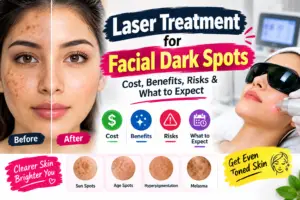

Laser Treatment for Facial Dark Spots: Cost, Benefits, Risks & What to Expect
Dark spots, sun spots, age spots, and other forms of facial pigmentation are common skin concerns. They can develop after sun exposure, acne, inflammation, hormonal changes, or simply as the skin ages. While topical skincare products can gradually fade some types of pigmentation, laser treatment for facial dark spots is another option that may provide faster improvement for certain patients.
Sun and age spots are among the pigmentation issues that can be addressed with laser and light treatments; however, the best course of action will depend on your skin type and the origin of the discolouration.
This guide will describe how laser treatment for dark spots operates, as well as its prospective advantages, anticipated outcomes, recovery period, potential hazards, and cost-determining aspects.
What Causes Dark Spots on the Face?
Dark spots occur when certain areas of the skin produce or retain more melanin, the pigment responsible for skin color.
Common causes include:
- Sun exposure
- Post-inflammatory hyperpigmentation after acne or irritation
- Aging and sun spots
- Hormonal pigmentation such as melasma
- Skin injuries
- Certain medications
- Inflammation
- Picking or squeezing acne
People with medium to dark skin tones can be particularly prone to post-inflammatory hyperpigmentation. Finding the underlying cause is important because treating the pigmentation without addressing its trigger can allow new spots to develop.
What Is Laser Treatment for Facial Dark Spots?
Laser treatment uses concentrated light energy to target pigment or damaged areas of the skin. Depending on the technology used, the laser may target excess pigment directly or remove damaged outer layers of skin while encouraging the formation of new skin.
Laser resurfacing can improve the appearance of sun-damaged skin, age spots, blemishes, and other facial imperfections.
There is no single laser that is best for every dark spot. A dermatologist may select a treatment based on:
- The cause of pigmentation
- Your skin tone
- The depth of the pigment
- The size and location of the spots
- Previous treatments
- Your risk of post-treatment pigmentation
For this reason, a professional skin assessment should come before treatment.
Types of Laser Treatments Used for Dark Spots
Different laser and light-based technologies may be used for pigmentation and skin rejuvenation.
1. Non-Ablative Laser Treatments
Non-ablative lasers heat targeted areas without removing the entire outer layer of skin. They may involve less downtime than aggressive resurfacing procedures, although results and recovery depend on the specific device.
2. Ablative Laser Resurfacing
Ablative lasers remove damaged outer layers of skin. As the skin heals, newer skin forms over the treated area.
These treatments can address multiple concerns, including sun damage, pigmentation, scars, and texture, but they generally involve more recovery than less-invasive treatments.
3. Pigment-Targeting Lasers
Certain lasers are designed to target unwanted pigment. They may be considered for specific types of sun spots or other localized pigmentation.
The correct wavelength and settings are important, particularly for people with darker skin tones, because excessive heat or injury can sometimes trigger additional pigmentation.
Benefits of Laser Treatment for Dark Spots
One reason people consider laser treatment is that it can provide more targeted treatment than some conventional skincare products.
Potential benefits include:
Faster Improvement
For certain age spots, laser therapy may work more quickly than topical creams. The American Academy of Dermatology notes that one or two laser treatments can sometimes treat age spots, although treatment requirements vary by person and condition.
More Even-Looking Skin Tone
Reducing excess pigmentation can make the complexion appear more even.
Treatment of Multiple Concerns
Some laser resurfacing procedures can address pigmentation alongside concerns such as fine lines, sun damage, acne scars, and uneven skin texture.
Potentially Long-Lasting Results
Results can last for an extended period when the underlying cause of pigmentation is controlled. However, new dark spots can develop with continued sun exposure or other triggers.
Laser Treatment for Dark Spots Cost
The cost of laser treatment for facial dark spots varies considerably.
Factors that influence the price include:
- Type of laser
- Number of treatment sessions
- Size of the treatment area
- Clinic location
- Doctor’s experience
- Whether anesthesia or numbing is required
- Follow-up appointments
- Additional skincare or prescription products
As a U.S. benchmark, the American Society of Plastic Surgeons currently lists an average cost of $697 for laser skin treatments and $1,829 for skin resurfacing. These figures are averages and do not necessarily represent the price of treating facial dark spots specifically. Actual fees can vary substantially by treatment and location.
In other countries, including Pakistan, prices can differ significantly between clinics and cities. It is therefore better to request a consultation and a complete treatment quote rather than relying on a single advertised price.
How Many Laser Sessions Are Needed?
The number of sessions depends on the type and severity of pigmentation and the laser selected.
Some localized age spots may respond after one or two treatments, while more complicated pigmentation may require multiple sessions.
Your dermatologist may recommend spacing treatments apart to allow the skin to recover.
It is important not to assume that more aggressive treatment or more frequent sessions will produce faster results. Skin needs adequate time to heal.
What to Expect During Laser Treatment
Before your treatment, your dermatologist should examine your skin and determine whether the pigmentation is suitable for laser therapy.
During the procedure, the skin may be cleansed and a topical numbing product may be used depending on the laser and treatment intensity.
You may experience:
- Warmth
- Stinging
- Tingling
- Mild discomfort
- A snapping sensation
The exact experience depends on the device and treatment settings.
After treatment, your skin may appear red or swollen. Some procedures may also cause darkening, crusting, peeling, or temporary sensitivity while the skin heals.
Laser Treatment Recovery Time
Recovery varies significantly between laser types.
After more intensive resurfacing, the skin can feel similar to a sunburn, with redness, swelling, itching, or stinging. Peeling and dryness may occur during healing.
For some resurfacing treatments, recovery can take approximately one to two weeks, while less aggressive procedures may involve much less downtime.
Your dermatologist should give you specific aftercare instructions based on the treatment you receive.
Possible Side Effects and Risks
Laser treatment is a medical procedure, so it is important to understand the possible risks.
Potential side effects include:
- Redness
- Swelling
- Temporary irritation
- Crusting
- Peeling
- Temporary darkening
- Temporary lightening
- Infection
- Scarring
- Changes in skin texture
- Persistent pigmentation changes
The risk of pigmentation problems can be particularly important for people with darker skin tones. The American Academy of Dermatology notes that darker skin is more prone to burns and dark marks following laser treatment, making experience with treating darker skin especially important.
The American Society of Plastic Surgeons also lists burns, scarring, infection, pigmentation irregularities, and delayed wound healing among possible risks of skin resurfacing.
Is Laser Treatment Safe for Dark Skin?
Laser treatment can be performed on different skin types, but the settings and treatment choice must be carefully selected.
Darker skin contains more melanin, which can increase the risk of unwanted pigmentation after some laser procedures. The AAD recommends working with a board-certified dermatologist experienced in treating darker skin with lasers.
If you have a medium-to-dark skin tone, ask your dermatologist:
- How often do you treat my skin type?
- Which laser do you recommend and why?
- What is my risk of hyperpigmentation?
- Can you show results from patients with a similar skin tone?
- What should I use before and after treatment?
Laser Treatment for Melasma
Melasma is different from a simple sun spot.
It often appears as larger patches of brown or gray-brown pigmentation, commonly on the cheeks, forehead, nose, or upper lip.
Laser and light treatments may sometimes be incorporated into a melasma treatment plan, but they are not appropriate for everyone. Dermatologists often consider sun protection and medications as part of treatment, and the plan should be tailored to the individual.
Because melasma can be persistent and may return, professional diagnosis is particularly important before choosing laser treatment.
How to Prepare for Laser Treatment
Your dermatologist may recommend certain preparations before your procedure.
Depending on your treatment, you may be asked to:
- Avoid tanning
- Limit direct sun exposure
- Use sunscreen consistently
- Stop certain irritating skincare products temporarily
- Tell your doctor about medications and supplements
- Discuss a history of cold sores
- Follow instructions regarding retinoids or other active ingredients
The AAD recommends informing your physician about the skincare products, medications, and supplements you use because some substances can make skin more sensitive to laser light.
Laser Treatment Aftercare
Good aftercare is essential for minimizing irritation and supporting healing.
Follow your dermatologist’s instructions carefully. General recommendations may include:
Use Gentle Skincare
Avoid harsh scrubs and irritating active ingredients until your skin has recovered.
Protect Your Skin From the Sun
Sun protection is one of the most important parts of pigmentation treatment. Use a broad-spectrum sunscreen with SPF 30 or higher and limit direct sun exposure.
Do Not Pick Peeling Skin
Picking crusts or peeling skin can increase the risk of scarring and pigmentation changes.
Follow Your Doctor’s Product Recommendations
Your dermatologist may recommend specific moisturizers, healing products, or prescription treatments depending on the procedure.
Who Should Avoid or Delay Laser Treatment?
Laser treatment may not be appropriate in certain situations.
Your dermatologist may recommend delaying treatment if you have:
- An active skin infection
- Active acne in the treatment area
- Recent significant tanning
- Certain medications that increase photosensitivity
- A history that increases the risk of abnormal healing
- Certain pigmentation disorders that may worsen with laser treatment
People with darker skin may require special consideration because of the increased risk of post-inflammatory hyperpigmentation.
Always discuss your medical and skincare history with the treating professional.
Laser Treatment vs. Creams for Dark Spots
Both topical products and procedures have a role in treating pigmentation.
Laser Treatment
Potential advantages:
- Can work relatively quickly for some spots
- Targets specific areas
- May improve other signs of sun damage
Potential disadvantages:
- Higher cost
- Possible downtime
- Risk of pigmentation changes
- Requires professional treatment
Topical Treatments
Potential advantages:
- Usually less expensive
- Can be used at home
- May be suitable for long-term maintenance
Potential disadvantages:
- Results can take weeks or months
- Require consistent use
- May not work for every type of pigmentation
The AAD notes that creams and lotions generally require consistent application over weeks or months, while procedures such as laser therapy can work faster but cost more and carry a higher risk of side effects.
How to Choose a Qualified Laser Provider
Choosing the right professional is more important than simply finding the lowest price.
Look for a qualified dermatologist or appropriately trained medical professional with specific experience using lasers for pigmentation and your skin type.
Before booking, ask about:
- Their qualifications
- Experience with your skin tone
- The exact laser being recommended
- Expected number of sessions
- Total cost
- Recovery time
- Possible complications
- Before-and-after photographs of similar cases
The AAD recommends asking about realistic results, risks, number of treatments, recovery time, preparation, aftercare, and cost before undergoing a cosmetic procedure.
How to Maintain Results After Laser Treatment
Laser treatment does not make your skin permanently immune to pigmentation.
To help maintain results:
- Wear broad-spectrum SPF 30 or higher
- Reapply sunscreen as recommended
- Avoid tanning
- Treat acne and inflammation promptly
- Avoid picking your skin
- Follow your dermatologist’s maintenance routine
- Use recommended pigmentation treatments consistently
Sun protection is particularly important because UV exposure can stimulate additional pigment production and contribute to new dark spots.
Final Thoughts
Laser treatment for facial dark spots can be an effective option for certain types of pigmentation, particularly sun spots and age spots. However, the best treatment depends on the cause of the dark spots, your skin tone, the depth of pigmentation, and your individual risk factors.
Laser procedures can offer faster improvement than some topical treatments, but they also involve cost, downtime, and potential side effects. People with darker skin should take particular care to choose a dermatologist experienced in treating pigmentation safely with lasers.
Before treatment, get a professional diagnosis and ask about the specific laser, expected results, number of sessions, total cost, recovery time, and potential risks. With the right diagnosis, treatment plan, and consistent sun protection, laser therapy can be part of a broader approach to achieving a more even-looking complexion.