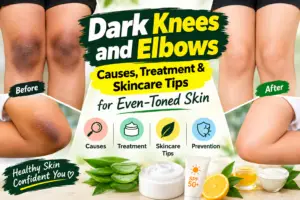

Dark Knees and Elbows: Causes, Treatment & Skincare Tips for Even-Toned Skin
Dark knees and elbows are a common skincare concern. The skin around these areas can sometimes appear darker, rougher, or thicker than the surrounding skin. Although dark knees and elbows are usually harmless, many people want to improve their appearance and achieve a more even skin tone.
The good news is that darker knees and elbows can look and feel better with regular skincare. The first step in selecting the best course of action is to comprehend the potential reasons.
The reasons of dark knees and elbows, practical treatments, skincare advice, at-home care techniques, and strategies to stop future darkening will all be covered in this guide.
What Causes Dark Knees and Elbows?
Several factors can contribute to darker skin on the knees and elbows. In many cases, more than one factor may be involved.
1. Dry Skin
The skin around the knees and elbows tends to become dry because these areas have fewer oil-producing glands. When the skin loses moisture, it can become rough, flaky, and appear darker.
Regular moisturizing can help restore hydration and make the skin look smoother and healthier.
2. Friction and Pressure
Frequent friction can contribute to darkening. Kneeling, leaning on your elbows, tight clothing, and repeated rubbing may irritate the skin.
Over time, repeated friction can encourage the skin to become thicker and darker. Reducing unnecessary pressure and friction may help prevent additional pigmentation.
3. Dead Skin Cell Buildup
Dead skin cells can accumulate on rough areas such as the knees and elbows. This buildup may make the skin look dull, uneven, or darker.
Gentle exfoliation can help remove excess dead skin cells. However, aggressive scrubbing can irritate the skin and potentially make pigmentation worse.
4. Sun Exposure
Although knees and elbows may receive less attention than the face, they can still be exposed to sunlight. UV exposure can stimulate melanin production and contribute to uneven pigmentation.
Using sunscreen on exposed areas can help protect the skin from further darkening.
5. Hyperpigmentation
Hyperpigmentation occurs when certain areas of skin produce more melanin than usual. Previous irritation, inflammation, injuries, or skin conditions can sometimes leave darker patches behind.
Post-inflammatory hyperpigmentation can be more noticeable in people with medium to deep skin tones.
6. Certain Skin Conditions
Some skin conditions can cause darker, thicker, or velvety-looking skin. For example, acanthosis nigricans can cause darkened, thickened skin, commonly around the neck, armpits, and other folds.
If darkening develops suddenly, spreads to other areas, becomes thick or velvety, or is accompanied by other symptoms, it is a good idea to consult a dermatologist or healthcare professional.
How to Treat Dark Knees and Elbows
Improving dark knees and elbows usually requires patience and consistency. There is no single treatment that works for everyone, but several skincare strategies may help.
1. Moisturize Every Day
One of the simplest ways to care for dark knees and elbows is regular moisturization.
Look for moisturizers containing ingredients such as:
- Ceramides
- Glycerin
- Hyaluronic acid
- Shea butter
- Urea
- Lactic acid
Apply moisturizer after bathing while the skin is still slightly damp. This can help lock in moisture and improve roughness.
2. Try Gentle Exfoliation
Exfoliation can help remove excess dead skin cells and improve skin texture.
Chemical exfoliants such as lactic acid, glycolic acid, or salicylic acid may be useful depending on your skin type and the product formulation.
Start slowly, particularly if you have sensitive skin. Over-exfoliating can cause irritation, dryness, and inflammation, which may worsen pigmentation.
3. Use Skin-Brightening Ingredients
Certain skincare ingredients may help improve the appearance of uneven pigmentation over time.
Common ingredients include:
- Niacinamide: Can support the skin barrier and help improve the appearance of uneven skin tone.
- Vitamin C: An antioxidant that may help brighten the appearance of skin.
- Alpha hydroxy acids (AHAs): Can improve surface texture and help reduce dullness.
- Azelaic acid: May help with uneven pigmentation and inflammation.
- Retinoids: Can increase skin cell turnover and may help with some types of hyperpigmentation.
Introduce one active ingredient at a time to reduce the chance of irritation.
4. Apply Sunscreen
Sunscreen is an important part of managing hyperpigmentation.
When your knees or elbows are exposed to the sun, apply a broad-spectrum sunscreen with SPF 30 or higher. Reapply when necessary, particularly during prolonged outdoor activities.
Sun protection is important because UV exposure can encourage pigmentation and make existing dark patches more noticeable.
Home Remedies for Dark Knees and Elbows
Many home remedies are promoted online for lightening dark knees and elbows. However, natural does not always mean safe or effective.
Aloe Vera
Aloe vera can provide soothing and moisturizing benefits. It may be useful if the skin is dry or irritated, but it should not be considered a guaranteed treatment for pigmentation.
Coconut Oil
Coconut oil can help moisturize dry skin. However, moisturizing alone may not remove established pigmentation.
Avoid Lemon Juice
Lemon juice is frequently recommended as a natural skin-lightening remedy, but applying acidic ingredients directly to the skin can cause irritation. Citrus exposure combined with sunlight can also create skin reactions.
For this reason, it is safer to use properly formulated skincare products instead of applying undiluted lemon juice to dark areas.
How to Prevent Dark Knees and Elbows
Prevention is just as important as treatment. A simple daily routine can help reduce dryness, irritation, and friction.
Avoid Excessive Scrubbing
Scrubbing darker areas aggressively with a loofah, brush, or rough exfoliating product may cause irritation. Instead, use gentle movements and avoid exfoliating too frequently.
Keep the Skin Hydrated
Apply a thick moisturizer regularly, especially after showering. If your knees and elbows are very dry, consider a cream containing urea, ceramides, or lactic acid.
Reduce Friction
If you frequently kneel or rest your elbows on hard surfaces, try to reduce prolonged pressure. Wearing comfortable clothing can also minimize rubbing.
Protect Your Skin From the Sun
Apply sunscreen to exposed knees and elbows and cover them when practical during prolonged sun exposure.
A Simple Skincare Routine for Dark Knees and Elbows
Consistency is more important than using a large number of products.
Morning
- Gently cleanse the skin.
- Apply a moisturizing lotion or cream.
- Apply broad-spectrum SPF 30 or higher when the areas are exposed to sunlight.
Evening
- Clean the skin gently.
- Use a suitable exfoliating or pigmentation-focused product a few nights per week.
- Apply a rich moisturizer.
If you have sensitive skin, begin with moisturizing and introduce active ingredients gradually.
How Long Does It Take to Lighten Dark Knees and Elbows?
The time required to improve pigmentation varies from person to person. Mild discoloration caused mainly by dryness may appear better after several weeks of consistent moisturizing.
More established hyperpigmentation can take considerably longer to improve. The underlying cause, skin type, level of pigmentation, skincare routine, and sun exposure can all affect results.
Avoid products that promise extremely fast skin whitening. Rapid or aggressive approaches may irritate the skin and potentially make pigmentation more noticeable.
When Should You See a Dermatologist?
Dark knees and elbows are often a cosmetic concern, but professional evaluation may be appropriate in certain situations.
Consider seeing a dermatologist if:
- The darkening appeared suddenly.
- The pigmentation is spreading.
- The skin has become thick or velvety.
- There is significant itching, redness, scaling, or pain.
- Over-the-counter skincare products cause persistent irritation.
- The pigmentation does not improve despite consistent skincare.
- Similar dark patches appear elsewhere on the body.
A dermatologist can examine the skin, identify possible causes, and recommend appropriate treatment.
Frequently Asked Questions About Dark Knees and Elbows
Why are my knees and elbows darker than the rest of my skin?
Knees and elbows can become darker because of dryness, friction, pressure, dead skin buildup, sun exposure, or hyperpigmentation. The exact cause varies between individuals.
Can moisturizer remove dark knees and elbows?
Moisturizer may improve dryness and rough texture, making the skin look healthier and more even. However, established pigmentation may require additional ingredients or professional treatment.
Is exfoliation good for dark elbows?
Gentle exfoliation can help remove dead skin cells and improve texture. However, excessive scrubbing can irritate the skin and potentially worsen discoloration.
Can sunscreen help with dark knees?
Yes. Sunscreen helps protect exposed skin from UV radiation, which can contribute to pigmentation and make existing dark patches more noticeable.
How can I lighten dark knees and elbows naturally?
Gentle moisturizing and avoiding friction are safe ways to care for the skin. Be cautious with DIY remedies such as lemon juice or harsh scrubs because they can cause irritation.
Final Thoughts
Dark knees and elbows are common and can have several causes, including dry skin, friction, pressure, dead skin buildup, sun exposure, and hyperpigmentation. The most effective approach is usually a consistent and gentle skincare routine rather than aggressive skin-lightening methods.
Moisturize regularly, exfoliate gently, protect exposed skin from the sun, and avoid unnecessary friction. Ingredients such as niacinamide, AHAs, azelaic acid, and other well-formulated skincare actives may help improve uneven pigmentation over time.
Most importantly, give your skin time. Consistent care can gradually improve the appearance and texture of dark knees and elbows. If pigmentation is sudden, spreading, thickened, or resistant to basic skincare, consult a dermatologist to determine the underlying cause and appropriate treatment.