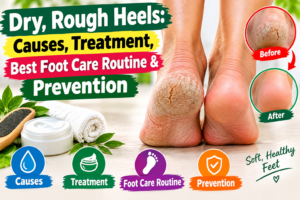

Dry, rough heels are a common foot-care problem that can affect people of all ages. The skin around the heels can become hard, flaky, thick, and sometimes painful. In more severe cases, dryness may lead to deep heel cracks that bleed or become infected.
The good news is that dry, rough heels can often be improved with consistent home care. Moisturizing regularly, gently removing excess dead skin, wearing supportive footwear, and protecting the skin from excessive dryness can make a noticeable difference.
This guide explains the causes of dry heels, effective treatments, the best foot care routine, and prevention tips to help keep your feet soft and healthy.
What Causes Dry, Rough Heels?
The skin on your heels naturally experiences a lot of pressure and friction. Unlike many other areas of the body, the feet are frequently exposed to weight-bearing, rubbing, dry environments, and repeated movement.
Here are some of the most common causes of dry, rough heels.
1. Lack of Moisture
One of the main causes of rough heels is simply dry skin. When the skin loses moisture, it can become tight, flaky, and rough.
Cold weather, low humidity, frequent hot showers, and harsh soaps can remove natural oils from the skin and make dryness worse.
2. Excessive Pressure on the Feet
Standing or walking for long periods puts continuous pressure on the heels. This pressure can encourage the skin to become thicker as a natural protective response.
Over time, thickened skin may become rough and develop cracks.
3. Open-Back Shoes
Sandals and open-back footwear can allow the heel to expand outward as you walk. This may increase pressure and friction around the heel.
Wearing open shoes frequently can therefore contribute to rough and cracked heels, especially when the skin is already dry.
4. Hot Showers and Baths
Very hot water may feel relaxing, but frequent exposure can strip the skin of protective oils.
Long, hot showers may leave your feet feeling temporarily clean but can contribute to increased dryness afterward.
5. Harsh Soaps
Some soaps and body washes can be drying, particularly if they contain strong cleansing ingredients or fragrances that irritate sensitive skin.
A gentle cleanser is generally a better choice when your heels are already dry or cracked.
6. Not Moisturizing Regularly
The feet are often forgotten during daily skincare routines. While people commonly moisturize their face and hands, they may neglect their heels.
Without regular moisturizing, dry skin can gradually become thicker and rougher.
7. Certain Skin Conditions
Conditions such as eczema, psoriasis, and athlete’s foot can sometimes cause dry, peeling, or thickened skin on the feet.
If your heel dryness is persistent, severe, itchy, painful, or accompanied by other skin changes, it is worth discussing it with a healthcare professional.
8. Aging
As we age, skin can become thinner and may produce less natural oil. This can make the feet more prone to dryness and cracking.
Regular moisturizing and gentle foot care become increasingly important with age.
What Do Dry, Rough Heels Look Like?
Dry heels can appear different depending on their severity.
Common signs include:
- Flaky or peeling skin
- White or grayish patches
- Thick, hard skin
- Rough texture
- Mild itching or tightness
- Small lines or cracks
- Deep heel fissures
- Pain while standing or walking
If cracks become deep, the skin may bleed. Open cracks also provide an opportunity for bacteria to enter the skin.
How to Treat Dry, Rough Heels at Home
A simple and consistent routine can help restore moisture and soften thick skin.
Step 1: Wash Your Feet Gently
Clean your feet with lukewarm water and a mild cleanser.
Avoid very hot water and prolonged soaking because excessive exposure to water can worsen dryness.
After washing, gently pat your feet dry with a clean towel. Avoid aggressive rubbing.
Step 2: Gently Exfoliate Thick Skin
If your heels have thick, hardened skin, gentle exfoliation can help remove some of the excess dead skin.
You can use a foot file or pumice stone on damp skin. Move gently rather than scrubbing aggressively.
Avoid cutting thick skin with razors, scissors, or other sharp tools. This can cause injuries and increase the risk of infection.
If your heels are deeply cracked, bleeding, or painful, avoid aggressive exfoliation until the skin has healed.
Step 3: Apply a Thick Moisturizer
Moisturizing is one of the most important steps for treating dry heels.
Look for foot creams containing ingredients such as:
- Urea
- Lactic acid
- Glycerin
- Ceramides
- Petrolatum
- Hyaluronic acid
These ingredients can help attract or retain moisture and soften rough skin.
Apply moisturizer while the skin is still slightly damp after bathing.
Step 4: Use an Occlusive Layer at Night
For very dry heels, applying a thick layer of an occlusive moisturizer such as petroleum jelly before bedtime can help reduce moisture loss.
After applying it, you can wear clean cotton socks overnight.
This simple overnight routine can help keep the skin moisturized for longer.
Best Foot Care Routine for Dry Heels
A consistent routine is more useful than occasional intensive treatments.
Morning Foot Care
Start your day by checking your heels for dryness or cracks.
If needed:
- Wash your feet gently.
- Dry them thoroughly, especially between the toes.
- Apply a moisturizing foot cream to dry areas.
- Wear comfortable, well-fitting footwear.
Avoid applying thick creams between the toes unless specifically recommended because excessive moisture in that area can encourage fungal growth.
Evening Foot Care
Nighttime is an excellent opportunity for intensive heel care.
Follow these steps:
- Wash your feet with lukewarm water.
- Pat them dry.
- Apply a rich foot cream.
- Apply petroleum jelly or another suitable occlusive to very dry areas if appropriate.
- Put on clean cotton socks.
- Leave the moisturizer on overnight.
Repeat this routine consistently rather than relying on a single treatment.
How Often Should You Exfoliate Your Heels?
You do not need to aggressively exfoliate your heels every day.
For mildly rough skin, gentle exfoliation once or twice a week may be sufficient. The exact frequency depends on how thick and sensitive your skin is.
The goal is to remove excess dead skin without damaging healthy skin underneath.
Over-exfoliation can cause irritation, tenderness, and additional dryness.
Can Petroleum Jelly Help Dry Heels?
Yes. Petroleum jelly can be useful for dry heels because it forms an occlusive barrier that helps reduce water loss from the skin.
For best results, apply it after moisturizing while the skin is slightly damp.
However, petroleum jelly does not replace treatment for an underlying condition. If your heels remain severely cracked despite regular care, consider getting professional advice.
Best Ingredients for Dry, Rough Heels
When choosing a heel cream, certain ingredients are particularly useful.
Urea
Urea is commonly used in foot creams because it can help hydrate and soften thick, rough skin.
Higher concentrations may have stronger effects on very thick skin, but sensitive or cracked skin may require a gentler formulation.
Lactic Acid
Lactic acid is an alpha hydroxy acid that can help moisturize and gently exfoliate the skin.
It may be useful for rough, uneven heel texture.
Glycerin
Glycerin is a humectant that helps attract moisture to the skin.
It is commonly included in moisturizers designed for dry skin.
Ceramides
Ceramides are lipids naturally found in the skin barrier. Moisturizers containing ceramides can help support the skin barrier and reduce dryness.
Petrolatum
Petrolatum helps form a protective barrier over the skin, reducing moisture loss.
Footwear Tips to Prevent Rough Heels
Your footwear can have a major effect on heel health.
Choose shoes that:
- Fit properly
- Provide adequate cushioning
- Reduce friction
- Support the heel
- Do not squeeze the toes
- Do not constantly rub the back of the foot
If you frequently wear sandals, consider alternating them with closed-back shoes when practical, particularly when your heels are already cracked.
Avoid walking barefoot for long periods on hard surfaces if this makes your heel dryness worse.
How to Prevent Dry, Cracked Heels
Prevention is easier when foot care becomes part of your normal routine.
Moisturize Daily
Apply foot cream every day, particularly after bathing and before bed.
Avoid Very Hot Water
Use lukewarm water instead of very hot water.
Keep Feet Clean and Dry
Wash your feet regularly and dry them carefully.
Pay particular attention to the spaces between the toes.
Don’t Overuse Foot Scrubs
Frequent aggressive scrubbing can damage the skin barrier.
Gentle exfoliation is usually enough.
Wear Breathable Socks
Choose comfortable socks that help manage moisture and reduce friction.
Change socks regularly, especially if they become sweaty.
Protect Your Feet
Avoid prolonged barefoot walking on rough or hard surfaces when possible.
When Should You See a Doctor?
Most mild cases of dry heels can be managed with consistent skincare. However, professional medical advice is appropriate if:
- Cracks are deep or bleeding
- There is significant pain
- The area becomes red, swollen, or warm
- You notice pus or other signs of infection
- The problem does not improve with regular moisturizing
- You have severe itching or peeling
- You have diabetes or poor circulation
- You have a known skin condition affecting your feet
People with diabetes should be especially careful with foot problems because wounds can sometimes heal more slowly and complications can be more serious.
Common Mistakes That Make Dry Heels Worse
Some popular foot-care habits can actually damage the skin.
Cutting the Skin
Never cut thick heel skin yourself with a blade or sharp tool. Accidental cuts can lead to bleeding and infection.
Excessive Scrubbing
Scrubbing harder does not necessarily make heels smoother. It can irritate the skin and increase sensitivity.
Using Very Hot Water
Hot water may worsen dryness by removing natural oils.
Ignoring Small Cracks
Small cracks can become deeper if the skin remains dry. Treat them early with gentle cleansing and regular moisturization.
Using Irritating Products
Strong acids, fragranced products, or harsh scrubs may irritate already damaged skin.
Frequently Asked Questions
How can I make my rough heels soft quickly?
Apply a rich foot moisturizer daily, gently exfoliate thick skin when appropriate, and use an occlusive such as petroleum jelly overnight. Consistency is more important than aggressive treatment.
Is it okay to use a pumice stone every day?
Daily aggressive pumice use is generally unnecessary. Over-exfoliation can irritate the skin. Gentle exfoliation once or twice a week may be sufficient for many people.
Why are my heels dry even when I use lotion?
Regular body lotion may not be rich enough for thick heel skin. A foot cream containing ingredients such as urea, lactic acid, glycerin, or ceramides may provide more targeted care.
Should I wear socks after applying heel cream?
Yes. Wearing clean cotton socks after applying a thick moisturizer at night can help keep the product in contact with the skin and reduce moisture loss.
Can dry heels heal naturally?
Mild dryness may improve with basic moisturizing and reduced friction. However, persistent or severely cracked heels may require targeted treatment or evaluation for an underlying skin condition.
Final Thoughts
Dry, rough heels are common, but they don’t have to be permanent. The key to softer feet is a simple, consistent routine that focuses on hydration, gentle exfoliation, protection, and appropriate footwear.
Start by washing your feet with lukewarm water, moisturizing daily, and gently managing thick skin. At night, a rich foot cream followed by an occlusive layer and clean socks can provide extra protection.
Avoid cutting or aggressively scrubbing your heels, and seek professional advice if cracks are deep, painful, infected, or not improving.
With regular care and prevention, you can help maintain soft, smooth, healthy-looking heels throughout the year.