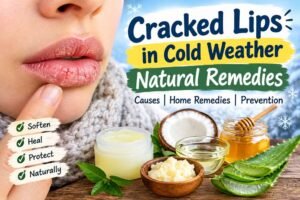

Cracked Lips in Cold Weather: Natural Remedies, Causes, Prevention & Care
Introduction
Cracked lips are a common problem during cold and dry weather. When temperatures drop, the air usually becomes drier, and cold wind can remove moisture from the delicate skin of the lips. As a result, lips may become dry, rough, flaky, painful, and sometimes even split or bleed.
The lips have extremely little natural oil protection, in contrast to the majority of the body’s skin. They are therefore particularly vulnerable to wind, cold temperatures, interior heating, dehydration, and irritating substances.
Fortunately, basic at-home care can frequently cure mildly dry and cracked lips. Petroleum jello, coconut oil, honey, aloe vera, and shea butter are examples of natural ingredients that can help preserve moisture and shield the lips.
In addition to offering useful natural cures and preventative advice, this page describes the typical causes of cracked lips during cold weather.
What Causes Cracked Lips in Cold Weather?
Cold weather is one of the most common triggers of dry and cracked lips. However, several factors can contribute to the problem.
1. Cold and Dry Air
Winter air contains less moisture, which can cause water to evaporate from the surface of your lips. Cold wind can make this moisture loss even worse.
2. Lip Licking
When lips feel dry, many people instinctively lick them. Although licking may provide temporary relief, saliva evaporates quickly and can leave the lips even drier.
Repeated lip licking can create a cycle of dryness, irritation, and cracking.
3. Dehydration
Not drinking enough fluids can contribute to dry skin and lips. During winter, people may not feel as thirsty as they do in hot weather, so they may accidentally drink less water.
4. Indoor Heating
Heaters and other indoor heating systems can reduce humidity inside your home. Spending many hours in heated rooms may make already-dry lips feel worse.
5. Irritating Lip Products
Some lip balms, lipsticks, toothpaste ingredients, and fragrances may irritate sensitive lips. Products containing strong flavors or fragrances can sometimes cause burning, redness, or dryness.
6. Sun Exposure
Cold weather does not eliminate the risk of sun damage. Lips can still be exposed to ultraviolet radiation during winter, especially outdoors, at high altitudes, or around reflective surfaces such as snow.
Natural Remedies for Cracked Lips
1. Apply Petroleum Jelly
Petroleum jelly is one of the simplest ways to protect dry, cracked lips. It creates a protective barrier over the lips and helps reduce moisture loss.
Apply a thin layer to clean lips several times throughout the day, especially before going outside and before sleeping.
For severely cracked lips, applying it overnight can help keep the surface protected while you sleep.
2. Try Coconut Oil
Coconut oil can make dry lips feel softer and smoother. It also provides an oily layer that helps reduce moisture loss.
Apply a small amount of plain coconut oil to your lips using clean fingers.
If you have sensitive skin, test a small amount first. Stop using it if it causes irritation.
3. Use Honey Carefully
Honey is naturally moisturizing and can help keep the lips feeling soft. A small amount can be applied to the lips for a short period before gently rinsing or wiping it away.
However, avoid repeatedly licking honey from your lips because licking can increase dryness.
You can also apply a protective lip moisturizer afterward.
4. Apply Aloe Vera Gel
Pure aloe vera gel may provide a soothing feeling when lips are irritated or dry.
Use a small amount of plain, fragrance-free aloe vera gel. Avoid products containing alcohol, perfumes, or other ingredients that may irritate damaged skin.
Because aloe vera can sometimes sting cracked skin, discontinue use if you experience burning or worsening irritation.
5. Use Shea Butter
Shea butter is rich in fatty substances that can help soften dry skin. It can be used as a natural lip moisturizer.
Apply a small amount to your lips whenever they feel dry. Using it before bed can provide overnight moisturization.
6. Drink Enough Water
Hydration is an important part of overall skin care. Make a habit of drinking water regularly throughout the day.
You do not need to drink excessive amounts. Simply maintain normal hydration according to your body’s needs.
Warm drinks such as caffeine-free herbal tea can also be comforting during cold weather.
7. Use a Humidifier
If your home becomes very dry because of heating, a humidifier can add moisture to indoor air.
Place the humidifier in the room where you spend the most time, such as your bedroom. Clean it regularly according to the manufacturer’s instructions to prevent the buildup of microorganisms.
8. Protect Your Lips Before Going Outside
Prevention is easier than treating severely cracked lips.
Before going outside in cold weather, apply a thick, fragrance-free lip moisturizer or protective ointment. Cover your mouth and lips with a soft scarf when the weather is particularly cold or windy.
This creates an additional physical barrier against harsh weather.
What Should You Avoid on Cracked Lips?
Some common habits can make cracked lips worse.
Avoid Constant Lip Licking
Try to replace lip licking with applying a protective moisturizer.
Avoid Picking Flaky Skin
It can be tempting to pull off pieces of dry skin, but this can cause bleeding and slow healing.
Allow the skin to shed naturally while keeping the lips moisturized.
Avoid Harsh Scrubs
Sugar scrubs and other physical exfoliators are often promoted as ways to remove flaky skin. However, aggressively scrubbing already-cracked lips can cause additional irritation.
When lips are painful or bleeding, focus on protection and moisturization rather than exfoliation.
Avoid Irritating Ingredients
If a lip product causes burning, stinging, or redness, stop using it.
Fragrances, strong flavors, and certain cosmetic ingredients may be irritating for some people.
Simple Winter Lip Care Routine
A consistent routine can help prevent recurring dryness.
Morning
Start your day by drinking water and applying a protective lip moisturizer.
If you are going outside, consider using a lip product with sun protection.
During the Day
Reapply your lip moisturizer whenever your lips begin to feel dry.
Try not to lick or bite your lips.
When outdoors, protect your face and lips from cold wind with appropriate clothing.
Before Bed
Wash your face gently and avoid rubbing your lips.
Apply a generous layer of petroleum jelly, shea butter, or another suitable fragrance-free ointment to help protect the lips overnight.
How Long Do Cracked Lips Take to Heal?
Mildly dry lips may improve within several days when the cause is removed and the lips are properly protected.
More severe cracks can take longer to heal, especially if they continue to be exposed to cold air, wind, irritants, or repeated licking.
If your lips are not improving despite consistent care, there may be another underlying cause that needs attention.
When Should You See a Doctor?
Most cases of winter-related dry lips are temporary. However, persistent or severe symptoms should not be ignored.
Consider speaking with a healthcare professional if you experience:
- Deep or painful cracks that do not heal
- Frequent bleeding
- Significant swelling
- Pus or signs of infection
- Severe redness
- Repeated sores
- Cracks mainly at the corners of the mouth
- Symptoms that continue despite proper lip care
Persistent lip problems can sometimes be related to irritation, allergies, nutritional deficiencies, infections, medications, or other medical conditions.
A healthcare professional can help identify the underlying cause.
Frequently Asked Questions
Can cold weather really cause cracked lips?
Yes. Cold, dry air and wind can increase moisture loss from the lips, making them dry, flaky, and cracked.
What is the best natural remedy for cracked lips?
There is no single remedy that works for everyone. Protective moisturizers such as shea butter and simple oils may help, while petroleum jelly is useful for creating a protective barrier and reducing moisture loss.
Is coconut oil good for dry lips?
Coconut oil can help soften dry lips and reduce moisture loss. However, it may not suit everyone, so discontinue it if irritation occurs.
Is honey good for cracked lips?
Honey can provide a moisturizing effect, but it should not replace a protective lip moisturizer. Avoid repeatedly licking it from your lips.
Should I exfoliate cracked lips?
It is generally better to avoid aggressive exfoliation when your lips are cracked, painful, or bleeding. Focus on gentle moisturization and protection instead.
Why do my lips crack more in winter?
Cold temperatures, dry air, wind, indoor heating, dehydration, and lip licking can all contribute to increased dryness during winter.
Conclusion
Cracked lips in cold weather are common, but simple daily habits can make a significant difference. Cold air, wind, indoor heating, dehydration, and lip licking can all contribute to dry and uncomfortable lips.
Natural options such as coconut oil, shea butter, aloe vera, and honey may help soothe and moisturize the lips, while protective products such as petroleum jelly can help reduce moisture loss. Drinking enough water, avoiding lip licking, protecting your face from cold wind, and maintaining a consistent winter lip-care routine can also help prevent repeated cracking.
If your lips remain severely cracked, painful, swollen, or infected despite home care, speak with a healthcare professional. Persistent symptoms may have a cause that requires specific treatment.
With gentle care and good protection, you can keep your lips softer and healthier throughout the cold season.