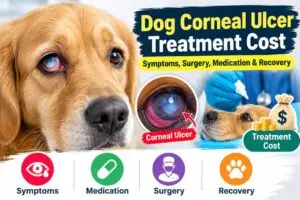

Dog Corneal Ulcer Treatment Cost: Symptoms, Surgery, Medication & Recovery
A corneal ulcer in dogs is a painful eye condition that should be taken seriously. The cornea is the clear outer layer of the eye that helps protect the inner eye and allows light to enter. When this surface becomes scratched, damaged, or infected, an ulcer can develop. Depending on its severity, a dog corneal ulcer may require prescription eye drops, pain medication, frequent veterinary examinations, or even surgery.
The dog corneal ulcer treatment cost can vary considerably depending on the severity of the ulcer, the veterinarian’s fees, diagnostic testing, medications, and whether surgery is necessary. Mild ulcers may be treated relatively inexpensively with medication, while deep or complicated ulcers can require specialized treatment and surgical procedures.
This guide explains the symptoms of corneal ulcers in dogs, treatment options, medication, surgery costs, recovery time, and factors that influence veterinary expenses.
What Is a Corneal Ulcer in Dogs?
A corneal ulcer is an open wound or erosion on the surface of a dog’s cornea. It can occur when the protective outer layer of the cornea is damaged.
Common causes include scratches, dust or foreign objects, trauma, infections, dry eye, eyelid abnormalities, eyelashes rubbing against the eye, and certain eye diseases.
Some dogs are more prone to corneal injuries because of their facial structure. Dogs with prominent eyes and short noses may have increased exposure to eye injuries.
A superficial ulcer may heal with appropriate treatment, but a deep ulcer can become an emergency because the cornea may weaken and potentially rupture.
Dog Corneal Ulcer Symptoms
Recognizing the symptoms early can help prevent the condition from becoming more serious.
Common dog corneal ulcer symptoms include:
- Excessive tearing
- Squinting or keeping the eye closed
- Redness around the eye
- Cloudy or bluish appearance of the cornea
- Pawing or rubbing at the eye
- Increased sensitivity to light
- Eye discharge
- Swelling around the eye
- Visible scratches or spots on the cornea
- Changes in the appearance of the eye
- Behavioral changes caused by pain
A dog with a painful eye may become less active, avoid bright areas, or become reluctant to have its face touched.
If your dog is suddenly squinting or keeping one eye closed, a veterinary examination is recommended rather than waiting to see whether it improves on its own.
How Much Does Dog Corneal Ulcer Treatment Cost?
The cost of treating a corneal ulcer in a dog depends on several factors.
For a mild, uncomplicated ulcer, treatment may consist mainly of an examination, an eye stain test, antibiotic eye drops, pain relief, and follow-up visits.
In more severe cases, the veterinarian may recommend additional diagnostic testing, specialized medications, hospitalization, or surgery.
A general treatment-cost breakdown may include:
| Treatment or Service | Typical Cost Range* |
|---|---|
| Veterinary eye examination | $50–$150+ |
| Fluorescein eye stain test | $20–$60+ |
| Prescription eye medication | $20–$100+ |
| Pain medication | $15–$60+ |
| Follow-up examination | $30–$100+ |
| Veterinary ophthalmologist consultation | $100–$300+ |
| Corneal ulcer surgery | $500–$3,000+ |
| Advanced corneal surgery | $1,500–$4,000+ |
*These are broad illustrative ranges rather than guaranteed prices. Veterinary costs vary significantly by country, clinic, geographic area, emergency status, and procedure complexity.
In countries such as the United States, specialized veterinary ophthalmology and emergency care can be substantially more expensive than routine veterinary treatment. Local prices in other countries can be much lower or higher depending on available services and veterinary facilities.
What Determines the Cost of Treatment?
Several factors can affect the final dog eye ulcer treatment cost.
1. Severity of the Ulcer
A superficial corneal ulcer may require only medication and monitoring. A deep ulcer that affects a large portion of the cornea can require intensive treatment or surgery.
2. Infection
If bacteria or another infection is involved, the veterinarian may prescribe antibiotic medication or additional treatment. Resistant or complicated infections can require more frequent medication and follow-up examinations.
3. Location and Size
The size and location of the ulcer can influence how quickly it heals and how closely the dog needs to be monitored.
4. Underlying Eye Problems
Conditions such as dry eye, abnormal eyelashes, eyelid problems, or inadequate tear production can prevent an ulcer from healing properly. Treating the underlying cause may increase the total cost.
5. Emergency Care
A rapidly worsening eye ulcer may require emergency veterinary treatment. Emergency consultation and after-hours services can increase the overall cost.
6. Surgery
If the ulcer is deep, infected, melting, or at risk of perforating the cornea, surgery may be recommended. Surgical treatment is generally much more expensive than medication alone.
How Are Corneal Ulcers Diagnosed?
Veterinarians commonly use a fluorescein stain test to identify a corneal ulcer.
A unique dye is applied to the eye’s surface during this test. The colour is absorbed by damaged corneal regions, making them easier to spot when properly examined.
In addition, the veterinarian may assess ocular pressure, eyelid anatomy, tear production, and general eye health.
If an infection, foreign body, dry eye, or any underlying issue is detected, further testing could be advised.
Medication for Dog Corneal Ulcers
Treatment depends on the cause and depth of the ulcer.
Veterinarians may prescribe medications such as:
Antibiotic Eye Drops
Antibiotic ophthalmic medications may be used when bacterial infection is present or when the veterinarian believes infection prevention is necessary.
Pain Relief
Corneal ulcers can be painful. A veterinarian may prescribe appropriate pain medication to improve comfort.
Some dogs may also receive medication that reduces painful spasms of the muscles inside the eye.
Tear-Stimulating Medication
If dry eye is contributing to the ulcer, medication designed to improve tear production may be prescribed.
Protective Measures
A protective Elizabethan collar, commonly called an E-collar, may be recommended. It prevents the dog from rubbing or scratching the injured eye.
Owners should use only medications prescribed or specifically recommended by a veterinarian. Human eye drops and leftover medications may not be appropriate and could potentially make certain eye conditions worse.
Can a Dog Corneal Ulcer Heal Without Surgery?
Yes, some superficial corneal ulcers can heal successfully with medical treatment.
The healing time depends on the depth of the ulcer, the cause, the dog’s overall eye health, and how well treatment is followed.
However, not every ulcer should be treated at home or simply observed. A deep, infected, rapidly progressing, or non-healing ulcer may require more aggressive treatment.
This is why veterinary diagnosis is important.
When Is Surgery Needed?
Dog corneal ulcer surgery may be recommended when an ulcer is deep or does not respond adequately to medical treatment.
Surgery may also be considered when the cornea has become dangerously thin, when the ulcer is progressing rapidly, or when there is a risk of perforation.
Possible procedures include techniques designed to provide structural support and encourage healing of the cornea. In complicated cases, a veterinary ophthalmologist may perform specialized corneal surgery.
The exact procedure depends on the condition of the eye.
Dog Corneal Ulcer Surgery Recovery
Recovery after corneal surgery can take several weeks.
Your dog may need:
- Prescription eye drops
- Antibiotic medication
- Pain control
- An E-collar
- Restricted activity
- Multiple veterinary checkups
- Frequent monitoring of the eye
The veterinarian may repeat fluorescein staining to determine whether the ulcer is healing.
During recovery, preventing your dog from rubbing the eye is extremely important.
Follow the veterinarian’s medication schedule carefully, even if the eye appears to look better.
How Long Does a Dog Corneal Ulcer Take to Heal?
The healing time varies.
Some superficial ulcers may improve within several days and heal within approximately one to two weeks. More complicated ulcers can take several weeks or longer.
Deep ulcers may require surgical treatment and extended monitoring.
If the eye is not improving as expected, the veterinarian may need to reassess the diagnosis, check for infection, evaluate tear production, or look for an underlying cause preventing healing.
What Happens If a Corneal Ulcer Is Left Untreated?
An untreated corneal ulcer can become significantly more serious.
Possible complications include:
- Severe eye pain
- Bacterial infection
- Corneal thinning
- Corneal melting
- Scarring
- Vision impairment
- Corneal perforation
- Loss of the eye in severe cases
The risk depends on the depth and cause of the ulcer. Rapidly progressing ulcers can become emergencies.
For this reason, a dog with significant squinting, eye cloudiness, discharge, or obvious eye injury should receive veterinary attention promptly.
Can You Treat a Dog’s Corneal Ulcer at Home?
Home care should generally be limited to following the veterinarian’s treatment instructions.
There are several things owners can do to support recovery:
Keep the prescribed medication schedule consistent, prevent rubbing with an E-collar when recommended, keep the dog away from situations that could cause additional eye trauma, and attend all follow-up appointments.
Do not attempt to remove something stuck deeply in the eye yourself.
Do not use human medications unless your veterinarian specifically tells you to do so.
How to Reduce the Risk of Corneal Ulcers
Although not every corneal ulcer can be prevented, several precautions may reduce the risk.
Keep sharp objects away from areas where your dog plays. Monitor dogs during interactions that could result in scratches. Regularly check the eyes for redness, discharge, or foreign material.
Dogs with recurring eye ulcers should receive veterinary evaluation to determine whether dry eye, eyelid abnormalities, abnormal eyelashes, or another condition is contributing to the problem.
Does Pet Insurance Cover Corneal Ulcer Treatment?
Pet insurance coverage varies between policies.
Some plans may cover eligible diagnostic tests, medications, surgery, and veterinary treatment for an unexpected illness or injury. However, pre-existing conditions, waiting periods, exclusions, deductibles, and reimbursement limits can affect coverage.
Before relying on insurance, check the specific policy terms and confirm whether ophthalmic treatment is covered.
Final Thoughts
The dog corneal ulcer treatment cost can range from relatively modest medication expenses for a superficial ulcer to several thousand dollars when advanced surgery and specialist care are required.
The most important factors are the severity of the ulcer, whether infection is present, the underlying cause, the dog’s response to treatment, and whether surgery is necessary.
Because corneal ulcers can worsen quickly, early veterinary assessment is important. With appropriate diagnosis and treatment, many dogs recover well, but complicated ulcers require careful monitoring and sometimes surgical intervention.
If your dog is squinting, rubbing its eye, experiencing excessive tearing, developing eye discharge, or has a cloudy-looking eye, contact a veterinarian promptly. Early treatment can help protect the cornea, reduce pain, and improve the chances of preserving normal eye function.