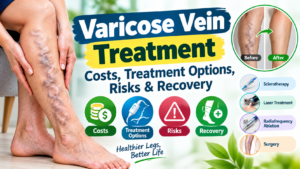

Varicose veins are enlarged, twisted veins that commonly appear on the legs. They may look blue, purple, or skin-colored and can become more noticeable when standing. For some people, varicose veins are mainly a cosmetic concern, while others experience aching, heaviness, swelling, itching, skin changes, or other complications.
Fortunately, there are numerous ways to treat varicose veins. Lifestyle modifications, compression stockings, and minimally invasive techniques like sclerotherapy, laser therapy, radiofrequency ablation, and, in certain situations, surgery are all possible forms of treatment.
The size and location of the veins, symptoms, circulation, general health, and the findings of a medical evaluation all influence the best course of action.
This guide explains varicose vein treatment costs, treatment options, benefits, risks, recovery time, and when to see a doctor.
What Are Varicose Veins?
Varicose veins develop when valves inside the veins do not work properly. Normally, these valves help blood move toward the heart and prevent it from flowing backward.
When the valves become weak or damaged, blood can collect inside the vein. Increased pressure can cause the vein to enlarge and become twisted or visible beneath the skin.
Varicose veins most commonly develop in the legs because the veins must work against gravity to return blood to the heart.
Some people have no symptoms, while others may experience:
- Aching or heaviness in the legs
- Swelling around the ankles or lower legs
- Burning or throbbing
- Muscle cramps
- Itching around the affected veins
- Skin discoloration
- Tired or uncomfortable legs after standing
- Visible twisted or bulging veins
Do Varicose Veins Always Need Treatment?
Not every varicose vein requires medical treatment.
If the veins do not cause symptoms or complications, a healthcare professional may recommend observation and lifestyle measures.
Treatment becomes more important when varicose veins cause persistent discomfort, swelling, skin changes, ulcers, bleeding, or other complications.
Treatment may also be considered when symptoms interfere with daily activities.
How Are Varicose Veins Diagnosed?
A healthcare professional usually examines the legs while you are standing and asks about symptoms.
A duplex ultrasound may be used to evaluate blood flow and identify problems with the veins and their valves. It can also help doctors plan an appropriate treatment.
Ultrasound is particularly important before many procedures because treating the visible vein alone may not address the underlying circulation problem.
Varicose Vein Treatment Options
There is no single treatment that works for everyone. Common options include conservative care, sclerotherapy, endovenous ablation, phlebectomy, and surgery.
1. Lifestyle Changes
For mild symptoms, lifestyle changes may help reduce discomfort.
Helpful measures can include:
- Regular walking and exercise
- Avoiding prolonged sitting or standing
- Elevating the legs when resting
- Maintaining a healthy weight
- Taking movement breaks during long periods of sitting
- Avoiding activities that consistently worsen symptoms
Exercise helps the calf muscles support blood circulation in the legs. Elevating the legs can also help reduce swelling.
Lifestyle measures may improve symptoms, but they generally do not make established varicose veins disappear.
2. Compression Stockings
Compression stockings apply pressure to the legs and can help improve blood flow and reduce symptoms such as swelling and aching.
They are available in different compression levels, so the appropriate type should be discussed with a healthcare professional, particularly if you have circulation problems or other medical conditions.
Compression stockings may be useful when procedures are not appropriate or while waiting for treatment.
3. Sclerotherapy
Sclerotherapy is a minimally invasive procedure commonly used for smaller varicose veins and spider veins.
During treatment, a healthcare professional injects a solution or foam into the affected vein. The solution irritates the inside of the vein, causing it to close. The body gradually processes the treated vein.
Sclerotherapy is usually performed in an office or outpatient setting, and anesthesia is generally not required.
Some veins may need more than one treatment session.
Results do not appear immediately. Smaller treated veins may improve over several weeks, while larger veins can take several months to fade.
4. Radiofrequency Ablation
Radiofrequency ablation is a catheter-based treatment often used for larger problematic veins.
A thin catheter is inserted into the vein, usually with ultrasound guidance. Radiofrequency energy heats the vein wall, causing the vein to close.
Blood is then redirected through healthier veins.
This is generally an outpatient procedure, and patients commonly return home the same day.
5. Endovenous Laser Treatment
Endovenous laser treatment, sometimes called EVLT or endovenous laser ablation, uses laser energy delivered through a catheter.
The heat causes the targeted vein to close.
Like radiofrequency ablation, this treatment can be performed through a small access point rather than traditional large surgical incisions.
The NHS describes endothermal ablation, including radiofrequency and laser techniques, as a commonly used treatment approach for appropriate varicose veins.
6. Ambulatory Phlebectomy
Ambulatory phlebectomy is used to remove smaller surface varicose veins through tiny punctures in the skin.
The procedure is generally performed using local anesthesia.
Because the openings are very small, extensive surgical incisions may not be necessary.
7. Vein Stripping and Surgery
Traditional surgery, including ligation and vein stripping, may be considered when less invasive treatments are not suitable.
During vein stripping, the affected vein is tied off and removed through small incisions.
Modern minimally invasive techniques have reduced the need for traditional surgery in many cases, but surgery remains an option for selected patients.
Varicose Vein Treatment Cost
The cost of varicose vein treatment can vary considerably.
There is no single worldwide price because the final cost depends on:
- Country and city
- Type of treatment
- Number of veins treated
- Severity of the condition
- Ultrasound or diagnostic testing
- Physician or vascular specialist fees
- Facility fees
- Anesthesia
- Follow-up appointments
- Insurance coverage
- Whether treatment is considered medically necessary or cosmetic
In the United States, minimally invasive vein procedures can range from hundreds to several thousand dollars depending on the procedure and treatment plan.
Sclerotherapy for smaller veins may cost less than treatment for larger veins requiring catheter-based ablation. Treating both legs or multiple veins can also increase the total cost.
Before scheduling treatment, ask the clinic for a complete estimate that includes consultation, ultrasound, procedure, compression garments, follow-up visits, and any additional fees.
Does Insurance Cover Varicose Vein Treatment?
Insurance coverage depends on the medical necessity of the treatment and the individual insurance plan.
Treatment performed purely for cosmetic reasons may not be covered. When varicose veins cause significant symptoms or complications, coverage may be possible depending on the insurer and policy.
Always confirm coverage with your insurance company before undergoing treatment.
Benefits of Varicose Vein Treatment
Treatment can provide both medical and cosmetic benefits when appropriately indicated.
Potential benefits include:
- Reduced leg aching
- Less heaviness and discomfort
- Reduced swelling
- Improvement in visible bulging veins
- Improved skin appearance
- Better ability to perform daily activities
- Treatment of certain complications
- Improved quality of life in people with symptomatic disease
Treatment does not necessarily prevent new varicose veins from developing in the future.
Risks and Side Effects
Every medical procedure has potential risks.
Common temporary effects after vein procedures may include:
- Bruising
- Mild swelling
- Tenderness
- Redness
- Temporary skin discoloration
- Firm or lumpy areas along treated veins
Sclerotherapy may occasionally cause brownish skin discoloration, small new blood vessels, inflammation, allergic reactions, or other complications.
Ablation and surgery can also carry risks such as infection, nerve irritation or damage, bleeding, inflammation, blood clots, and recurrence. Deep vein thrombosis and pulmonary embolism are recognized but uncommon complications of treatment.
Your healthcare professional should explain the specific risks associated with the procedure recommended for you.
Varicose Vein Treatment Recovery
Recovery depends heavily on the procedure.
After Sclerotherapy
Most people can walk and return home shortly after treatment. Walking is encouraged because movement supports circulation.
Compression stockings or wraps may be recommended for several days or longer depending on the treatment. Cleveland Clinic notes that recovery is generally quick, although visible results can take weeks or months.
After Laser or Radiofrequency Ablation
Many patients can return to normal activities relatively quickly.
The NHS notes that people may experience some pain or bruising but can often return to usual activities soon after endothermal ablation. Compression stockings may be recommended for approximately a week, depending on the clinical situation.
After Traditional Surgery
Recovery from vein stripping generally takes longer.
Pain and bruising can persist for several weeks, and some people may need approximately one to two weeks away from work depending on the procedure and occupation.
Your individual recovery instructions should always take priority over general timelines.
What Should You Do After Varicose Vein Treatment?
Your provider may recommend:
- Walking regularly
- Wearing compression stockings as directed
- Avoiding prolonged sitting
- Keeping follow-up appointments
- Monitoring injection or incision sites
- Avoiding strenuous activity for the recommended period
- Taking prescribed or recommended pain medication
- Keeping the treated area clean
Do not stay completely inactive unless your healthcare professional specifically tells you to. Gentle movement is commonly encouraged after many vein procedures.
When Should You Seek Medical Attention?
Contact a healthcare professional if you develop significant or worsening:
- Leg swelling
- Severe pain
- Redness or warmth
- Bleeding
- Fever
- Wound drainage
- Skin changes
Seek urgent medical attention for symptoms that could indicate a blood clot or pulmonary embolism, such as sudden significant leg swelling or pain, chest pain, difficulty breathing, coughing blood, or sudden unexplained shortness of breath.
Varicose veins themselves can occasionally be associated with complications such as ulcers, bleeding, or blood clots.
Can Varicose Veins Come Back After Treatment?
Treatment can successfully close or remove the targeted vein, but it does not guarantee that new varicose veins will never develop.
New veins may become enlarged over time, and some patients may require additional treatment.
Recurrence or development of new varicose veins is a recognized possibility after treatment.
How to Reduce the Risk of Varicose Veins
You cannot completely prevent varicose veins, particularly when genetics, age, pregnancy, or other risk factors are involved.
However, healthy habits may support better circulation.
Consider:
Stay Physically Active
Walking and regular exercise help the leg muscles support venous blood flow.
Avoid Sitting or Standing for Long Periods
If your work requires prolonged sitting or standing, take regular movement breaks.
Maintain a Healthy Weight
Maintaining a healthy weight may reduce pressure on the veins.
Elevate Your Legs
Raising your legs while resting may help reduce swelling and discomfort.
Avoid Excessive Tight Clothing
Very tight clothing around the waist or legs may be uncomfortable for some people with circulation symptoms.
Frequently Asked Questions
What is the most effective treatment for varicose veins?
There is no single treatment that is appropriate for everyone. Options include compression, sclerotherapy, radiofrequency ablation, laser ablation, phlebectomy, and surgery. A duplex ultrasound and medical evaluation can help determine the appropriate approach.
Is varicose vein treatment painful?
Many modern procedures use local anesthesia and are designed to minimize discomfort. Some temporary soreness, bruising, or tenderness can occur afterward.
How long does varicose vein treatment take?
Many minimally invasive procedures are performed on an outpatient basis and may take roughly an hour, although treatment time varies according to the procedure and number of veins treated.
Can walking help varicose veins?
Regular walking can support circulation and may help relieve symptoms. However, exercise generally does not make established varicose veins disappear.
Are compression stockings a permanent cure?
Compression stockings can help control symptoms such as swelling and aching, but they do not eliminate the underlying damaged veins.
How long does it take to recover from varicose vein treatment?
Recovery varies. Many minimally invasive treatments allow a relatively quick return to normal activities, while traditional surgery may require one to two weeks or longer depending on the individual.
Final Thoughts
Varicose vein treatment has changed significantly, with minimally invasive procedures now offering several alternatives to traditional surgery. Depending on the size and location of the veins and the individual’s symptoms, treatment may include compression therapy, sclerotherapy, radiofrequency ablation, laser ablation, phlebectomy, or surgery.
The process, location, number of veins treated, diagnostic testing, provider fees, and insurance coverage all affect the overall cost of varicose vein therapy. The best course of action can be determined with the use of a duplex ultrasound and medical advice.
Instead of depending solely on suggestions for cosmetic treatment, consult a healthcare provider if varicose veins are causing chronic pain, oedema, skin changes, ulcers, bleeding, or other symptoms. Many people can have better symptoms and a higher quality of life with the right diagnosis and treatment plan.