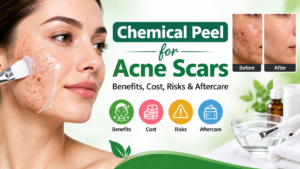

Acne scars can remain on the skin long after active acne has disappeared. They may appear as dark spots, uneven texture, shallow depressions, or deeper scars that affect the overall appearance of the skin. While skincare products can help improve mild discoloration, some people consider professional treatments such as a chemical peel for acne scars.
Chemical peels remove damaged skin layers and promote the development of healthier skin by using carefully chosen acids. Acne-related discoloration, rough texture, and some superficial scars may be improved by treatment, depending on the kind and intensity of the peel.
Chemical peels, however, are not appropriate for all acne scar types. You can make a better choice if you are aware of the advantages, costs, risks, types of peels, and appropriate aftercare.
What Is a Chemical Peel for Acne Scars?
A chemical peel is a professional skin treatment in which a chemical solution is applied to the skin for a controlled amount of time. The solution exfoliates damaged skin cells and stimulates the skin renewal process.
For acne scars, chemical peels are generally used to improve:
- Dark marks left after acne
- Uneven skin tone
- Rough skin texture
- Mild superficial acne scars
- Post-inflammatory hyperpigmentation
- Dull-looking skin
- Mild discoloration around old acne lesions
Chemical peels tend to work better for surface-level discoloration and mild textural changes than for deep, depressed acne scars.
Deep ice-pick, boxcar, or rolling scars may require treatments such as microneedling, laser resurfacing, subcision, fillers, or a combination approach recommended by a dermatologist.
Can Chemical Peels Remove Acne Scars?
Chemical peels usually do not completely “remove” acne scars. Instead, they can make certain scars and acne marks less noticeable by improving skin tone and surface texture.
The results depend on several factors, including:
- Type of acne scar
- Depth of the scar
- Skin type and tone
- Type of chemical peel
- Concentration of the peeling solution
- Number of treatments
- Aftercare
- Whether active acne is still present
Dark acne marks often respond differently from depressed scars. A person with mainly brown or red marks may see more improvement from superficial treatments than someone with deep indentations.
For this reason, a professional skin assessment is important before choosing a peel.
Types of Chemical Peels for Acne Scars
Different chemical peels penetrate the skin to different depths. The appropriate treatment depends on the condition being treated.
1. Salicylic Acid Peel
Salicylic acid is a beta hydroxy acid (BHA) that can penetrate into oily pores. It is commonly used for acne-prone skin because of its exfoliating properties.
A salicylic acid peel may help improve:
- Acne
- Clogged pores
- Excess oil
- Mild post-acne discoloration
- Uneven skin texture
It may be particularly useful for people who continue to experience occasional breakouts.
2. Glycolic Acid Peel
One alpha hydroxy acid (AHA) that exfoliates the skin’s surface is glycolic acid. Professional glycolic acid peels could help with superficial textural irregularities, uneven pigmentation, and dullness.
Glycolic acid can irritate skin, so concentration and frequency of treatment should be carefully chosen, especially for sensitive skin.
3. Lactic Acid Peel
Lactic acid is another AHA and is often considered a gentler exfoliating option. It can help improve skin texture and uneven pigmentation.
People with sensitive or dry skin may sometimes tolerate lactic acid better than stronger exfoliating acids, although any professional peel can cause irritation.
4. Jessner’s Peel
A Jessner’s peel traditionally combines several exfoliating ingredients and can penetrate more deeply than very superficial peels.
It may be used for acne, pigmentation, and some superficial textural concerns. However, stronger peels also have a greater potential for irritation and complications, so professional assessment is important.
5. TCA Peel
Trichloroacetic acid (TCA) peels can be superficial, medium-depth, or used in more targeted techniques depending on concentration and application.
TCA is sometimes used for certain acne scars and pigmentation problems, but stronger TCA treatments require professional expertise because improper application can cause burns, prolonged discoloration, or scarring.
Benefits of Chemical Peels for Acne Scars
When appropriately selected and professionally performed, chemical peels may provide several cosmetic benefits.
1. Improves Dark Acne Marks
One of the most noticeable benefits can be improvement in post-inflammatory hyperpigmentation. Removing damaged surface cells and encouraging skin renewal may gradually make some dark marks less visible.
2. Smooths Skin Texture
Superficial peels can exfoliate accumulated dead skin cells, potentially leaving the skin feeling smoother and more refined.
3. Helps Brighten Dull Skin
By removing some damaged surface cells, a peel may give the skin a fresher appearance.
4. May Help Prevent Some New Breakouts
Certain peels, particularly salicylic acid treatments, can help reduce excess oil and clogged pores. This can be useful for people whose acne and post-acne marks occur together.
5. Can Reduce the Appearance of Mild Scars
Superficial acne scars may become less noticeable after a series of treatments. However, deeper scars usually need treatments specifically designed to remodel deeper layers of skin.
Chemical Peel for Acne Scars: Cost
The cost of a chemical peel for acne scars varies significantly depending on location, clinic, peel type, concentration, dermatologist experience, and the number of sessions required.
A basic superficial peel is generally less expensive than a medium-depth or advanced professional peel.
Your total treatment cost may include:
- Consultation fee
- Chemical peel procedure
- Pre-treatment skincare
- Post-treatment products
- Follow-up appointments
- Multiple treatment sessions
Because prices differ substantially between countries and clinics, it is better to ask the provider for the complete cost rather than relying on a single online price.
A cheaper treatment is not necessarily appropriate if the provider lacks experience with your skin type.
How Many Chemical Peels Are Needed for Acne Scars?
The number of treatments depends on the type of peel and the condition of the skin.
Some people may notice improvement after one treatment, while others require a series of treatments spaced several weeks apart.
Acne scars generally develop over time, so dramatic improvement should not be expected immediately.
A dermatologist may recommend a treatment plan based on:
- Scar depth
- Pigmentation
- Active acne
- Skin sensitivity
- Previous treatments
- Skin tone
- Desired results
The skin may continue changing for weeks after treatment as it recovers and renews itself.
Chemical Peel Procedure: What to Expect
Before treatment, a skincare professional usually evaluates the skin and asks about acne, medications, allergies, previous procedures, and skincare products.
During the procedure, the skin is cleansed and the chemical solution is applied. You may experience temporary:
- Tingling
- Warmth
- Stinging
- Tightness
The provider controls how long the solution remains on the skin according to the treatment being performed.
Afterward, the skin may appear red or feel tight. Depending on the strength of the peel, peeling or flaking may occur over the following days.
Chemical Peel Aftercare
Proper aftercare is extremely important because freshly treated skin can be more sensitive.
1. Use Gentle Skincare Products
Choose a mild cleanser and avoid harsh scrubs or aggressive exfoliators while the skin is recovering.
2. Apply Moisturizer
A gentle moisturizer can help support the skin barrier and reduce dryness and tightness.
3. Wear Sunscreen
Sun protection is especially important after a chemical peel. Use a broad-spectrum sunscreen as directed by your skincare professional and limit unnecessary sun exposure.
Sun exposure during recovery can increase the risk of pigmentation changes.
4. Do Not Pick or Peel Flaking Skin
If the skin begins to peel, allow it to shed naturally. Pulling or scratching peeling skin can increase irritation and potentially cause complications.
5. Temporarily Avoid Strong Actives
Your provider may recommend temporarily stopping products such as retinoids, exfoliating acids, benzoyl peroxide, or other potentially irritating ingredients.
Follow the specific aftercare instructions provided for your peel.
Chemical Peel Risks and Side Effects
Chemical peels can cause side effects, particularly when stronger acids are used or when treatments are performed incorrectly.
Possible side effects include:
- Redness
- Burning or stinging
- Dryness
- Peeling
- Swelling
- Temporary sensitivity
- Changes in skin pigmentation
- Prolonged irritation
- Infection
- Scarring
People with darker skin tones can be particularly concerned about post-inflammatory hyperpigmentation or hypopigmentation after certain procedures. This does not mean chemical peels cannot be used, but treatment selection and professional experience with different skin tones are important.
A peel should not be performed casually at home using high-strength professional acids.
Who Should Avoid Chemical Peels?
Chemical peels may not be appropriate for everyone.
A dermatologist may recommend postponing or avoiding treatment if you have:
- Active skin infections
- Open wounds
- Severe active acne inflammation
- Significant skin irritation
- Certain inflammatory skin conditions
- Recent facial procedures
- A history of abnormal scarring
- Certain medication use that affects skin healing
Pregnancy, breastfeeding, medications, and individual medical history should also be discussed with a qualified healthcare professional before treatment.
Chemical Peel vs. Other Acne Scar Treatments
Chemical peels are only one option for treating acne scars.
Depending on the scar type, other treatments may include:
Microneedling: Uses controlled micro-injuries to stimulate collagen production and may help certain depressed acne scars.
Laser resurfacing: Uses laser energy to remodel the skin and improve texture and pigmentation.
Subcision: A technique that releases fibrous bands beneath certain depressed scars.
Dermal fillers: May temporarily raise selected depressed scars.
Topical skincare: Ingredients such as retinoids, azelaic acid, and sunscreen can help manage acne, pigmentation, and overall skin appearance.
The most suitable approach depends on the individual scar pattern rather than simply choosing the most aggressive treatment.
How to Get Better Results From a Chemical Peel
Results are generally better when the treatment is part of a broader acne and skincare plan.
Consider these steps:
- Treat active acne before aggressively treating scars.
- Use sunscreen consistently.
- Follow your provider’s aftercare instructions.
- Avoid picking acne and peeling skin.
- Maintain a gentle skincare routine.
- Give the skin enough time to recover between procedures.
- Use only professionally recommended peel strengths.
- Have deeper scars evaluated separately.
Remember that acne scars often require patience. Combining appropriate professional treatment with long-term skincare can provide more realistic results than expecting one procedure to completely erase scars.
When Should You See a Dermatologist?
Consider consulting a dermatologist if your acne scars are deep, widespread, painful, or resistant to skincare products.
Professional evaluation is particularly useful if you have darker skin, a history of pigmentation problems, or previous reactions to chemical exfoliants.
A dermatologist can determine whether your concern is primarily:
- Hyperpigmentation
- Red post-acne marks
- Atrophic scars
- Raised scars
- Active acne
- Uneven texture
This distinction matters because different problems respond to different treatments.
Frequently Asked Questions
Is a chemical peel good for acne scars?
Chemical peels can improve certain superficial acne scars, dark marks, and uneven texture. They are generally less effective for deep depressed scars that extend into deeper layers of the skin.
How long does it take to see results?
Some changes may become noticeable after the skin heals, but multiple treatments may be needed for more significant improvement. Results vary according to the type of peel and the individual’s skin.
Are chemical peels permanent?
The improvement from a chemical peel can last, but it does not prevent new acne or completely eliminate the possibility of future pigmentation and scarring. Good acne control and sun protection can help maintain results.
Can I use a chemical peel at home?
Mild cosmetic exfoliating products are available for home use, but professional-strength chemical peels should not be performed at home. Strong acids can cause chemical burns, pigmentation problems, and scarring when used incorrectly.
Can chemical peels remove deep acne scars?
Chemical peels generally have limited effects on deep acne scars. A dermatologist may recommend treatments such as microneedling, laser procedures, subcision, fillers, or combinations depending on the scar type.
Final Thoughts
A chemical peel for acne scars can be a useful treatment for certain types of post-acne discoloration, uneven texture, and superficial scarring. Benefits can include smoother-looking skin, reduced appearance of dark marks, and a brighter, more even complexion.
Chemical peels, however, are not a cure-all for all acne scars. The outcome depends on the type and depth of the scar, skin tone, intensity of the treatment, and aftercare.
Before undergoing treatment, speak with a licensed dermatologist or skilled skincare specialist if you are thinking about getting a professional peel. Give your skin enough time to heal in between treatments and refrain from using strong chemical acids without the proper medical advice.