
Dry vs Wet Dog Food: Benefits, Differences & Which to Choose
Choosing the right food for your dog is one of the most important decisions you can make as a pet owner. A balanced diet supports healthy growth, strong muscles, a healthy coat, normal energy levels, and overall well-being. However, with so many dog food choices available, many pet owners wonder whether dry dog food or wet dog food is better.
When prepared appropriately for a dog’s life stage and nutritional requirements, both dry and wet dog food can offer comprehensive and balanced nourishment. Their moisture content, texture, calorie density, storage, ease of feeding, and palatability are typically the largest variations.
This tutorial will contrast dry and wet dog food, outline the advantages and possible disadvantages of each, and go over the things you should think about when selecting food for your dog.
What Is Dry Dog Food?
Dry dog food, commonly called kibble, is a type of dog food made from a mixture of ingredients that is cooked and processed into small pieces. It generally contains much less moisture than canned or pouch-style wet food.
Dry dog food is popular because it is convenient, easy to store, and simple to measure. Many formulas are available for puppies, adult dogs, senior dogs, small breeds, large breeds, and dogs with specific nutritional needs.
A quality dry dog food should provide appropriate amounts of protein, fat, carbohydrates, vitamins, minerals, and other nutrients needed by the dog.
Benefits of Dry Dog Food
1. Convenient to Store
One of the biggest advantages of dry dog food is convenience. An unopened bag can be stored easily, and individual meals can be measured quickly.
After opening, proper storage in a sealed container can help maintain freshness and protect the food from moisture and pests.
2. Easy to Measure
Kibble is relatively easy to portion. This can be useful for pet owners who need to carefully monitor how much their dog eats.
Portion control is particularly important because dogs can gain excess weight when they regularly consume more calories than they need.
3. Often More Convenient for Multi-Dog Homes
If you have multiple dogs, dry food can be practical because it is easy to measure and serve. Different dogs can receive different portions based on their size, age, activity level, and nutritional requirements.
4. Generally Less Messy
Dry food usually creates less mess than wet food. It does not require refrigeration before opening and can be carried easily during travel.
For busy pet owners, this convenience can make dry dog food an attractive option.
5. Can Be Used in Food Puzzles
Kibble can work well in many food-dispensing toys and puzzle feeders. These tools can encourage dogs to work for their food and may help make mealtime more engaging.
Potential Drawbacks of Dry Dog Food
Dry food contains considerably less water than wet food. Dogs that do not drink enough water may benefit from having additional moisture included in their diet.
Some dogs may also find wet food more appealing because of its stronger smell and softer texture.
Another consideration is calorie density. Because dry food contains less water, a relatively small volume can contain a substantial number of calories. Following the feeding guidance on the product and adjusting portions according to your dog’s individual needs is important.
What Is Wet Dog Food?
Wet dog food is usually sold in cans, trays, or pouches and contains significantly more moisture than dry kibble. It often has a soft texture and may be available as pâté, chunks in gravy, stew, or other formulations.
Wet food can be especially appealing to dogs that prefer strong aromas and soft textures.
Like dry food, wet dog food comes in formulas designed for different life stages and nutritional requirements.
Benefits of Wet Dog Food
1. Higher Moisture Content
One of the most noticeable differences between wet and dry dog food is moisture.
The high water content of wet food can contribute to a dog’s overall daily water intake. This may be useful for dogs that are reluctant to drink from their water bowl.
However, fresh drinking water should still be available to dogs at all times.
2. Appealing Taste and Aroma
Many dogs find wet food highly palatable. Its smell and texture may encourage eating, especially in dogs that are picky or have temporarily reduced interest in food.
3. Soft Texture
Wet food is easier to chew than many dry foods. This texture can be useful for dogs that have difficulty chewing, although dental problems should be discussed with a veterinarian rather than managed through food texture alone.
4. Useful for Certain Feeding Situations
Wet food can be helpful when a dog needs a softer diet or when a veterinarian recommends a particular type of food for a specific nutritional situation.
The exact choice should depend on the dog’s health and nutritional requirements.
Potential Drawbacks of Wet Dog Food
Wet food can be more expensive per serving than some dry foods, particularly when it is used as the dog’s primary diet.
Once opened, wet food generally needs to be refrigerated and used according to the manufacturer’s storage instructions.
It can also be messier to serve and may have a shorter usable period after opening compared with dry kibble.
Another important consideration is calorie content. Not every wet food has the same number of calories, so comparing feeding instructions and calorie information can be helpful.
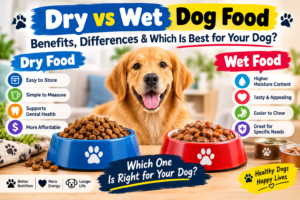
Dry vs Wet Dog Food: Key Differences
When comparing dry vs wet dog food, there is no single food type that is automatically perfect for every dog.
Dry food is usually more convenient, easier to measure, and simpler to store. Wet food provides substantially more moisture and may be more attractive to dogs that prefer soft, aromatic meals.
The best choice depends on factors such as your dog’s age, size, activity level, health, preferences, and the nutritional adequacy of the specific product.
Which Is Better for Puppies?
Puppies have different nutritional requirements from adult dogs because they are growing rapidly. Their food should be formulated for growth and development.
Both dry and wet puppy foods can be appropriate when they are complete and balanced for puppies.
Large-breed puppies can have particularly important nutritional considerations because excessive or unbalanced nutrient intake can contribute to developmental problems. Owners of large-breed puppies should choose an appropriate growth formula and follow professional feeding guidance when needed.
Which Is Better for Senior Dogs?
Senior dogs may experience changes in activity, appetite, body condition, and health as they age.
Some senior dogs enjoy wet food because of its soft texture and strong aroma. Others continue to eat dry food comfortably.
Rather than automatically switching food because a dog reaches a certain age, consider the dog’s individual nutritional needs, body condition, activity level, and any health conditions.
A veterinarian can help determine whether a specific senior diet is appropriate.
Is Wet Food Better for Dogs With Sensitive Stomachs?
A dog’s digestive response depends on the individual dog and the ingredients in the food. Wet food is not automatically better for sensitive stomachs.
For a dog experiencing repeated vomiting, diarrhea, poor appetite, weight loss, or other digestive symptoms, changing food repeatedly without professional guidance may not solve the underlying problem.
If digestive problems continue, a veterinarian should evaluate the dog and recommend an appropriate diet if necessary.
Is Dry Food Better for Dental Health?
A common belief is that ordinary kibble automatically cleans a dog’s teeth. While some specially formulated dental diets are designed to provide a mechanical cleaning effect, regular dry food should not be considered a substitute for proper dental care.
Daily tooth brushing with appropriate canine dental products and regular veterinary dental examinations can be important parts of maintaining oral health.
Can You Mix Dry and Wet Dog Food?
Yes, many pet owners combine dry and wet food. This approach can provide the convenience of kibble while adding moisture and variety from wet food.
However, calories from both foods should be considered. Simply adding wet food on top of the normal amount of kibble can increase total calorie intake and potentially contribute to weight gain.
If you combine foods, adjust portions so the total daily amount remains appropriate for your dog’s nutritional needs.
How to Choose the Best Dog Food
Instead of focusing only on whether food is dry or wet, consider the nutritional quality of the specific product.
Look for a food that is appropriate for your dog’s life stage and meets established nutritional standards. Check the product label for feeding instructions and nutritional information.
You should also consider:
- Your dog’s age
- Breed or expected adult size
- Activity level
- Body condition
- Food preferences
- Known food sensitivities
- Any diagnosed medical conditions
- Your veterinarian’s dietary recommendations
- Your budget and feeding routine
Remember that the most expensive dog food is not necessarily the right food for every dog.
How Much Dog Food Should You Feed?
There is no universal amount that every dog should eat. Feeding requirements depend on the dog’s body weight, age, activity level, metabolism, and the calorie density of the food.
Start with the manufacturer’s feeding guidelines, then monitor your dog’s body condition and adjust the amount when appropriate.
Treats and snacks should also be included when considering the dog’s total daily calorie intake.
If you are unsure about the appropriate amount, particularly for a puppy, overweight dog, underweight dog, or dog with a medical condition, ask your veterinarian for individualized guidance.
Dry vs Wet Dog Food: Can They Be Used Together?
For many healthy dogs, a combination of dry and wet food can be part of a balanced feeding routine if both foods are nutritionally appropriate and portions are managed correctly.
Some owners use wet food as a topper over kibble, while others feed separate meals.
The important point is to make sure the overall diet provides appropriate nutrition without excessive calories.
Frequently Asked Questions
Is dry or wet dog food healthier?
Neither type is automatically healthier. Both can provide complete and balanced nutrition when properly formulated. The right choice depends on the individual dog and the nutritional quality of the product.
Can dogs eat wet and dry food together?
Yes. Many dogs can eat a combination of wet and dry food. Make sure the total daily amount is appropriate and account for calories from both foods.
Is wet food good for dogs that do not drink enough water?
Wet food contains substantially more moisture than dry kibble, so it can contribute to daily water intake. However, dogs should always have access to clean, fresh drinking water.
Is dry dog food easier to store?
Generally, yes. Unopened dry food is convenient to store, while opened wet food usually requires refrigeration and should be used according to the manufacturer’s instructions.
Should puppies eat wet or dry food?
Puppies can eat either wet or dry food as long as the food is complete and balanced for growth and appropriate for the puppy’s nutritional needs.
Can changing dog food cause digestive problems?
A sudden dietary change can cause digestive upset in some dogs. When changing foods, a gradual transition is generally preferable unless a veterinarian gives different instructions.
Final Thoughts
The dry vs wet dog food debate does not have one universal answer. Both types can be useful parts of a healthy feeding plan when they provide appropriate nutrition.
While wet dog food gives more moisture and a velvety, frequently very attractive feel, dry dog food is more practical, easy to measure, and easy to store. While some dogs prefer wet food, others thrive on dry food, and still others like a mix of the two.
The most crucial objective is to select a diet that is suitable for your dog’s demands and life stage. Pay attention to portion sizes, keep an eye on your dog’s physical condition, give them fresh water, and see a veterinarian if they continue to have health or nutritional issues.
By focusing on nutrition rather than simply choosing between a can and a bag, you can create a feeding routine that supports your dog’s health and quality of life for years to come.