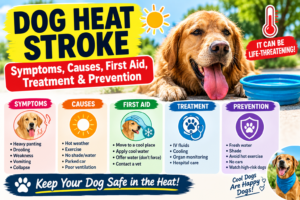

When a dog gets dangerously overheated, a potentially fatal condition known as dog heat stroke can occur. Dogs are less able to cool themselves than humans because they mostly use panting instead of sweating to control body temperature. A dog’s body temperature can quickly rise due to hot weather, high humidity, vigorous exercise, inadequate ventilation, and being left in a car.
Any dog can get heat stroke, but some are more susceptible than others, such as older dogs, dogs with thick coats, flat-faced breeds, overweight dogs, and dogs with specific respiratory or cardiac issues.
It may be possible to save your dog’s life if you are aware of the signs of heat stroke in dogs, what to do right away, and how to avoid overheating.
What Is Heat Stroke in Dogs?
Heat stroke occurs when a dog’s body becomes dangerously overheated and can no longer regulate its temperature effectively.
A dog’s normal body temperature is generally around 100°F to 102.5°F (37.7°C to 39.2°C). Temperatures above the normal range can indicate hyperthermia, and severe overheating can cause damage to multiple organs.
Heat stroke can progress quickly. It can affect the brain, kidneys, liver, gastrointestinal tract, blood-clotting system, and other organs.
For this reason, suspected heat stroke should always be treated as a veterinary emergency.
Dog Heat Stroke Symptoms
Recognizing the early warning signs is extremely important. Symptoms can become more severe as overheating progresses.
Common signs include:
- Heavy or uncontrolled panting
- Excessive drooling
- Thick or sticky saliva
- Red or abnormal-looking gums
- Weakness
- Lethargy
- Restlessness or distress
- Confusion or disorientation
- Difficulty walking
- Vomiting
- Diarrhea
- Collapse
- Seizures
- Loss of consciousness
Dogs with severe heat stroke may develop abnormal gum or tongue coloration, including very dark red, purple, blue, or gray coloration.
If your dog is showing severe symptoms, do not wait to see whether they improve on their own.
What Causes Heat Stroke in Dogs?
Several situations can cause a dog to overheat.
1. Hot Weather
High outdoor temperatures are an obvious risk, particularly when a dog is exposed to direct sunlight for extended periods.
However, heat stroke can occur even when the weather does not feel extremely hot, especially when humidity is high or a dog is exercising.
2. Leaving a Dog in a Car
A parked vehicle can become dangerously hot very quickly, even when the weather outside does not seem extreme.
Never leave a dog alone inside a parked vehicle, even with the windows partially open or the car parked in shade.
3. Excessive Exercise
Running, playing, hiking, or exercising vigorously in hot weather can cause a dog’s body temperature to rise rapidly.
Dogs may continue exercising because they are excited, even when their bodies are becoming dangerously overheated.
4. Lack of Shade and Water
Dogs kept outdoors need access to fresh water and a cool, shaded environment.
A yard exposed to direct sunlight without adequate shade can become dangerous during hot weather.
5. Poor Ventilation
Enclosed spaces with little airflow can trap heat.
A poorly ventilated room, crate, shed, or vehicle can become hazardous, especially during hot weather.
Which Dogs Are Most at Risk?
Although any dog can develop heat stroke, certain dogs are more vulnerable.
Flat-Faced Breeds
Brachycephalic breeds such as Bulldogs, French Bulldogs, Pugs, and similar dogs can have more difficulty cooling themselves efficiently.
Overweight Dogs
Extra body weight can increase the risk of overheating.
Older Dogs
Senior dogs may have a harder time coping with extreme temperatures.
Thick-Coated Dogs
Dogs with dense coats may be more vulnerable to overheating, especially when exposed to high temperatures for prolonged periods.
Dogs With Heart or Respiratory Problems
Underlying health problems can make it harder for some dogs to tolerate heat and strenuous activity.
Very Young Dogs
Puppies may also require extra attention during hot weather because they can become dehydrated or overheated quickly.
Importantly, any dog can experience heat stroke, including healthy dogs.
Dog Heat Stroke First Aid: What to Do
If you suspect your dog has heat stroke, act immediately.
Step 1: Move Your Dog Away From the Heat
Take your dog out of direct sunlight and move them to a shaded or comfortably cool environment.
Turn on air conditioning or a fan if available.
Step 2: Begin Gentle Cooling
Begin cooling your dog while arranging veterinary care.
Veterinary guidance recommends using cool or room-temperature water rather than extreme cold. Cool water can be applied to areas such as the neck, armpits, abdomen, and legs.
A fan can help move air over the dog’s body and support evaporative cooling.
Step 3: Offer Water, But Don’t Force It
Make fresh water available if your dog is alert and able to drink.
Do not force water into the dog’s mouth, particularly if they are weak, confused, or having difficulty swallowing.
Step 4: Contact a Veterinarian Immediately
Heat stroke can cause internal organ damage even after the dog’s body temperature appears to return to normal.
Call a veterinarian or emergency veterinary hospital and explain what happened.
Continue cooling and transport your dog for professional evaluation as directed.
The American Veterinary Medical Association recommends taking a dog with suspected heat stroke to the closest veterinary hospital as soon as possible while beginning cooling measures.
What NOT to Do During Dog Heat Stroke
Knowing what to avoid is just as important.
Don’t Wait
Do not wait for severe symptoms such as collapse or seizures before seeking help.
Don’t Use Ice Baths
Extreme cold can interfere with safe cooling. Veterinary guidance recommends cool rather than very cold water.
Don’t Cover Your Dog With Wet Towels for Extended Periods
Wet towels can trap heat if they remain in place and become warm. If towels are used, follow veterinary first-aid guidance and replace or rewet them frequently.
Don’t Force Your Dog to Drink
A confused or severely ill dog may have difficulty swallowing safely.
Don’t Assume Cooling Solves the Problem
Even if your dog seems better after cooling, internal complications can develop later.
Veterinary assessment is important after suspected heat stroke.
How Is Heat Stroke Treated by a Veterinarian?
At the veterinary hospital, the priority is to safely control the dog’s body temperature and assess for complications.
Treatment may include:
- Controlled cooling
- Intravenous fluids
- Oxygen support
- Monitoring body temperature
- Monitoring blood pressure
- Blood tests
- Monitoring kidney and liver function
- Treatment for shock
- Treatment for seizures when necessary
- Monitoring for blood-clotting problems
- Hospital observation
The exact treatment depends on how severe the heat stroke is and whether organ damage has occurred.
Can a Dog Recover From Heat Stroke?
Yes, some dogs recover completely, particularly when cooling and veterinary treatment begin quickly.
However, severe heat stroke can cause permanent organ damage or death.
The outcome depends on factors such as how high the body temperature became, how long the dog remained overheated, and the dog’s overall health before the event.
This is why early recognition and immediate treatment are so important.
10 Ways to Prevent Heat Stroke in Dogs
Prevention is the best approach.
1. Always Provide Fresh Water
Keep clean, fresh water available throughout the day.
When traveling or walking, carry water and a suitable bowl for your dog.
2. Provide Shade
If your dog spends time outdoors, make sure they have access to reliable shade.
Remember that the position of the sun changes during the day, so an area that is shaded in the morning may become sunny later.
3. Avoid Hot-Day Exercise
Plan walks and exercise for cooler parts of the day, such as early morning or evening.
Avoid intense running or prolonged outdoor activity during extreme heat.
4. Never Leave Your Dog in a Parked Car
This is one of the most important heat-safety rules.
Never leave your dog unattended in a parked vehicle, even for a short period.
5. Use Air Conditioning or Fans
During very hot weather, keep your dog in a cool, well-ventilated environment whenever possible.
Fans and air conditioning can help create a more comfortable environment.
6. Watch Overweight and High-Risk Dogs
Dogs with obesity, breathing problems, heart disease, thick coats, or flat faces may need additional protection from heat.
Ask your veterinarian about appropriate exercise and heat-management strategies.
7. Don’t Overdo Exercise
A dog may appear enthusiastic about running or playing even when they are becoming overheated.
Take frequent breaks and stop activity if your dog shows excessive panting, weakness, or distress.
8. Check the Environment
Before taking your dog outside, consider not only the air temperature but also humidity, direct sunlight, ventilation, and the surface they will walk on.
Hot pavement can also injure paw pads.
9. Never Rely on Grooming Alone
Regular grooming can help maintain a healthy coat, but shaving a dog’s coat is not automatically the best way to prevent heat stroke.
Ask your veterinarian or professional groomer what grooming approach is appropriate for your dog’s breed and coat.
10. Learn Your Dog’s Warning Signs
Every dog is different.
Learn how your dog normally behaves during exercise and warm weather so you can recognize unusual panting, weakness, confusion, or reluctance to continue.
Heat Exhaustion vs. Heat Stroke
Heat exhaustion and heat stroke are related but should not be treated casually.
A dog that is heavily panting after exercise may simply need rest and cooling. However, signs such as weakness, confusion, vomiting, difficulty walking, collapse, seizures, or abnormal gum color are serious warning signs.
Once severe symptoms appear, treat the situation as an emergency.
It can be difficult for owners to determine exactly how serious overheating is, so contacting a veterinarian is the safest option.
Can Heat Stroke Happen on a Mild Day?
Yes.
Heat stroke is not limited to extremely hot summer days. Exercise, humidity, poor ventilation, direct sunlight, and individual health factors can all increase risk.
Dogs with restricted airways may become overheated under conditions that seem only moderately warm to humans.
Final Thoughts
Heat stroke in dogs is a dangerous and potentially lethal situation. Warning signs include excessive panting, drooling, weakness, disorientation, vomiting, difficulty walking, collapse, and unusual gum color.
Move your dog to a cooler spot if you suspect heat stroke, start cooling them gently with room-temperature or cool water, stay away from extremely cold temperatures, offer water without pressuring them, and get in touch with a veterinarian right away.
Prevention is the best course of action. Give dogs access to fresh water and shade, prevent them from engaging in strenuous activities during hot weather, keep them out of parked cars, and exercise extra caution around flat-faced, overweight, elderly, thick-coated, or medically vulnerable dogs.
When a dog becomes dangerously overheated, prompt action can make a big difference.
Frequently Asked Questions
1. What are the first signs of heat stroke in dogs?
Early warning signs can include heavy panting, excessive drooling, restlessness, weakness, and distress. More severe signs include confusion, vomiting, difficulty walking, collapse, seizures, and abnormal gum or tongue color.
2. What should I do if my dog has heat stroke?
Move your dog into a cool environment, begin gentle cooling with cool or room-temperature water, and contact a veterinarian or emergency veterinary hospital immediately.
3. Can dogs die from heat stroke?
Yes. Severe heat stroke can cause multiple-organ damage and can be fatal, particularly when treatment is delayed.
4. Can I give my dog ice water during heat stroke?
Avoid extreme cooling methods such as ice baths. Veterinary first-aid guidance favors controlled cooling with cool or room-temperature water.
5. How can I prevent heat stroke in my dog?
Provide fresh water and shade, avoid strenuous activity during hot periods, keep your dog in a cool environment, and never leave them alone in a parked car.
6. Are Pugs and Bulldogs more likely to get heat stroke?
Yes. Flat-faced breeds can have restricted airways and may have greater difficulty cooling themselves, making them particularly vulnerable to heat-related illness.
7. Does a dog need a vet after heat stroke?
Yes. Even if your dog appears to recover after cooling, heat stroke can cause internal complications that are not immediately obvious. Veterinary evaluation is strongly recommended.