
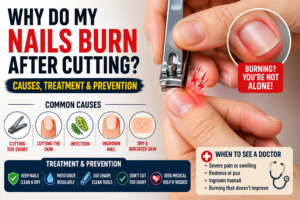

Have you ever cut your nails and then experienced a burning, stinging, or painful sensation around the nail? Although cutting your nails is typically a straightforward aspect of personal hygiene, burning can occasionally occur as a result of the nail or surrounding skin being irritated, cut too short, or exposed to an underlying nail issue.
After cutting your nails, mild burning is usually transient and goes away quickly. Persistent burning, redness, swelling, or pain, however, could be signs of an infection, ingrown nail, skin irritation, or another ailment that requires medical attention.
Knowing why your nails burn after cutting can help you figure out what’s causing it and stop it from happening again.
Why Do My Nails Burn After Cutting?
There are several possible reasons your nails may burn after trimming. The most common causes include cutting the nails too short, irritating the surrounding skin, using dirty or blunt nail clippers, or having an existing nail or skin condition.
Here are some of the most common causes.
1. Cutting Your Nails Too Short
One of the most common reasons for burning after cutting nails is trimming them too short.
When you cut the nail extremely close to the skin, the sensitive area underneath and around the nail can become exposed. This may cause:
- Burning
- Stinging
- Tenderness
- Increased sensitivity
- Pain when touching the area
Your nails provide protection to the fingertips and toes. Cutting them excessively short can remove some of that protection.
Try leaving a small amount of nail beyond the skin rather than cutting directly into the nail bed.
2. Cutting the Skin Around the Nail
Sometimes nail clippers accidentally cut the surrounding skin or cuticle.
Even a tiny cut can cause a burning sensation, particularly when the area comes into contact with water, soap, sanitizer, or skincare products.
If you notice a small cut after trimming, avoid picking at it. Gently clean the area and keep it protected while it heals.
3. Using Dull or Poor-Quality Nail Clippers
A sharp, clean nail clipper creates a cleaner cut.
A dull clipper may crush, split, or bend the nail instead of cutting through it smoothly. This can create tiny cracks or rough edges that irritate the surrounding skin.
Using damaged nail tools can also increase the risk of accidental cuts.
Replace nail clippers that no longer cut smoothly and keep your tools clean.
4. Ingrown Toenail
If the burning sensation occurs mainly around a toenail, an ingrown toenail could be responsible.
An ingrown toenail happens when the edge of the nail grows into the surrounding skin. Cutting the nail incorrectly can sometimes make the irritation worse.
Common symptoms include:
- Burning or throbbing pain
- Redness
- Swelling
- Tenderness
- Pain when wearing shoes
- Sometimes drainage or pus
To reduce the risk of ingrown toenails, avoid cutting toenails extremely short or rounding the edges deeply.
5. Nail or Skin Infection
A nail infection can cause burning, tenderness, redness, swelling, or changes in the nail.
Fungal nail infections more commonly cause changes such as:
- Thickened nails
- Yellow, white, or brown discoloration
- Brittle nails
- Crumbling edges
- Nail separation
A bacterial infection around the nail can cause more noticeable redness, swelling, warmth, tenderness, or drainage.
If burning continues after cutting and you notice signs of infection, it is important to have the area evaluated by a healthcare professional.
6. Irritation From Nail Products
If you use nail polish, gel nails, acrylic nails, nail glue, acetone, or other manicure products, the surrounding skin may become irritated.
Some people develop sensitivity to ingredients in nail products. Symptoms can include:
- Burning
- Redness
- Itching
- Dryness
- Peeling
- Swelling
If symptoms repeatedly appear after using a particular nail product, stop using it and discuss the reaction with a healthcare professional.
7. Dry or Cracked Skin
Dry skin around the nails can become more sensitive after cutting.
When the skin is cracked or irritated, even a small amount of pressure from nail clippers can cause discomfort.
This is particularly common during cold or dry weather or when you frequently wash your hands.
Regularly applying a fragrance-free hand cream or moisturizer can help keep the skin around your nails comfortable.
8. Cutting an Already Damaged Nail
If your nail is already cracked, bruised, split, or injured, cutting it may expose a sensitive area.
The nail may feel painful or burn because the tissues underneath have already been irritated.
In this situation, avoid unnecessary trimming and protect the affected nail until it grows out or heals.
What Should You Do If Your Nails Burn After Cutting?
If the burning is mild and there are no signs of infection or significant injury, simple home care may be enough.
Clean the Area
Gently wash the finger or toe with clean water and mild soap.
Avoid aggressive scrubbing.
Keep It Dry
After washing, gently pat the area dry. Excess moisture around damaged skin can contribute to irritation.
Apply a Gentle Moisturizer
If the surrounding skin is dry, use a fragrance-free moisturizer.
Avoid applying strongly scented products to freshly irritated skin.
Protect Small Cuts
If you accidentally cut the skin, keep the area clean and protect it with a small bandage if necessary.
Avoid Further Trimming
Give the nail and surrounding skin time to recover before cutting it again.
How to Prevent Burning After Cutting Your Nails
Prevention is usually easier than dealing with painful or irritated nails.
1. Don’t Cut Nails Too Short
Leave a small amount of nail rather than trimming right down to the skin.
For fingernails, following the natural shape of the fingertip can help prevent unnecessary irritation.
For toenails, cutting relatively straight across can help reduce the risk of ingrown nails.
2. Use Clean Nail Clippers
Clean your nail tools before and after use.
If you share nail tools with other people, consider using your own personal tools instead. Sharing improperly cleaned tools can increase the risk of spreading infections.
3. Use Sharp, Good-Quality Tools
A sharp clipper should cut through the nail without excessive force.
Avoid repeatedly squeezing a dull clipper because this can damage the nail.
4. Don’t Cut Your Cuticles Aggressively
The cuticle helps protect the area where the nail grows.
Cutting or pushing the cuticle too aggressively can irritate the surrounding skin and potentially increase the risk of infection.
5. Moisturize Regularly
Apply hand cream or moisturizer around your nails regularly, especially after washing your hands.
For very dry skin, a thicker moisturizer can be useful at night.
6. Avoid Biting or Picking Nails
Nail biting and picking can damage both the nail and surrounding skin.
Small wounds around the nail can become irritated or infected.
7. Be Careful With Manicures
If you regularly get gel, acrylic, or artificial nails, pay attention to any burning, itching, redness, or swelling.
Repeated reactions should not be ignored. Give your nails a break and seek professional advice if symptoms continue.
When Is Burning After Nail Cutting Normal?
A small amount of temporary tenderness or burning can occur after trimming, particularly if you cut the nail shorter than usual or accidentally nicked the surrounding skin.
Mild irritation should generally improve rather than become progressively worse.
However, persistent or worsening pain is not something you should simply ignore.
When Should You See a Doctor?
You should consider seeking medical attention if you experience:
- Severe or increasing pain
- Significant swelling
- Spreading redness
- Pus or other drainage
- Fever
- A nail that becomes very dark after an injury
- A nail that separates from the nail bed
- Repeated infections
- Burning that does not improve
- An ingrown toenail that is becoming worse
People with diabetes, poor circulation, or conditions that affect immune function should be especially careful with foot and nail injuries and seek medical advice when problems occur.
Can Cutting Nails Cause Infection?
Cutting nails itself does not normally cause an infection. However, cutting the surrounding skin, using contaminated tools, or creating small wounds can provide an opportunity for bacteria or fungi to enter.
To reduce the risk:
- Wash your hands and nails before trimming.
- Clean your nail clippers.
- Avoid cutting the skin.
- Don’t share nail tools.
- Keep small cuts clean and protected.
- Avoid picking at irritated skin.
Good nail hygiene is an important part of preventing nail problems.
Why Do My Toenails Burn More Than Fingernails?
Toenails may experience more irritation because they are exposed to shoes, socks, moisture, pressure, and friction.
A tight shoe can press against the nail and surrounding skin, making an already irritated toenail feel worse after cutting.
Toenail burning may also be related to an ingrown nail, fungal infection, injury, or repeated pressure.
If only one toenail repeatedly burns after trimming, pay attention to its shape, thickness, color, and surrounding skin.
Can Nail Fungus Cause Burning?
Nail fungus does not always cause burning. More commonly, it causes nail thickening, discoloration, brittleness, or crumbling.
However, irritated skin around an affected nail can sometimes become uncomfortable or painful.
If your nails have persistent discoloration or structural changes, a healthcare professional can determine whether a fungal infection or another nail condition is responsible.
Final Thoughts
If you are wondering “Why do my nails burn after cutting?”, the cause is often something simple, such as cutting the nails too short, irritating the surrounding skin, using a dull clipper, or trimming an already sensitive nail.
However, burning can sometimes occur because of an ingrown toenail, infection, dry skin, nail injury, or reaction to manicure products.
The best prevention is to use clean, sharp nail tools, avoid cutting nails too short, protect the surrounding skin, moisturize regularly, and avoid aggressive cuticle trimming.
Mild burning that quickly improves is usually less concerning. But if you develop significant pain, swelling, redness, pus, or symptoms that keep returning, consult a healthcare professional for proper evaluation.
Frequently Asked Questions
Why do my nails hurt and burn after cutting?
Nails may burn or hurt after cutting if they were trimmed too short, the surrounding skin was accidentally cut, or the nail was already damaged. Irritation from nail products or an underlying infection can also cause discomfort.
How long should burning last after cutting nails?
Mild irritation should generally improve relatively quickly. If burning persists, becomes stronger, or is accompanied by swelling, redness, or drainage, seek medical advice.
Why do my toenails burn after cutting them?
Toenail burning may result from cutting too short, an ingrown toenail, pressure from shoes, nail injury, or infection.
Should I cut my nails shorter if they hurt?
No. Cutting them even shorter may increase irritation. Allow the nail to grow and avoid trimming into the sensitive area.
Can dirty nail clippers cause burning?
Dirty nail tools can introduce bacteria or fungi through small cuts and may increase the risk of infection. Always clean your nail clippers regularly.
How can I stop nail burning after cutting?
Keep the area clean, avoid further trimming, moisturize dry surrounding skin, and protect small cuts. If symptoms persist or worsen, seek medical evaluation.
When is burning after cutting nails a sign of infection?
Burning accompanied by increasing redness, warmth, swelling, tenderness, pus, drainage, or fever can indicate an infection and should be evaluated by a healthcare professional.