
Can Stomach Problems Cause Blackheads? Understanding the Gut-Skin Connection
Have you ever noticed more blackheads when you are experiencing bloating, constipation, indigestion, or other digestive problems? This can make you wonder: Can stomach problems cause blackheads?
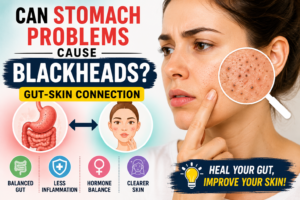
The answer is not completely straightforward. Stomach or digestive problems do not directly cause blackheads in the same way that clogged pores, excess oil, and dead skin cells do. However, researchers are increasingly interested in the gut-skin connection, which describes the possible relationship between digestive health, inflammation, the immune system, hormones, and skin conditions such as acne.
Your gut and skin communicate through several biological pathways. Changes in the gut microbiome may influence inflammation and other processes that can potentially affect acne-prone skin. However, more research is needed to understand exactly how strong this relationship is.
In this article, we will explain the possible connection between digestive health and blackheads, what actually causes blackheads, and what you can do to support both your skin and digestive health.
What Are Blackheads?
Blackheads are a type of acne called open comedones. They form when a pore becomes clogged with a mixture of sebum, dead skin cells, and other debris.
When the material inside the pore is exposed to air, it can oxidize and become dark. This is why blackheads appear black or dark—not necessarily because the pore contains dirt.
Blackheads commonly appear on:
- Nose
- Forehead
- Chin
- Cheeks
- Chest
- Back
People with oily or combination skin may be more likely to develop them because excess sebum can contribute to clogged pores.
Can Stomach Problems Cause Blackheads?
Stomach problems are not considered a direct cause of blackheads.
Blackheads primarily develop because pores become clogged with oil and dead skin cells. Digestive symptoms such as gas, bloating, constipation, or indigestion do not directly block your pores.
However, there may be an indirect relationship between digestive health and acne-related skin problems.
The possible connection involves the gut microbiome, inflammation, hormones, immune function, and diet.
This means that improving digestive health may support overall health and potentially benefit your skin, but treating a stomach problem alone is not a guaranteed treatment for blackheads.
What Is the Gut-Skin Connection?
The gut-skin connection refers to the communication between your digestive system and your skin.
Your digestive tract contains trillions of microorganisms, including bacteria that help support digestion and other body functions. This community is known as the gut microbiome.
Researchers are studying whether changes in the gut microbiome can influence skin inflammation and conditions such as acne.
Several factors may connect the gut and skin, including:
1. Inflammation
Inflammation plays an important role in acne. Changes in the gut environment may influence inflammatory pathways throughout the body.
However, having digestive symptoms does not automatically mean that inflammation in your gut is causing your blackheads.
2. Immune Function
A large part of the body’s immune activity is associated with the digestive system. The gut microbiome interacts with the immune system and may influence how the body responds to different substances.
Because acne also involves inflammatory and immune processes, researchers are investigating whether gut health can influence acne severity.
3. Hormonal Changes
Hormones can strongly influence sebum production. Increased oil production can contribute to clogged pores and blackheads.
Digestive health, nutrition, stress, and hormonal pathways can interact in complex ways, but there is currently no simple rule saying that a specific stomach problem causes hormonal acne or blackheads.
4. Diet
What you eat can influence both digestive health and, in some people, acne.
Certain dietary patterns may affect blood sugar, hormones, inflammation, and the gut microbiome. Some research has explored associations between high-glycemic diets, dairy consumption, and acne, although individual responses vary.
This does not mean that eating one particular food will automatically cause blackheads.
7 Possible Ways Gut Health May Relate to Skin
1. A Balanced Gut Microbiome May Support Overall Health
A diverse and balanced gut microbiome is generally considered beneficial for overall health.
The microbiome interacts with digestion, immune function, and metabolism. Researchers are continuing to investigate how these interactions may influence skin health.
However, there is currently no reliable way to diagnose the cause of blackheads simply by looking at digestive symptoms.
2. Digestive Problems Can Affect Your Diet
When someone experiences digestive discomfort, they may change what they eat.
For example, they may consume more processed foods, skip meals, eat irregularly, or rely on foods that they personally find easier to tolerate.
Dietary changes can affect both digestion and overall skin health.
A balanced eating pattern that includes vegetables, fruits, whole grains, protein, and healthy fats can support general health.
3. Stress Can Affect Both Your Gut and Skin
Stress is another important part of the gut-skin discussion.
Stress can affect digestion and may also influence hormones and inflammatory processes associated with acne.
Some people notice that their skin becomes oilier or breaks out during stressful periods.
Therefore, if digestive symptoms and breakouts occur at the same time, stress may be one factor worth considering.
4. Poor Sleep May Play a Role
Digestive discomfort can interfere with sleep, while poor sleep can make it harder to manage stress and maintain healthy routines.
Although lack of sleep is not a direct cause of blackheads, poor sleep can affect overall wellbeing and may make it more difficult to maintain a consistent skincare routine.
5. Inflammation May Connect the Two
Acne involves inflammation, while some digestive conditions also involve inflammatory processes.
Researchers are interested in whether signals from the gut can influence inflammation elsewhere in the body, including the skin.
But it is important not to assume that every blackhead is caused by internal inflammation or poor gut health.
6. Certain Foods May Affect People Differently
Some people notice that certain foods appear to worsen their acne, while others notice no difference.
Highly processed, high-glycemic foods may be associated with acne in some research, while dairy has also been investigated as a possible dietary factor.
If you suspect that a specific food affects your skin, keep a simple food and symptom diary rather than eliminating large numbers of foods unnecessarily.
7. Gut Health Is Only One Piece of the Puzzle
Even if the gut-skin connection contributes to acne for some people, it is only one possible factor.
Genetics, hormones, sebum production, skincare products, medications, stress, and pore-clogging substances can all influence acne.
Therefore, blackheads should not automatically be blamed on poor digestion.
What Actually Causes Blackheads?
If you want to reduce blackheads, it is important to focus on the direct causes.
Excess Sebum
Your sebaceous glands produce an oily substance called sebum. Too much sebum can increase the likelihood of clogged pores.
Dead Skin Cells
Dead skin cells can accumulate inside pores and combine with sebum.
Clogged Pores
When oil and dead skin cells accumulate, a comedone can form.
Hormonal Changes
Hormonal fluctuations can increase oil production and contribute to acne.
Certain Skincare or Hair Products
Heavy, oily, or pore-clogging products may contribute to breakouts in some people.
Genetics
Some people naturally have oilier skin or are more prone to developing acne and blackheads.
How to Reduce Blackheads Naturally and Safely
If you are dealing with blackheads, you do not necessarily need an aggressive skincare routine.
1. Cleanse Your Skin Gently
Wash your face with a gentle cleanser once or twice daily and after heavy sweating.
Avoid harsh scrubbing because it can irritate your skin.
2. Consider Salicylic Acid
Salicylic acid is a commonly used acne ingredient that can help exfoliate inside pores and may be useful for blackheads.
Start with a lower concentration or use it less frequently if your skin is sensitive.
3. Use Non-Comedogenic Products
Choose moisturizers, sunscreen, makeup, and other skincare products labeled non-comedogenic when possible.
These products are designed to be less likely to clog pores.
4. Don’t Squeeze Blackheads
Trying to squeeze blackheads with your fingers can irritate the skin and potentially cause inflammation or marks.
Professional extraction may be a safer option if you have stubborn blackheads.
5. Support a Balanced Diet
Instead of following extreme “acne detox” diets, focus on a balanced eating pattern.
Include:
- Vegetables
- Fruits
- Whole grains
- Lean proteins
- Healthy fats
- Adequate fluids
If particular foods seem to trigger digestive symptoms or skin problems, discuss your diet with a qualified healthcare professional or registered dietitian.
6. Take Care of Your Digestive Health
For general digestive health, focus on regular meals, adequate hydration, fiber-rich foods when appropriate for you, physical activity, and sufficient sleep.
If you have persistent digestive symptoms, it is better to identify and treat the underlying problem rather than relying on supplements marketed as “gut cleanses.”
Should You Take Probiotics for Blackheads?
Probiotics are often promoted for both digestive and skin health.
Some research has investigated probiotics and acne, but evidence is still developing. Probiotics should not be considered a guaranteed treatment for blackheads.
If you are considering a probiotic supplement, especially if you have an existing digestive condition or take medications, discuss it with a healthcare professional first.
You do not necessarily need supplements to support your gut microbiome. A varied diet containing appropriate sources of fiber can also support a healthy gut environment.
When Should You See a Doctor?
Digestive symptoms that continue for a long time should not simply be blamed on “poor gut health.”
See a healthcare professional if you experience persistent:
- Abdominal pain
- Severe bloating
- Diarrhea
- Constipation
- Vomiting
- Unexplained weight loss
- Blood in the stool
- Changes in bowel habits
For your skin, consider seeing a dermatologist if blackheads are severe, persistent, widespread, or accompanied by painful acne, cysts, or scarring.
Final Thoughts
So, can stomach problems cause blackheads? Not directly. Blackheads mainly develop when pores become clogged with excess oil and dead skin cells.
However, the gut-skin connection is an interesting area of research. The gut microbiome, inflammation, immune function, stress, diet, and other factors may influence skin health, but the relationship is complex and still being studied.
If you have blackheads, focus first on proven skincare habits such as gentle cleansing, non-comedogenic products, and appropriate acne ingredients like salicylic acid. At the same time, support your overall health with a balanced diet, adequate hydration, sleep, and stress management.
Most importantly, don’t assume that every skin problem comes from your stomach. Persistent digestive symptoms or acne deserve proper evaluation so the underlying cause can be addressed.
Frequently Asked Questions
Can constipation cause blackheads?
Constipation is not a direct cause of blackheads. Blackheads form primarily because pores become clogged with sebum and dead skin cells. However, overall diet, stress, and health can influence both digestive and skin health.
Does poor gut health cause acne?
There may be a relationship between gut health and acne, but research is still developing. Poor gut health should not be considered a proven direct cause of acne or blackheads.
Can probiotics clear blackheads?
There is not enough evidence to say that probiotics can reliably clear blackheads. Some research is exploring probiotics and acne, but they should not replace established acne treatments.
What foods cause blackheads?
There is no single food proven to cause blackheads in everyone. Dietary patterns, including high-glycemic foods, have been studied in relation to acne, but individual responses vary.
Can drinking more water remove blackheads?
Drinking adequate water supports overall health and helps prevent dehydration, but water alone cannot unclog blackheads. A consistent skincare routine is more directly relevant to treating clogged pores.
How do I get rid of blackheads?
Gentle cleansing, non-comedogenic skincare, and products containing salicylic acid may help reduce blackheads. Avoid squeezing them because this can irritate the skin.
Is the gut-skin connection scientifically proven?
The gut-skin connection is an active area of scientific research. There is evidence that the gut, immune system, inflammation, and skin can interact, but the exact relationship between gut health and individual acne or blackheads is not yet fully understood.