
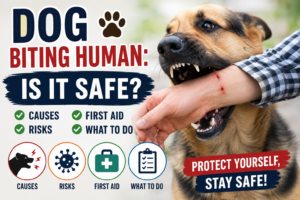

Dog Biting Human: Is It Safe? Causes, Risks, First Aid & What to Do
Even with a well-known or typically amiable dog, an unexpected dog bite might occur. A dog may bite someone while they are playing, when they are scared, when they are defending food or territory, or when they are hurt.
Is a dog bite safe, though? While deeper bites can harm tissue and introduce bacteria into the wound, some bites merely result in a minor scrape or puncture. Additionally, if the biting animal is infectious or its vaccination status is unknown, there may be a danger of contracting rabies.
Knowing what to do immediately after a dog bite can reduce complications and help you get appropriate medical care.
Is a Dog Bite Safe?
Never assume that a dog bite is harmless.
Because bacteria from the dog’s mouth or the surrounding skin can infiltrate damaged tissue, even a small-looking wound might become infected. Deeper bites have the potential to damage blood vessels, muscles, tendons, or nerves.
Rabies is another major issue, especially in regions where the disease is prevalent and when the dog is unidentified, unvaccinated, acting strangely, or cannot be securely supervised.
The World Health Organization recommends immediate and thorough wound washing after a potentially risky animal bite and prompt medical assessment for possible rabies post-exposure treatment.
Why Do Dogs Bite Humans?
Understanding why dogs bite can help prevent future incidents.
1. Fear
A frightened dog may bite when it feels trapped or threatened. Loud noises, unfamiliar people, sudden movements, or being cornered can trigger defensive behavior.
2. Pain or Illness
Dogs experiencing pain may become more defensive. A normally gentle dog might snap if someone touches an injured area or tries to move it while it is sick.
3. Protecting Food or Toys
Some dogs show resource-guarding behavior. They may bite when someone tries to take away food, treats, toys, or another valued object.
4. Protecting Puppies
A mother dog may become protective when people approach her puppies. Children should be taught not to disturb a dog that is caring for young puppies.
5. Territorial Behavior
Some dogs become defensive around their home, yard, kennel, or other territory. Entering their space without proper introduction can increase the risk of a bite.
6. Overexcitement During Play
Puppies and young dogs sometimes use their mouths during play. Although playful mouthing is different from an aggressive bite, it can still cause scratches or puncture wounds.
7. Previous Negative Experiences
Dogs that have experienced abuse, poor socialization, or frightening situations may react defensively around certain people or circumstances.
What Are the Risks of a Dog Bite?
Dog bites can range from minor injuries to serious wounds.
Possible complications include:
- Puncture wounds
- Cuts and lacerations
- Bruising
- Bleeding
- Skin and soft-tissue infections
- Tendon or nerve damage
- Scarring
- Damage to joints or bones
- Tetanus risk
- Rabies exposure
The location and depth of the bite are important. Bites involving the face, hands, feet, joints, or other sensitive areas may require particular attention.
The CDC advises medical evaluation for serious or deep wounds and for wounds that show signs of infection.
Can a Dog Bite Cause an Infection?
Yes. Dog bites can introduce bacteria into the skin and deeper tissues.
An infection may develop hours or days after the injury. Watch for symptoms such as:
- Increasing redness
- Swelling
- Warmth around the wound
- Increasing pain
- Pus or drainage
- Fever
- Red streaks extending from the wound
- Feeling increasingly unwell
If these symptoms develop, seek medical attention promptly.
Some dog bites may require antibiotics, particularly when the wound is considered high risk. A healthcare professional should decide whether antibiotics are appropriate.
Can a Dog Bite Cause Rabies?
Yes, a bite from a rabid animal can transmit rabies.
Rabies is a serious viral disease affecting the nervous system. Once clinical symptoms develop, rabies is almost invariably fatal, but it is preventable when appropriate post-exposure treatment is started promptly.
Not every dog bite means a person has rabies or needs the same treatment. Risk assessment depends on factors such as:
- Whether the dog is vaccinated
- Whether the dog is healthy
- Whether the dog is behaving normally
- Whether the bite broke the skin
- Whether saliva contacted broken skin or mucous membranes
- Whether the dog can be safely observed
- The local prevalence of rabies
A healthcare professional or public health authority can determine whether rabies post-exposure prophylaxis (PEP) is needed.
What to Do Immediately After a Dog Bite
If a dog has bitten you, don’t panic. Take action as soon as possible.
Step 1: Move Away From the Dog
First, get yourself to a safe location. Do not attempt to punish, chase, or physically confront the dog.
If possible, the dog should be safely contained by a responsible person without creating another risk of injury.
Step 2: Wash the Wound Thoroughly
Wash and flush the bite wound with plenty of soap and running water for about 15 minutes.
This is one of the most important immediate steps after a potentially risky animal exposure. WHO specifically recommends thorough wound washing as part of rabies prevention.
If soap is unavailable, flush the wound extensively with water.
Step 3: Control Bleeding
If the wound is bleeding, apply gentle pressure with a clean cloth or sterile gauze.
For severe bleeding that does not stop with pressure, seek emergency medical help immediately.
Step 4: Avoid Harmful Home Remedies
Do not apply substances such as chili powder, acids, alkalis, or other irritating household remedies to the wound.
WHO specifically advises against using irritating substances on animal bite wounds.
Step 5: Get Medical Advice
Even if the bite appears small, medical advice can be important, particularly if the skin was broken.
A healthcare professional can assess the wound, determine whether antibiotics are appropriate, review your tetanus vaccination status, and evaluate whether rabies PEP may be necessary.
When Should You Go to the Emergency Room?
Seek urgent medical attention if:
- The wound is deep
- Bleeding is severe or won’t stop
- You can see deep tissue
- You have severe pain
- You cannot move the affected finger, hand, arm, leg, or other body part normally
- The bite is on the face, head, neck, or hand
- You develop significant swelling
- The dog was acting strangely
- The dog’s rabies vaccination status is unknown
- The dog cannot be located or safely observed
- You have signs of infection
The CDC considers uncontrolled bleeding, extreme pain, loss of function, and serious or deep wounds reasons for urgent medical care.
What About a Bite From a Vaccinated Dog?
A bite from a properly vaccinated, healthy dog may carry a lower rabies risk, but you should not automatically assume that no medical assessment is necessary.
The dog’s vaccination information, health status, behavior, local rabies situation, and circumstances of the exposure all matter.
WHO notes that not every animal bite requires rabies treatment, but a trained healthcare professional should assess potentially significant exposures.
If possible, obtain the dog’s vaccination information and provide it to the healthcare professional.
Should the Dog Be Observed?
When appropriate and safe, authorities or veterinary professionals may recommend observing a dog after a bite.
WHO notes that a biting dog may be confined and observed for 10 days under appropriate veterinary/public-health supervision.
Do not attempt to capture or restrain a potentially aggressive or unknown dog yourself. Contact appropriate local animal-control or public-health authorities.
What Is Rabies Post-Exposure Prophylaxis?
Rabies post-exposure prophylaxis, commonly called PEP, is treatment given after a potentially risky exposure to prevent rabies from developing.
Depending on the exposure, PEP can include:
- Thorough wound cleaning
- Rabies vaccine
- Rabies immunoglobulin or another recommended passive rabies treatment when indicated
WHO recommends immediate wound washing and appropriate PEP for qualifying exposures.
Do not wait for symptoms of rabies before seeking medical advice. Once clinical symptoms appear, rabies is almost always fatal.
Can You Prevent Dog Bites?
Many dog bites can be prevented by understanding canine behavior and respecting a dog’s space.
Important safety tips:
- Never disturb a dog while it is eating.
- Avoid approaching unfamiliar dogs.
- Ask the owner’s permission before touching a dog.
- Don’t suddenly hug or grab a dog.
- Avoid staring directly into an unfamiliar dog’s eyes.
- Never pull a dog’s tail or ears.
- Teach children to interact with dogs safely.
- Leave dogs alone when they are sleeping or caring for puppies.
- Avoid approaching injured or frightened dogs.
- Supervise young children around dogs.
- Keep pet dogs appropriately vaccinated.
- Use professional help for dogs showing repeated aggressive behavior.
Children deserve particular attention because they are at higher risk of serious dog-bite injuries, especially around the head and neck.
Dog Bite vs. Dog Scratch: Is There a Difference?
Both bites and scratches can potentially break the skin and create an opportunity for infection.
A scratch contaminated with saliva can also be relevant to rabies exposure assessment. Therefore, don’t ignore a scratch simply because there was no obvious bite.
Wash the affected area thoroughly and seek medical advice when there is a potential rabies exposure or when the injury is significant.
Frequently Asked Questions
Can a small dog bite be dangerous?
Yes. Size does not completely determine risk. Even a small dog can cause a puncture wound, infection, or other injury.
What should I put on a dog bite?
Immediately wash and flush the wound thoroughly with soap and water. Further wound care should be guided by a healthcare professional. Avoid irritating home remedies.
Do I need a rabies shot after a dog bite?
Not every dog bite requires rabies vaccination. The decision depends on the exposure and the dog’s vaccination and health status, along with local rabies risk. A healthcare professional or public-health authority should make the assessment.
How long should I watch for infection?
Monitor the wound closely over the following days. Increasing redness, swelling, pain, warmth, pus, or fever should prompt medical attention.
Can a healthy-looking dog carry rabies?
A dog appearing healthy does not by itself establish that there is no risk. The dog’s vaccination status, exposure circumstances, local epidemiology, and appropriate observation/testing all matter.
Final Thoughts
Even if the wound seems minor, a dog biting a person should always be handled seriously. Although most dog bites do not induce rabies, they can result in tissue damage, bacterial infections, and other problems.
Washing and flushing the wound completely with soap and water for approximately fifteen minutes is the most crucial initial step. Then get the proper medical attention, especially if the bite is deep, breaks the skin, occurs on a sensitive location, or involves a dog whose vaccination status is unknown.
Never wait for rabies symptoms before seeking care after a potentially risky exposure. Prompt assessment and appropriate post-exposure treatment can prevent rabies from developing.
Disclaimer: This article is for general educational purposes and does not replace professional medical advice. If you have been bitten by a dog, especially an unknown, unvaccinated, or unusually behaving dog, contact a healthcare professional or local public-health authority promptly.