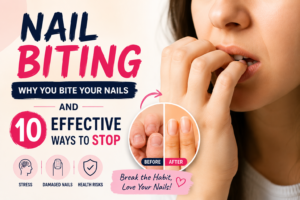

Nail Biting: Why You Bite Your Nails and 10 Effective Ways to Stop
Both adults and children may have the common practice of biting their nails. While some people may bite their nails without even noticing it, others may do so when they are anxious, stressed, bored, or intensely concentrated. Frequent nail biting can destroy the nails, surrounding skin, and even raise the risk of infections, despite the fact that occasional biting may seem safe.
The good news is that nail biting is a habit that can be changed. Understanding what triggers the behavior and using practical strategies can make it much easier to stop.
In this article, we will explain why people bite their nails, the possible effects of nail biting, and 10 effective ways to stop biting your nails.
What Is Nail Biting?
Nail biting, medically known as onychophagia, is a repetitive habit of biting or chewing the fingernails. It is often considered a body-focused repetitive behavior because people may perform it automatically, especially during stressful or uncomfortable situations.
Some people only bite their nails occasionally, while others may bite them every day. In severe cases, the habit can cause bleeding, painful skin around the nails, broken nails, or repeated infections.
Why Do You Bite Your Nails?
There is no single reason why people bite their nails. The habit can develop for different emotional, behavioral, and environmental reasons.
1. Stress and Anxiety
Stress is one of the most common triggers for nail biting. When you feel worried, nervous, or overwhelmed, biting your nails may temporarily provide a feeling of relief or distraction.
For example, you might notice yourself biting your nails before an exam, during a difficult conversation, while working, or when waiting for important news.
2. Boredom
Boredom can also trigger nail biting. When your hands are inactive, you may automatically start touching, picking, or biting your nails without consciously deciding to do so.
3. Habit and Automatic Behavior
Over time, nail biting can become an automatic behavior. You may not even notice that your fingers have moved toward your mouth until you have already started biting.
This is why simply telling yourself “I won’t bite my nails” may not always be enough. You need to identify the situations that trigger the habit.
4. Perfectionism
Some people bite their nails because they notice a rough edge, uneven nail, or small imperfection. They may try to “fix” it by biting the nail, but this can make the problem worse and encourage more biting.
5. Concentration
Nail biting may happen when you are concentrating deeply. Reading, studying, watching television, working on a computer, or thinking about a difficult problem can sometimes trigger unconscious nail biting.
Is Nail Biting Bad for Your Nails?
Occasional nail biting may not cause serious problems, but frequent or aggressive biting can damage the nails and surrounding skin.
Possible effects include:
- Short, uneven nails
- Cracked or damaged nails
- Sore fingertips
- Bleeding around the nails
- Damaged cuticles
- Increased risk of bacterial infections
- Pain around the nail
- Skin irritation
- Damage to the nail bed
Repeated trauma can also make the skin around the nails rough and irritated.
Can Nail Biting Cause Infections?
Yes. Nail biting can increase the risk of infections because your mouth contains many microorganisms, and biting can create tiny cuts around the nail.
If you bite the skin around your nails, bacteria may enter through broken skin and cause inflammation or infection.
Signs that you may need medical attention include significant swelling, increasing redness, pus, severe pain, warmth around the finger, or symptoms that continue to get worse.
10 Effective Ways to Stop Nail Biting
Breaking a nail-biting habit takes time, but these strategies can help.
1. Identify Your Triggers
The first step is to understand when and why you bite your nails.
For a few days, pay attention to situations in which you start biting. Ask yourself:
- Am I stressed?
- Am I bored?
- Am I working?
- Am I watching television?
- Am I feeling anxious?
- Am I noticing an uneven nail?
Once you know your triggers, you can prepare an alternative response.
2. Keep Your Nails Short
Keeping your nails short can lessen the amount of nail that is available for biting and make nail biting less alluring.
Regularly trim your nails with clean scissors or nail clippers. Rather than biting sharp or uneven edges, file them.
Maintaining a tidy appearance while trying to kick the habit can also be made easier with shorter nails.
3. Keep Your Hands Busy
If boredom or automatic behavior triggers your nail biting, give your hands something else to do.
You can try:
- A stress ball
- A small fidget object
- Drawing or coloring
- Knitting or crafting
- Folding paper
- Using a pen while thinking
The goal is to replace the nail-biting movement with another harmless activity.
4. Use a Bitter-Tasting Nail Product
Some specially designed nail products have a bitter taste that can remind you to stop when your fingers reach your mouth.
These products can act as a behavioral reminder rather than a treatment for the underlying cause.
Choose products specifically intended for nail biting and follow the product instructions. Avoid applying irritating or unsafe substances to your nails.
5. Practice Stress Management
If stress or anxiety is one of your main triggers, working on stress management may reduce nail biting.
Helpful options include:
- Deep breathing
- Regular physical activity
- Meditation
- Stretching
- Getting enough sleep
- Taking short breaks during work
- Spending time outdoors
Even a few minutes of slow breathing when you notice the urge can help interrupt the habit.
6. Try the “Delay” Technique
Instead of telling yourself that you can never bite your nails again, try delaying the behavior.
When you feel the urge, wait for five minutes. During that time, keep your hands busy or take several slow breaths.
If the urge remains, delay it again.
This approach can help you gradually become more comfortable with experiencing the urge without acting on it.
7. Cover Your Nails
Physical barriers can make nail biting more difficult.
Depending on your preference, you can use:
- Bandages on frequently bitten fingers
- Gloves at home
- Nail polish
- A professional manicure
The purpose is to create an extra reminder between the urge and the behavior.
8. Take Care of Your Nails
Healthy, well-maintained nails may give you another reason to protect them.
Regularly moisturize your hands and the skin around your nails. File rough edges and avoid cutting or picking your cuticles excessively.
Some people find that getting a manicure helps them become more conscious of their nails and motivates them not to damage them.
9. Reward Your Progress
Breaking a habit does not require perfection.
Instead of becoming discouraged after one setback, focus on your overall progress.
You can track how many days you go without biting your nails. You might also take weekly photos to see how your nails are growing and improving.
Small rewards can help keep you motivated.
10. Get Professional Help if You Cannot Stop
If nail biting is severe, causes injuries, or continues despite your efforts, consider speaking with a healthcare professional or mental health professional.
A professional can help identify underlying triggers and recommend appropriate behavioral strategies.
For persistent body-focused repetitive behaviors, approaches such as habit reversal training (HRT) may be helpful. This type of behavioral approach focuses on recognizing the urge and replacing the repetitive behavior with a less harmful action.
How Long Does It Take to Stop Biting Your Nails?
There is no fixed amount of time required to stop nail biting. Everyone is different.
If you have been biting your nails for years, it may take time to change the automatic behavior. The key is consistency.
You may notice improvements within a few weeks, but completely breaking the habit can take longer. Don’t worry if you have occasional setbacks. A setback does not mean you have failed.
What Happens When You Stop Biting Your Nails?
When you stop biting your nails, the damaged nail edges and surrounding skin can gradually recover.
You may notice:
- More even-looking nails
- Less soreness around your fingertips
- Healthier cuticles
- Fewer broken nails
- Improved nail appearance
- Less irritation around the fingers
Fingernails grow slowly, so it can take several months to see the full effect of stopping the habit.
When Should You See a Doctor?
Most nail biting does not require medical treatment. However, you should consider professional advice if:
- Your fingers frequently bleed
- You develop swelling or pus
- Your nails become severely damaged
- You experience significant pain
- You repeatedly develop infections
- Nail biting interferes with your daily life
- You feel unable to control the behavior despite repeated attempts
If nail biting is connected with significant anxiety, stress, or other repetitive behaviors, discussing it with a healthcare professional may also be helpful.
Final Thoughts
Although biting one’s nails is a frequent habit, it doesn’t have to last forever. Nail biting can be caused by a variety of factors, including stress, anxiety, boredom, focus, perfectionism, and automatic behavior.
Understanding your triggers and substituting healthier actions for the habit is typically the most successful strategy. It can be helpful to keep your nails short, use a bitter-tasting nail polish, keep your hands occupied, manage tension, postpone the impulse, and recognize your accomplishments.
Remember that breaking a long-term habit takes patience. Instead of expecting immediate perfection, focus on making small improvements every day. With consistent effort, you can reduce nail biting and give your nails a chance to grow healthier and stronger.