
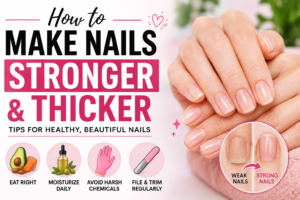

How to Make Nails Stronger and Thicker: 10 Proven Tips for Healthy Nails
Although weak, thin, peeling, or brittle nails are very common, strong, healthy nails can give your hands a well-groomed appearance. Frequent washing, harsh cleaning agents, nail polish removers, manicures, dehydration, and general wear and tear can all cause damage to nails.
The best strategy is typically to combine healthy nail care practices with a balanced diet and protection from needless damage if you’re wondering how to make nails stronger and thicker. Since nails grow slowly, there is no quick way to change thin nails overnight. On the other hand, regular maintenance can lessen breakage and promote the growth of healthier nails.
Ten doable strategies to strengthen nails, enhance their appearance, and promote healthy nail growth will be covered in this guide.
1. Keep Your Nails Properly Moisturized
One of the easiest ways to improve the appearance and condition of dry, brittle nails is to moisturize them regularly.
Nails and the surrounding cuticles can become dry, especially after frequent hand washing or exposure to soaps and cleaning products. Dry nails may be more likely to peel or break.
Apply a moisturizing hand cream, cuticle cream, or nourishing nail oil regularly.
Best Time to Moisturize
Try moisturizing:
- After washing your hands
- Before going to bed
- After removing nail polish
- Whenever your hands feel dry
Pay attention to the nails and cuticles rather than applying moisturizer only to the palms.
2. Eat a Balanced Diet
Nutrition plays an important role in supporting healthy nails. Your body needs adequate protein, vitamins, minerals, and other nutrients to produce normal nail tissue.
Include a variety of nutritious foods such as:
- Eggs
- Fish
- Chicken
- Beans and lentils
- Nuts and seeds
- Leafy green vegetables
- Fruits
- Whole grains
- Dairy or suitable alternatives
Protein is particularly important because nails are primarily made of a protein called keratin.
If your diet is lacking important nutrients, improving your overall nutrition may help support healthier nail growth.
3. Protect Your Nails From Water and Chemicals
Repeated exposure to water can make nails swell and shrink, which may contribute to splitting and peeling over time. Household cleaning products can also be harsh on the hands and nails.
Wear protective gloves when:
- Washing dishes
- Cleaning the bathroom
- Using household chemicals
- Gardening
- Handling irritating cleaning products
Gloves create a barrier between your nails and substances that may dry or irritate them.
4. Avoid Using Your Nails as Tools
One common reason nails break is using them to perform tasks they were never designed for.
Avoid using your fingernails to:
- Open cans
- Scrape labels
- Pry objects apart
- Remove stickers
- Scratch hard surfaces
- Open packages
Although these habits may seem harmless, repeated pressure can cause cracks, splits, and breaks.
Instead, use the appropriate tool for the task and treat your nails gently.
5. Keep Your Nails at a Practical Length
Although very long nails are more likely to break when they catch on clothing or other objects, long nails can still look good.
Maintaining slightly shorter nails can help lessen mechanical stress if they are currently weak or peeling.
Rough edges should be gently filed with a clean nail clipper or nail scissors.
How to File Nails Correctly
File in one direction rather than aggressively moving the file back and forth. Use a fine or medium-grit nail file and avoid excessive filing of the nail surface.
The goal is to smooth the edges—not make the nail thinner.
6. Be Careful With Nail Polish Remover
Frequent exposure to nail polish remover can contribute to dryness. Some removers contain solvents that can leave nails feeling dry or brittle.
If your nails are weak, consider reducing how frequently you remove and reapply polish.
When possible:
- Avoid unnecessary repeated polish removal
- Moisturize nails afterward
- Give damaged nails a break from manicures
- Avoid scraping polish from the nail surface
Never peel off gel polish because this can remove layers of the natural nail.
7. Take Care With Gel and Acrylic Nails
Although gel, acrylic, and artificial nails can produce gorgeous manicures, frequent application and removal may cause nail damage.
Aggressive nail filing, incorrect product removal, and frequent chemical exposure to the natural nail can all lead to potential issues.
Take a break and let your nails grow out if you’ve had artificial nail treatments and they’ve become thin.
Focus on moisturizing, gently filing, and shielding the nails from needless damage during this time.
8. Do Not Cut or Damage Your Cuticles
Cuticles serve as a protective barrier around the nail. Aggressively cutting or pushing them can cause irritation and increase the risk of infection.
Instead of cutting the cuticle deeply, keep the area moisturized and avoid picking at it.
If you have a small hangnail, carefully trim the loose piece with clean nail scissors rather than pulling it off.
Simple Cuticle Care
At night, massage a small amount of cuticle oil or moisturizer around each nail. Regular moisture can help keep the surrounding skin soft and comfortable.
9. Avoid Nail Biting and Picking
The nails and surrounding skin may sustain repeated physical harm as a result of nail biting. Rough edges and splitting can also result from picking at the nails.
If you have a habit of biting your nails, try figuring out what circumstances—like stress, boredom, or concentration—set off the habit.
Some people may be able to lessen nail biting by using a bitter-tasting nail product and keeping their nails neatly clipped.
Above all, keep in mind that pulling hangnails or biting the surrounding skin can result in injuries.
10. Give Your Nails Time to Grow
If you want to know how to make nails stronger and thicker, one of the most important things to remember is that healthy nail growth takes time.
Fingernails grow slowly, and the visible portion of your nail is produced from the nail matrix underneath the skin near the base of the nail.
Because of this, damage cannot usually disappear immediately. You need to protect the new nail as it grows.
Consistent care for several weeks or months can make a noticeable difference in the overall appearance of your nails.
Can Biotin Make Nails Stronger?
Biotin is a B vitamin that is sometimes promoted as a nail-strengthening supplement. Some research suggests that biotin supplementation may benefit certain people with brittle nails, but it is not a guaranteed solution for everyone.
If you suspect you have a nutritional deficiency, it is better to discuss it with a healthcare professional rather than taking high-dose supplements on your own.
Also remember that supplements can interact with medications and some high-dose supplements can interfere with certain laboratory tests.
A balanced diet should generally be the foundation of nail nutrition.
Natural Ways to Support Stronger Nails
You do not need an expensive collection of nail products to take better care of your nails.
Simple habits include:
Use Cuticle Oil
Applying a suitable nail or cuticle oil can help reduce dryness around the nails.
Moisturize After Washing
Keep a hand cream near your sink so you remember to use it after washing your hands.
Eat Enough Protein
Include protein-rich foods such as eggs, fish, beans, lentils, yogurt, and nuts as part of a balanced diet.
Drink Enough Fluids
Adequate hydration supports overall health. However, simply drinking extra water will not automatically make thin nails thicker if another problem is responsible.
Avoid Harsh DIY Treatments
Be cautious about using lemon juice, baking soda, toothpaste, or other harsh household ingredients on your nails. These may irritate or dry the surrounding skin.
Why Are My Nails Thin and Brittle?
Several factors can contribute to weak or brittle nails.
Common causes include:
- Frequent exposure to water
- Harsh soaps and cleaning chemicals
- Nail polish and polish remover
- Repeated manicures
- Gel or acrylic nail treatments
- Nail biting
- Physical trauma
- Dry skin
- Nutritional deficiencies
- Certain medical conditions
- Some medications
- Normal aging
If your nails suddenly become weak or change significantly, it is worth discussing the problem with a healthcare professional.
Signs That Your Nails May Need Medical Attention
Most nail problems are minor, but certain changes should not be ignored.
Consider seeking medical advice if you notice:
- Persistent nail discoloration
- Significant thickening or thinning
- Nails separating from the nail bed
- Repeated nail infections
- Pain or swelling around the nail
- Deep grooves or unusual changes
- A dark streak that is new or changing
- Sudden changes affecting several nails
A dermatologist or other healthcare professional can help determine whether an underlying condition is contributing to the problem.
A Simple Daily Nail Care Routine
A consistent routine does not need to be complicated.
Morning
- Wash your hands gently.
- Apply hand moisturizer.
- Avoid using nails as tools.
- Wear gloves when handling harsh cleaning products.
During the Day
Keep nails clean and dry when possible. Reapply hand cream after washing if your skin becomes dry.
Night
- Wash your hands gently.
- Apply moisturizer to your hands.
- Massage cuticle oil around each nail.
- Check for rough edges and gently file them if necessary.
This simple routine can help minimize dryness and mechanical damage.
How Long Does It Take to Strengthen Nails?
There is no exact timeline because nail growth varies from person to person.
You may notice less dryness or improved flexibility relatively quickly after changing your nail care habits. However, visible improvement in damaged nails takes longer because the damaged portion has to grow out.
For this reason, patience is essential.
Instead of looking for an overnight nail-strengthening treatment, focus on protecting your nails consistently while healthy new nail grows.
Final Thoughts
Instead of depending on miracle products, start with basic habits to strengthen and thicken your nails.
Regularly moisturize your cuticles and nails, eat a healthy diet rich in protein and nutrients, shield your hands from harsh chemicals, refrain from picking and biting your nails, and take breaks from harmful manicure techniques.
Remember that improvements take time and consistency because nails grow slowly by nature. See a doctor to rule out any underlying issues if your nails suddenly become extremely weak, change color, hurt, or exhibit strange changes.
Good nutrition, gentle care, protection, and patience are often the keys to healthy nails.
Frequently Asked Questions
How can I make my nails stronger naturally?
Regular moisturizing, eating a balanced diet, protecting nails from chemicals and excessive water exposure, keeping nails at a practical length, and avoiding biting or picking can help support stronger-looking nails.
Can nails become thicker?
The natural thickness of nails varies between individuals. If your nails have become thin because of damage, protecting them and allowing them to grow out may improve their appearance.
Does oil make nails stronger?
Nail and cuticle oils can help reduce dryness and improve the feel and appearance of the nails and surrounding skin. They do not permanently change the natural structure of the nail.
What foods are good for strong nails?
Protein-rich foods such as eggs, fish, poultry, beans, lentils, dairy products, nuts, and seeds can contribute to a balanced diet that supports normal nail growth.
How often should I moisturize my nails?
You can moisturize your hands and nails several times a day, especially after washing your hands. Applying cuticle oil or moisturizer before bed is also a useful habit.
Is biotin good for brittle nails?
Biotin may help some people with brittle nails, particularly when intake is inadequate, but supplements are not necessary or effective for everyone. Talk with a healthcare professional before starting high-dose biotin.
Does drinking water make nails stronger?
Adequate hydration is important for overall health, but drinking extra water alone is unlikely to fix brittle nails caused by physical damage, nutritional deficiencies, or medical conditions.
How can I stop my nails from breaking?
Keep them at a practical length, file rough edges gently, moisturize regularly, avoid using them as tools, wear gloves when cleaning, and limit practices that repeatedly damage the natural nail.
Can gel nails damage natural nails?
Repeated gel manicures or improper removal can contribute to nail thinning and damage. Avoid peeling or aggressively filing gel products and consider breaks if your natural nails become weak.