
7 Desi Herbs for Glowing Skin: Natural Ingredients for a Healthy Skin Glow
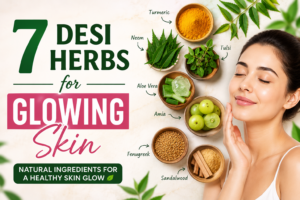
A costly skincare regimen is not always necessary for radiant skin. Herbs and plant-based ingredients have long been used in many traditional South Asian beauty practices to support skin that looks healthy. These days, natural skincare products and home remedies frequently contain ingredients like fenugreek, sandalwood, aloe vera, tulsi, turmeric, neem, and amla.
These Desi herbs for glowing skin contain different naturally occurring compounds that may help support hydration, soothe the skin, improve the appearance of dullness, or provide antioxidant benefits. However, natural does not automatically mean risk-free. Some herbs can irritate sensitive skin, especially when used in concentrated forms.
In this article, we explore 7 Desi herbs for glowing skin, their potential benefits, how to use them safely, and simple ways to include them in your skincare routine.
1. Turmeric
One of the most well-known traditional ingredients in South Asian skincare products is turmeric, also referred to as haldi. It has long been a part of beauty rituals and is particularly well-liked in homemade face masks.
Curcumin and other substances with anti-inflammatory and antioxidant qualities are found in turmeric. Turmeric is frequently used in skincare products to help people look healthier and more refreshed.
Potential Benefits of Turmeric for Skin
Turmeric may help:
- Give dull-looking skin a fresher appearance
- Support the skin against oxidative stress
- Soothe the appearance of temporary redness
- Complement a healthy skincare routine
- Provide antioxidant benefits
How to Use Turmeric
You can make a simple face mask by mixing a very small amount of turmeric with plain yogurt or aloe vera gel. Apply a thin layer, leave it on for a short period, and rinse thoroughly.
Be careful because turmeric can temporarily stain the skin yellow, particularly when a large amount is used.
Tip: Always patch-test homemade turmeric mixtures before applying them to your entire face.
2. Neem
Neem is another traditional Desi ingredient widely used in South Asian personal care. Neem leaves have long been valued in traditional practices, particularly for skin and hygiene.
Neem contains various plant compounds that have been studied for their antioxidant and antimicrobial properties.
Potential Benefits of Neem for Skin
Neem may be useful as part of a skincare routine for people concerned about:
- Oily-looking skin
- Occasional blemishes
- Excess surface oil
- Dull-looking complexion
However, neem is not a guaranteed treatment for acne or other skin diseases. Persistent acne should be evaluated by a qualified healthcare professional.
How to Use Neem
Neem powder is sometimes mixed with water, aloe vera gel, or another gentle base to create a face mask.
Avoid applying concentrated neem preparations to irritated, broken, or highly sensitive skin. Stop using the product if burning, itching, or significant redness develops.
3. Tulsi
Tulsi, also called holy basil, is an important plant in traditional South Asian practices. It is also increasingly used in natural skincare products.
Tulsi contains plant compounds with antioxidant properties, which may help support the skin against environmental stress.
Potential Benefits of Tulsi
Tulsi-based skincare may help support:
- Healthy-looking skin
- A refreshed complexion
- Skin exposed to environmental stressors
- A balanced skincare routine
Because research on topical tulsi for specific cosmetic outcomes is more limited than research on some conventional skincare ingredients, it is best viewed as a complementary ingredient rather than a miracle treatment.
How to Use Tulsi
Tulsi powder can be combined with a gentle base such as plain yogurt or aloe vera gel to create a simple mask.
Use a small amount and avoid leaving herbal masks on the skin for too long. Always patch-test first.
4. Aloe Vera
Aloe vera is one of the most popular plant-based ingredients used for skincare around the world. It is especially valued for its soothing and moisturizing properties.
Fresh aloe vera gel and commercially prepared aloe-based products are commonly used to help skin feel hydrated and comfortable.
Benefits of Aloe Vera for Skin
Aloe vera may help:
- Hydrate the skin
- Soothe mild temporary irritation
- Reduce feelings of dryness
- Make skin feel softer
- Give the complexion a fresh appearance
Aloe vera can be particularly useful during hot weather when skin may feel dry or uncomfortable.
How to Use Aloe Vera
Use a commercially prepared aloe vera gel designed for skin or a properly prepared plant-based gel. Apply a thin layer to clean skin and follow with moisturizer if needed.
Avoid using aloe latex or unprocessed plant material on the face, as different parts of the aloe plant contain different compounds and may cause irritation.
5. Amla
Indian gooseberry, or amla, has long been prized as a fruit and herb that is high in nutrients. Vitamin C and other antioxidant substances are present.
Although amla is often connected to conventional hair care, it can also be found in some natural skincare products.
Potential Benefits of Amla for Skin
Amla may support:
- Healthy-looking skin
- Antioxidant protection
- A more refreshed appearance
- A balanced natural skincare routine
Vitamin C is well known for its role in supporting normal skin function and collagen production when obtained through the diet.
How to Use Amla
Amla is commonly consumed as part of the diet, but amla powder is also found in traditional beauty preparations.
If using amla topically, choose a product specifically formulated for skin whenever possible. Homemade acidic or powdered preparations can be irritating for some people.
6. Fenugreek
Fenugreek, known as methi, is another traditional ingredient that has been used in South Asian beauty routines.
Fenugreek seeds contain various plant compounds and are sometimes used in homemade skin and hair masks.
Potential Benefits of Fenugreek
Fenugreek-based skincare may help:
- Make dry-feeling skin feel softer
- Support a smoother-looking complexion
- Provide plant-based antioxidant compounds
- Complement a moisturizing skincare routine
Fenugreek is not a replacement for proven treatments for acne, pigmentation, eczema, or other medical skin conditions.
How to Use Fenugreek
Soaked fenugreek seeds can be ground into a paste and mixed with a gentle moisturizing ingredient. Apply a thin layer and rinse after a short period.
Because homemade mixtures can vary greatly in strength and cleanliness, prepare them fresh and avoid storing wet herbal mixtures for long periods.
7. Sandalwood
Sandalwood, traditionally called chandan, has a long history in South Asian beauty rituals. Sandalwood-based preparations are often used in traditional face packs.
Sandalwood is particularly popular because of its pleasant aroma and its association with a cooling, soothing skincare experience.
Potential Benefits of Sandalwood
Sandalwood-based skincare may help:
- Refresh the appearance of tired-looking skin
- Make skin feel smoother
- Provide a pleasant sensory experience
- Complement a natural skincare routine
However, sandalwood powder and oils can vary in quality. Some fragranced products may also irritate sensitive skin.
How to Use Sandalwood
If you want to try sandalwood, consider using a reputable skincare product containing sandalwood rather than an unknown powder or essential oil.
Never apply undiluted essential oils directly to your face.
How to Use Desi Herbs for Glowing Skin Safely
Although using too many ingredients at once can irritate skin, natural skincare can be enjoyable. Generally speaking, a straightforward strategy is preferable.
Do a patch test on a small section of skin before putting a new herbal ingredient on your face. Watch for the development of redness, burning, swelling, or itching.
Follow these tips:
- Use clean utensils and containers for homemade masks.
- Do not apply herbal mixtures to cuts or broken skin.
- Avoid scrubbing the skin aggressively.
- Do not use several new ingredients at the same time.
- Stop using a product if significant irritation occurs.
- Avoid undiluted essential oils on facial skin.
- Use sunscreen during the day.
- Keep homemade mixtures fresh and avoid prolonged storage.
Simple Desi Herbal Face Mask for a Healthy Glow
If your skin tolerates herbal ingredients, you can create a simple mask using gentle ingredients.
Ingredients
- 1 teaspoon aloe vera gel
- A small pinch of turmeric
- 1 teaspoon plain yogurt
Method
Mix the ingredients into a smooth paste. Apply a thin layer to clean skin and leave it on for approximately 5–10 minutes. Rinse gently with lukewarm water and apply a moisturizer.
Do not use this mask if you are allergic or sensitive to any ingredient.
For acne-prone or sensitive skin, a simpler routine with fragrance-free, dermatologist-tested products may be a better choice.
Which Desi Herb Is Best for Your Skin Type?
Different skin types may prefer different ingredients.
For Dry Skin
Aloe vera and fenugreek may be useful additions to a moisturizing routine. However, follow them with a suitable moisturizer to help maintain hydration.
For Oily Skin
Neem and tulsi are popular traditional choices, but they should not replace proven acne treatments or gentle cleansing.
For Dull Skin
Turmeric and amla are commonly used in traditional skincare routines because of their antioxidant-related properties.
For Sensitive Skin
Aloe vera may be a gentler choice for some people, but even natural ingredients can cause reactions. Always patch-test new products.
Can Desi Herbs Permanently Make Skin Fairer?
Desi herbs shouldn’t be thought of as skin-whitening remedies.
When properly hydrated, shielded from the sun, and regularly cared for, healthy skin can appear more radiant and even. However, melanin and genetics play a major role in determining your natural skin tone.
Products that promise dramatic skin whitening or contain unidentified ingredients should be especially avoided. Certain unregulated skin-lightening products might include ingredients that are harmful to the skin.
Healthy, comfortable, and well-protected skin should be the aim of natural skincare, not altering your natural skin tone.
Common Mistakes When Using Herbal Skincare
1. Using Too Much
More herbal powder does not necessarily mean better results. Concentrated mixtures can increase irritation.
2. Applying Lemon Juice
Lemon juice is sometimes recommended in DIY skincare, but it can irritate the skin and may increase sensitivity to sunlight. It is better to avoid using raw lemon juice as a facial treatment.
3. Scrubbing Too Hard
Harsh scrubbing can damage the skin barrier and make irritation worse. Gentle application is always preferable.
4. Skipping Sunscreen
Herbal skincare cannot replace sun protection. A broad-spectrum sunscreen should remain an important part of your morning routine.
5. Expecting Overnight Results
Natural skincare ingredients generally do not produce instant dramatic changes. Healthy-looking skin is usually the result of consistent care over time.
Final Thoughts
These seven Desi herbs—turmeric, neem, tulsi, aloe vera, amla, fenugreek, and sandalwood—have deep roots in traditional South Asian beauty rituals. Each has various potential advantages, ranging from providing antioxidant plant compounds to calming and hydrating the skin.
Natural skincare, however, needs to be handled with caution. When you have a persistent skin condition, traditional remedies should not be used in place of medical treatment because herbal ingredients can still cause irritation or allergies.
Combine appropriate natural ingredients with a basic skincare regimen that includes daily sun protection, moisturizing, and mild cleansing for optimal results. Most importantly, don’t follow every DIY skincare trend; instead, choose ingredients according to the needs of your skin.
Frequently Asked Questions
What are the best Desi herbs for glowing skin?
Turmeric, neem, tulsi, aloe vera, amla, fenugreek, and sandalwood are popular traditional choices. Their suitability depends on your individual skin type and sensitivity.
Can turmeric make skin glow?
Turmeric may help skin look fresher and more even when used appropriately, but it should not be considered a guaranteed skin-brightening treatment.
Is aloe vera good for glowing skin?
Aloe vera can help hydrate and soothe the skin, which may contribute to a healthier-looking glow.
Can neem remove acne?
Neem has traditionally been used for skin care and has antimicrobial properties, but it should not be considered a proven cure for acne. Persistent acne may require evidence-based treatment.
How often should I use herbal face masks?
Once a week can be enough for many people. If your skin becomes dry, itchy, or irritated, stop using the mask.
Are natural herbs safe for sensitive skin?
Not always. Natural ingredients can still cause allergic reactions or irritation. Patch-test new ingredients before applying them to your face.
Do Desi herbs lighten skin permanently?
No. Herbal ingredients should not be expected to permanently change your natural skin tone. Focus on maintaining healthy, hydrated, and sun-protected skin.