
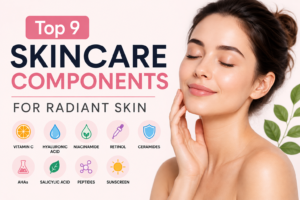

Top 9 Skincare Components for Radiant Skin
It takes more than just having a naturally bright complexion to have radiant skin. Maintaining hydration, shielding the skin barrier, minimizing obvious signs of damage, and selecting skincare products that are appropriate for your skin type are all key components of healthy-looking skin.
It can be challenging to determine which ingredients are truly worthwhile to include in your routine given the hundreds of skincare products available today. The good news is that dozens of products are not necessary. When used regularly, a few thoroughly studied skincare ingredients for glowing skin can have a big impact.
From hydrating ingredients such as hyaluronic acid to powerful antioxidants like vitamin C, the right combination can help your skin look smoother, healthier, and more luminous.
In this guide, we explore the top 9 skincare components for radiant skin, their benefits, and how to incorporate them into your daily skincare routine.
1. Vitamin C
One of the most widely used ingredients in skincare products to achieve skin that is more radiant and even-looking is vitamin C. It is a potent antioxidant that promotes a healthy-looking complexion and shields the skin from environmental stressors.
Topical vitamin C may help improve the appearance of:
- Dull skin
- Uneven skin tone
- Dark spots
- Post-acne marks
- Fine lines
- Sun-related skin changes
Vitamin C is commonly found in serums because concentrated formulas can be easily applied after cleansing.
How to Use Vitamin C
For most people, vitamin C can be used in the morning after cleansing and before moisturizer and sunscreen. If you have sensitive skin, start with a lower concentration and use it every other day.
Tip: Sunscreen is essential when your goal is brighter, healthier-looking skin. Vitamin C should complement—not replace—daily sun protection.
2. Hyaluronic Acid
If your skin looks dry, tight, or dull, hyaluronic acid can be a useful addition to your routine. Hyaluronic acid is a humectant, meaning it helps attract and hold water in the skin.
Well-hydrated skin often looks:
- Plumper
- Softer
- Smoother
- More refreshed
- Naturally radiant
Hyaluronic acid is suitable for many skin types, including dry, oily, combination, and sensitive skin.
How to Use Hyaluronic Acid
Apply a hyaluronic acid serum to slightly damp skin, followed by a moisturizer to help reduce water loss.
It can be used once or twice daily depending on your skin’s needs and the product instructions.
3. Niacinamide
Vitamin B3, or niacinamide, is a multipurpose skincare ingredient that can help with a number of common skin issues. Because it can improve the appearance of uneven tone and excess oil while supporting the skin barrier, it is especially well-liked.
Potential benefits include:
- Supporting the skin barrier
- Improving the appearance of enlarged pores
- Helping control excess oil
- Reducing the appearance of redness
- Improving uneven-looking skin tone
- Supporting smoother-looking skin
Niacinamide is available in cleansers, serums, moisturizers, and other skincare products.
How to Use Niacinamide
A niacinamide serum can generally be used after cleansing and before moisturizer. It can be used in the morning, evening, or both, depending on the product and your skin’s tolerance.
4. Retinol
Retinol is a vitamin A derivative and one of the best-known ingredients for improving the appearance of aging skin. It works by encouraging skin cell turnover and can help skin appear smoother over time.
Retinol may help with:
- Fine lines
- Uneven texture
- Dullness
- Uneven skin tone
- Acne-prone skin
- Visible signs of photoaging
Because retinol can cause dryness, peeling, or irritation when you first start using it, it is important to introduce it gradually.
How to Use Retinol
The best time to use retinol is usually at nite. If your skin can handle it, start with a small amount two or three nites a week and progressively increase the frequency.
Use moisturizer to help minimize dryness, and apply broad-spectrum sunscreen during the day.
Important: If you are pregnant or trying to become pregnant, speak with your healthcare professional before using retinoids.
5. Ceramides
A healthy skin barrier is essential for radiant-looking skin. Ceramides are naturally occurring lipids that help form and maintain the skin barrier.
When the skin barrier is weakened, the skin may become:
- Dry
- Rough
- Flaky
- Sensitive
- Easily irritated
Ceramide-containing moisturizers can help support the skin barrier and improve moisture retention.
Who Should Use Ceramides?
Ceramides are especially useful for dry or sensitive skin, but they can be beneficial for almost any skin type.
They are also helpful if your skincare routine includes potentially irritating ingredients such as retinoids or exfoliating acids.
6. Alpha Hydroxy Acids (AHAs)
Alpha hydroxy acids, commonly called AHAs, are chemical exfoliants that can help remove dead skin cells from the surface of the skin.
Common AHAs include:
- Glycolic acid
- Lactic acid
- Mandelic acid
By helping remove accumulated dead skin cells, AHAs can make the skin appear smoother and brighter.
They may be useful for people dealing with:
- Dull-looking skin
- Uneven texture
- Roughness
- Mild discoloration
- Fine lines
How to Use AHAs
Start with a low-strength product once or twice per week. Avoid using too many exfoliating products at the same time because excessive exfoliation can irritate the skin barrier.
Always use sunscreen during the day when incorporating exfoliating acids into your routine.
7. Salicylic Acid
Salicylic acid is a beta hydroxy acid (BHA) that is particularly useful for oily and acne-prone skin. Unlike AHAs, salicylic acid is oil-soluble, allowing it to work within pores.
It can help improve the appearance of:
- Blackheads
- Whiteheads
- Clogged pores
- Excess oil
- Acne-prone skin
Clearer-looking skin can also appear brighter and more radiant.
How to Use Salicylic Acid
Salicylic acid can be present in cleansers, toners, gels, and leave-on treatments, depending on the product.
Start with sporadic use instead of daily application if you have sensitive skin.
Unless a dermatologist advises it, avoid mixing multiple potent exfoliating ingredients at once.
8. Peptides
Peptides are short chains of amino acids that are used in many anti-aging skincare products. They can support the skin’s appearance and are commonly included in serums and moisturizers designed for mature or tired-looking skin.
Peptide-based products may help improve the appearance of:
- Fine lines
- Loss of firmness
- Rough texture
- Dull-looking skin
One advantage of peptides is that they are generally considered gentle and can often be incorporated into routines containing other ingredients.
How to Use Peptides
Peptide serums can typically be applied after cleansing and before moisturizer. Follow the specific product’s instructions because formulations differ.
9. Sunscreen
No list of the best skincare components for radiant skin is complete without sunscreen.
Daily sunscreen is one of the most important steps for protecting the skin from ultraviolet (UV) radiation. Sun exposure contributes to premature skin aging, uneven pigmentation, and other visible changes.
A broad-spectrum sunscreen can help protect against UVA and UVB rays.
How to Use Sunscreen
Apply sunscreen as the final step of your morning skincare routine. Use enough to adequately cover exposed skin, including your face, ears, neck, and other exposed areas.
Reapply when appropriate, particularly after sweating, swimming, or prolonged outdoor exposure.
How to Combine These Skincare Components
Using every active ingredient at once is not necessarily better. A simple routine can often be more effective because it is easier to maintain consistently.
Simple Morning Routine
- Gentle cleanser
- Vitamin C serum
- Hyaluronic acid or niacinamide
- Moisturizer
- Broad-spectrum sunscreen
Simple Evening Routine
- Gentle cleanser
- Retinol or another treatment ingredient
- Hydrating serum if needed
- Ceramide moisturizer
If you use exfoliating acids, consider using them on separate nights from retinol, especially when you are new to both products.
Choosing Ingredients Based on Your Skin Type
Different skin types may benefit from different ingredients.
Dry Skin
Look for:
- Hyaluronic acid
- Ceramides
- Glycerin
- Gentle moisturizers
- Niacinamide
The main goal should be maintaining hydration and supporting the skin barrier.
Oily Skin
Consider:
- Niacinamide
- Salicylic acid
- Lightweight moisturizers
- Non-comedogenic products
Avoid over-cleansing or excessive exfoliation because these can leave your skin irritated.
Sensitive Skin
Choose gentle formulas containing ingredients such as:
- Ceramides
- Hyaluronic acid
- Low-strength niacinamide
- Fragrance-free moisturizers
Introduce new products slowly and patch-test when appropriate.
Mature Skin
Ingredients often used in routines for mature-looking skin include:
- Retinol
- Vitamin C
- Peptides
- Hyaluronic acid
- Ceramides
- Sunscreen
Consistency is more important than using a large number of products.
Common Mistakes to Avoid
Even the best skincare ingredients can cause problems if they are used incorrectly.
Using Too Many Actives
Combining multiple strong ingredients can increase the risk of irritation. Build your routine gradually.
Skipping Sunscreen
Brightening and anti-aging products cannot compensate for inadequate sun protection.
Changing Products Too Quickly
Many skincare products require consistent use over time before visible improvements become noticeable. Avoid switching products every few days.
Ignoring Your Skin Barrier
If your skin is constantly burning, peeling, or feeling extremely tight, reduce active ingredients and focus on gentle cleansing and moisturizing.
Applying Too Much Product
More product does not necessarily mean better results. Follow the recommended amount on the product label.
How Long Does It Take to See Results?
Skincare results vary depending on the ingredient, your skin type, the concern being treated, and how consistently you use the product.
Hydrating ingredients can make the skin feel softer and more comfortable relatively quickly. However, concerns such as uneven tone, acne, fine lines, and pigmentation often require several weeks or longer to improve visibly.
The key is to build a routine that you can follow consistently rather than expecting overnight results.
Final Thoughts
The best skincare products for glowing skin don’t have to complicate your regimen. Different benefits are provided by ingredients like vitamin C, hyaluronic acid, niacinamide, retinol, ceramides, AHAs, salicylic acid, peptides, and sunscreen.
The best strategy is to determine your main skin issues and select a few ingredients that address them. Make sunscreen a daily habit, moisturize frequently, start slowly, and refrain from packing your skin with too many active ingredients.
Rather than a single miracle ingredient, healthy, glowing skin is typically the outcome of regular skincare, sufficient hydration, sun protection, and patience.
Frequently Asked Questions
1. What is the best skincare component for glowing skin?
Vitamin C, niacinamide, hyaluronic acid, and gentle exfoliating acids can help improve the appearance of dull skin. Sunscreen is also essential for protecting your skin.
2. Can I use vitamin C and hyaluronic acid together?
Yes. These ingredients are commonly used together. Vitamin C targets antioxidant and brightening needs, while hyaluronic acid helps support hydration.
3. Is niacinamide good for radiant skin?
Yes. Niacinamide can support the skin barrier and improve the appearance of uneven tone, redness, and excess oil, helping skin look healthier.
4. How often should I exfoliate?
It depends on the exfoliant and your skin’s tolerance. Starting once or twice a week is often a reasonable approach for leave-on exfoliating products.
5. Is sunscreen really necessary for glowing skin?
Yes. Consistent sun protection helps prevent UV-related skin damage, uneven pigmentation, and premature visible aging.
6. Can I use retinol every night?
Some people eventually tolerate retinol nightly, but beginners should generally start slowly and increase frequency as tolerated. Follow the product instructions and seek professional advice if irritation is persistent.
7. What ingredients are best for dry skin?
Hyaluronic acid, ceramides, glycerin, and moisturizing ingredients can help support hydration and the skin barrier.
8. Can skincare ingredients remove dark spots completely?
Some ingredients can improve the appearance of pigmentation over time, but results vary. Persistent or changing pigmentation should be evaluated by a dermatologist.