
Introduction
Anybody can experience armpit odor, also referred to as underarm odor or axillary odor. Sweating is a normal and vital bodily activity, but when perspiration interacts with microorganisms on the skin, an unpleasant smell may result.
Many people assume that armpit smell simply means poor hygiene, but that is not always the case. Diet, hormones, stress, clothing, medications, skin conditions, and excessive sweating can all contribute to stronger body odor.
The good news is that most cases of underarm odor can be managed with simple lifestyle and hygiene changes. Understanding what causes the smell is the first step toward finding the right solution.
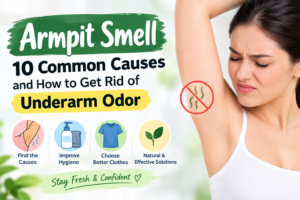
In this article, we explain 10 common causes of armpit smell and practical ways to get rid of it.
What Causes Armpit Smell?
Your sweat itself usually does not have a strong smell. Underarm odor develops mainly when bacteria on your skin break down substances found in sweat and produce odor-causing compounds.
Because the armpits have a large number of apocrine sweat glands, they are especially prone to odor. After puberty, these glands become more active and produce sweat that is thicker and contains proteins and other materials. Bacteria can provide the well-known odor of sweaty armpits when they decompose these materials.
Here are 10 common causes.
1. Poor or Inconsistent Hygiene
One of the most common reasons for bad armpit smell is inadequate washing.
Sweat, bacteria, dead skin cells, and oils can accumulate in the underarm area. If the area is not cleaned regularly, bacteria can multiply and produce stronger odors.
What to do:
- Wash your armpits regularly with soap and water.
- Pay attention to the entire underarm area.
- Rinse thoroughly.
- Dry your skin completely after showering.
- Change sweaty clothes as soon as possible.
You do not necessarily need harsh antibacterial products. For many people, consistent basic hygiene is enough to reduce odor.
2. Excessive Sweating
Another major cause of smelly armpits is excessive sweating. A condition called hyperhidrosis can cause a person to sweat much more than necessary, sometimes even when the body does not need to cool down.
More moisture can create an environment where odor-producing bacteria thrive.
How to manage excessive sweating:
- Use an antiperspirant rather than deodorant alone.
- Wear breathable clothing.
- Avoid staying in sweaty clothes.
- Keep your underarms dry whenever possible.
- Talk to a healthcare professional if excessive sweating interferes with daily life.
Antiperspirants help reduce the amount of sweat reaching the skin, while deodorants primarily help control odor.
3. Stress and Anxiety
Have you ever noticed stronger armpit odor when you are nervous or stressed? There is a reason.
Emotional stress can activate certain sweat glands, particularly the apocrine glands. The sweat produced during stressful situations can interact with skin bacteria and create noticeable odor.
Stress can also cause increased sweating, making the problem more obvious.
Helpful strategies include:
- Getting enough sleep
- Exercising regularly
- Practicing slow breathing
- Taking breaks during stressful situations
- Using relaxation or mindfulness techniques
Managing stress may help reduce both sweating and body odor.
4. Hormonal Changes
Hormonal fluctuations can affect sweating and body odor.
Puberty, menstruation, pregnancy, menopause, and other hormonal changes can influence sweat production and the way your body smells.
During puberty, for example, apocrine glands become more active. Hormonal changes later in life can also alter sweating patterns.
If your armpit smell suddenly changes during a period of hormonal change, it may be temporary.
However, a persistent or dramatic change in body odor should be discussed with a healthcare professional, particularly if it occurs with other unexplained symptoms.
5. Certain Foods and Drinks
What you eat can sometimes influence body odor.
Certain foods contain compounds that may contribute to stronger-smelling sweat or breath. Common examples include:
- Garlic
- Onions
- Spicy foods
- Certain strongly flavored foods
- Alcohol
This does not mean you need to completely eliminate these foods. Instead, pay attention to whether a particular food consistently makes your body odor stronger.
Keeping a simple food and symptom diary can help you identify possible triggers.
6. Wearing the Wrong Clothing
Your clothing can make underarm odor worse, especially if it traps sweat and moisture.
Tight or poorly breathable fabrics may prevent sweat from evaporating. Synthetic fabrics can sometimes hold onto odor even after they appear clean.
Try these clothing tips:
- Choose breathable fabrics when possible.
- Change clothes after heavy exercise.
- Avoid wearing sweaty shirts repeatedly.
- Wash clothing thoroughly.
- Make sure clothes are completely dry before wearing them.
If a shirt continues to smell after washing, bacteria and odor compounds may still be trapped in the fabric.
7. Bacterial or Fungal Skin Problems
Changes in the skin’s normal microorganisms can sometimes contribute to unpleasant underarm odor.
The warm and moist environment of the armpit can also encourage certain skin infections or conditions. These may cause odor along with symptoms such as:
- Redness
- Itching
- Burning
- Scaling
- Rash
- Tenderness
- Skin irritation
If your armpit odor is accompanied by noticeable skin changes, avoid repeatedly applying harsh products and consider getting medical advice.
8. Body Hair
Although underarm hair is perfectly normal, it can occasionally contribute to odor by giving perspiration, germs, and skin oils greater surface area.
It is not necessary for everyone to shave their armpits because of this. In general, washing on a regular basis is more crucial.
Shaving or cutting underarm hair can help some people control odor and make the region simpler to clean.
After shaving, exercise caution as irritated skin may become sensitive to scents and deodorants.
9. Medications and Health Conditions
Certain medications and medical conditions can sometimes affect sweating or body odor.
For example, changes in metabolism, hormones, or sweating patterns may cause body odor to become noticeably different.
A sudden and unusual odor should not automatically be blamed on hygiene.
Contact a healthcare professional if you notice:
- A sudden major change in body odor
- Unexplained excessive sweating
- Night sweats
- Fever
- Unexplained weight changes
- Persistent skin changes
- Other unusual symptoms
Your doctor can determine whether an underlying medical issue or medication could be contributing to the change.
10. Deodorant or Antiperspirant Problems
Sometimes the product you are using may not be working well for you.
Deodorant and antiperspirant are not the same thing.
Deodorants primarily help control or mask odor, while antiperspirants are designed to reduce sweating.
If sweating is the main problem, an antiperspirant may be more useful. Some people also find that fragranced products irritate their skin, which can make the situation worse.
Try different formulations if your current product is ineffective or causes irritation.
How to Get Rid of Armpit Smell
If you want to reduce underarm odor, start with simple habits before trying complicated treatments.
1. Wash Your Armpits Regularly
Clean your underarms with soap and water, particularly after exercising or sweating heavily.
2. Dry Your Skin Thoroughly
Moisture encourages bacterial growth. After showering, gently dry your armpits before applying deodorant or antiperspirant.
3. Use an Antiperspirant
If excessive sweating is contributing to odor, an antiperspirant can help reduce sweat.
Follow the product directions carefully. Some products work best when applied to clean, dry skin.
4. Change Sweaty Clothes
Do not remain in damp clothing for long periods. Change your shirt after workouts or heavy sweating.
5. Choose Breathable Fabrics
Loose-fitting, breathable clothing can improve airflow and reduce moisture buildup.
6. Wash Clothes Properly
Odor can remain in clothing even after washing. Follow the care instructions on the clothing label and avoid repeatedly wearing garments that still smell.
7. Keep Underarms Dry
If you sweat heavily, carrying an extra shirt or using absorbent clothing can help you stay comfortable throughout the day.
8. Avoid Irritating Your Skin
Scrubbing aggressively or using harsh household substances on your armpits can cause irritation and damage the skin barrier.
Avoid applying concentrated acids, bleach, or other harsh chemicals to your underarms.
Home Remedies for Armpit Smell: Do They Work?
You may find many home remedies online, including lemon juice, baking soda, vinegar, or other acidic ingredients.
Although some may temporarily reduce odor, they can also irritate sensitive underarm skin, especially after shaving.
A safer approach is to focus on:
- Regular washing
- Thorough drying
- Clean clothing
- Breathable fabrics
- Appropriate deodorant or antiperspirant
- Professional advice when necessary
If you have sensitive skin, choose fragrance-free products and stop using anything that causes burning, redness, or itching.
When Should You See a Doctor?
Occasional armpit smell is normal, especially after exercise, hot weather, or stressful situations.
However, medical advice may be appropriate if the odor:
- Appears suddenly without an obvious reason
- Becomes unusually strong or different
- Persists despite good hygiene
- Occurs with a rash or skin infection
- Is accompanied by excessive sweating
- Comes with fever, unexplained weight loss, or other unusual symptoms
A healthcare professional can evaluate your symptoms and determine whether an underlying condition is contributing to the odor.
Frequently Asked Questions
Why do my armpits smell even after showering?
If your armpits still smell after showering, possible reasons include excessive sweating, bacteria remaining on the skin or clothing, hormonal changes, certain foods, or an ineffective deodorant or antiperspirant.
Is armpit smell normal?
Yes. Some degree of body odor is normal because bacteria naturally live on the skin and interact with sweat. The intensity varies from person to person.
Does shaving reduce armpit odor?
Shaving may help some people manage odor by reducing hair where sweat and bacteria can remain, but it is not necessary for good hygiene.
Why does my armpit smell suddenly?
A sudden change may be related to diet, stress, hormonal changes, medication, increased sweating, or a skin problem. If the change persists or is accompanied by other symptoms, consider speaking with a healthcare professional.
Is deodorant or antiperspirant better for armpit smell?
If odor is the primary concern, deodorant may help. If excessive sweating contributes to the odor, an antiperspirant may be more useful because it reduces sweat.
Final Thoughts
Armpit odor is typical and typically controllable. In most cases, bacteria break down chemicals in sweat to produce the compounds that cause odor; perspiration itself is not the primary source of odor.
Poor hygiene, excessive sweating, stress, hormonal changes, certain foods, clothing, skin conditions, and other factors can all contribute to underarm odor.
The best approach is to wash regularly, keep your underarms dry, wear clean breathable clothing, and choose a deodorant or antiperspirant that works well for you. Avoid harsh DIY remedies that can irritate the skin.
If your body odor suddenly changes, becomes unusually strong, or occurs alongside other symptoms, consult a healthcare professional to rule out an underlying problem.
With the right routine and a little consistency, most people can keep their underarms clean, fresh, and comfortable throughout the day.