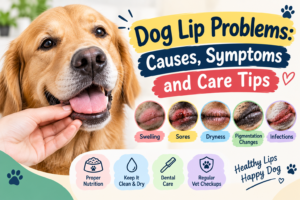

A dog’s lips play an important role in eating, drinking, exploring, and protecting the mouth. While small changes may sometimes be harmless, dog lip problems can also develop because of allergies, infections, dental disease, trauma, skin conditions, or irritation.
Dog owners may notice symptoms such as swollen lips, redness, sores, crusting, bad odor, excessive licking, or changes in the color or texture of the lips. Some problems are minor and resolve with appropriate care, while others require veterinary attention.
Understanding the common causes and warning signs can help you recognize when your dog needs professional care.
What Do Healthy Dog Lips Look Like?
Healthy dog lips can vary in color depending on the dog’s breed and natural pigmentation.
Normal dog lips may be:
- Pink
- Black
- Brown
- A combination of colors
- Smooth or slightly textured
The lips should generally not have unexplained swelling, bleeding, open sores, significant crusting, or a strong unpleasant odor.
Some dogs naturally have darker pigmentation around their lips, so a change should be judged against your dog’s normal appearance.
Common Dog Lip Problems
1. Lip Fold Dermatitis
Some dogs have deep folds around their lips. These folds can trap moisture, food particles, saliva, and debris.
Over time, the warm and moist environment may encourage irritation and microbial overgrowth.
Signs can include:
- Redness
- Moist skin
- Brown or reddish staining
- Unpleasant odor
- Crusting
- Discomfort
- Frequent licking
Lip fold problems are particularly common in dogs with prominent facial or lip folds.
Keeping the area clean and dry can help, but recurring infections may require veterinary treatment.
2. Swollen Dog Lips
Swollen lips can have many possible causes.
A dog may develop sudden lip swelling after:
- An insect bite or sting
- Contact with an irritating substance
- An allergic reaction
- Trauma
- Infection
- Dental problems
Mild swelling may sometimes resolve, but sudden facial or lip swelling should be monitored carefully.
If swelling is accompanied by difficulty breathing, severe weakness, collapse, or swelling of the tongue or throat, seek emergency veterinary care immediately.
3. Dog Lip Infection
A lip infection may develop when bacteria or yeast multiply in irritated or damaged skin.
Possible signs include:
- Redness
- Swelling
- Crusting
- Discharge
- Bad odor
- Moist skin
- Hair loss around the affected area
- Excessive licking
Dogs with deep lip folds may be more prone to recurring infections.
Treatment depends on the underlying cause. A veterinarian may need to examine the area and determine whether bacteria, yeast, allergies, dental disease, or another condition is involved.
Do not apply human antibiotic or antifungal creams to your dog’s lips unless a veterinarian specifically recommends them.
4. Dry or Cracked Dog Lips
Dogs can occasionally develop dry skin around their lips.
Possible contributing factors include:
- Dry weather
- Cold temperatures
- Dehydration
- Excessive licking
- Irritation
- Underlying skin problems
Mild dryness may improve when the underlying irritation is removed and your dog has access to fresh water.
However, deep cracks, bleeding, persistent dryness, or painful sores should be examined by a veterinarian.
5. Lip Sores and Ulcers
Sores or ulcers around the lips can develop for several reasons, including trauma, inflammation, infection, dental disease, or immune-related conditions.
You may notice:
- Small open wounds
- Red or raw areas
- Bleeding
- Crusts
- Drooling
- Difficulty eating
- Pawing at the mouth
Because different conditions can look similar, persistent sores should not be diagnosed based only on appearance.
A veterinarian can examine the mouth and determine whether additional testing is needed.
6. Allergic Reactions
Allergies can sometimes affect a dog’s lips and face.
Potential triggers include:
- Food ingredients
- Insect bites
- Environmental allergens
- Certain medications
- Contact with irritating substances
An allergic reaction may cause redness, itching, swelling, hives, or repeated licking.
If your dog suddenly develops significant facial swelling, especially with breathing difficulties or vomiting, treat it as an emergency and seek veterinary care immediately.
7. Dental Disease
Not every lip problem actually begins with the lips.
Dental disease can cause inflammation, discomfort, bad breath, and changes around the mouth. In some dogs, an infected tooth or severe gum disease may contribute to swelling or drainage around the mouth.
Signs of possible dental problems include:
- Bad breath
- Tartar buildup
- Red or bleeding gums
- Difficulty chewing
- Dropping food
- Excessive drooling
- Reluctance to eat
- Pawing at the mouth
Regular dental care and veterinary oral examinations are important for maintaining your dog’s overall mouth health.
8. Trauma or Injury
Dogs can injure their lips while chewing toys, playing, eating, or exploring their surroundings.
Small cuts or abrasions may cause:
- Bleeding
- Swelling
- Tenderness
- Redness
- Excessive licking
If the wound is deep, heavily bleeding, contaminated, or not healing, veterinary care is recommended.
Avoid allowing your dog to chew objects that are extremely hard or sharp because they can damage the mouth and teeth.
9. Canine Acne and Pimples
Dogs can develop acne-like bumps, particularly around the lips, chin, and muzzle.
These bumps may look like:
- Small red pimples
- Blackheads
- Swollen bumps
- Crusts
Young dogs may be particularly prone to acne-like skin problems.
Keeping the muzzle clean and avoiding excessive friction can help, but persistent or severe lesions should be checked by a veterinarian.
Never squeeze your dog’s pimples because this can increase inflammation and introduce infection.
10. Changes in Lip Pigmentation
Some dogs naturally have changes in pigmentation as they age or due to genetics.
A new dark, light, red, or unusual area may have many possible explanations.
While pigment changes are not automatically dangerous, new or changing lesions, especially those that become raised, bleed, ulcerate, or grow quickly, should be examined by a veterinarian.
Symptoms of Dog Lip Problems to Watch For
Knowing your dog’s normal appearance makes it easier to identify unusual changes.
Watch for:
- Swollen lips
- Redness
- Persistent itching
- Crusting
- Sores
- Bleeding
- Pus or discharge
- Bad odor
- Excessive drooling
- Frequent licking
- Pawing at the mouth
- Difficulty eating
- Difficulty chewing
- Facial swelling
- New lumps or bumps
- Changes in pigmentation
One symptom alone does not always reveal the cause. A combination of symptoms can provide more useful information to your veterinarian.
How to Care for Your Dog’s Lips
Good routine care can help reduce irritation and keep the mouth area cleaner.
Keep the Area Clean
If food or dirt collects around your dog’s lips, gently wipe the area with a clean, damp cloth.
Do not scrub aggressively because the skin around the mouth can be sensitive.
Keep Lip Folds Dry
For dogs with deep facial or lip folds, gently cleaning and drying the folds can help prevent moisture buildup.
Ask your veterinarian for specific cleaning recommendations if your dog frequently develops infections.
Provide Fresh Water
Make sure your dog has access to clean drinking water throughout the day.
Wash water bowls regularly to reduce buildup of food particles and microorganisms.
Maintain Dental Hygiene
Regular tooth brushing with toothpaste formulated specifically for dogs can help support oral hygiene.
Never use human toothpaste for dogs because some ingredients can be unsafe for pets.
Your veterinarian can also recommend professional dental care based on your dog’s needs.
Use Safe Toys
Choose toys that are appropriate for your dog’s size and chewing style.
Avoid extremely hard objects that can injure the gums, lips, or teeth.
Inspect toys regularly and replace damaged ones.
Don’t Use Human Skin Products
Human creams, antiseptics, acne treatments, essential oils, or other products may not be safe for dogs.
Your dog can also lick products applied around the mouth and ingest them.
Always ask your veterinarian before applying a medication or topical product to your dog’s lips.
Can Dog Lip Problems Be Prevented?
Not every lip condition can be prevented, but several habits can reduce the risk of irritation and infection.
Follow these tips:
- Keep facial folds clean and dry.
- Brush your dog’s teeth regularly.
- Provide fresh water.
- Use safe, appropriately sized toys.
- Avoid harsh chemicals around your dog’s food and water areas.
- Check the mouth regularly.
- Keep food and water bowls clean.
- Maintain recommended parasite prevention.
- Address allergies or skin problems with veterinary guidance.
- Avoid letting your dog chew dangerous or sharp objects.
Regular grooming is especially important for dogs with facial folds or long hair around the mouth.
When Should You See a Veterinarian?
Some lip problems can be monitored briefly, but certain symptoms require professional evaluation.
Contact your veterinarian if your dog has:
- Persistent lip swelling
- A sore that does not heal
- Repeated lip infections
- Pus or unusual discharge
- Significant bleeding
- Severe pain
- Difficulty eating or drinking
- A new or growing lump
- Persistent bad odor
- Significant facial swelling
- Changes affecting the mouth and teeth
Early evaluation can help identify the underlying problem before it becomes more serious.
When Is a Dog Lip Problem an Emergency?
Sudden facial or lip swelling can occasionally be associated with a serious allergic reaction.
Seek emergency veterinary care if your dog develops:
- Difficulty breathing
- Swelling of the tongue or throat
- Collapse
- Severe weakness
- Rapidly worsening facial swelling
- Pale or bluish gums
- Severe vomiting along with facial swelling
These signs can indicate a potentially life-threatening emergency.
What Will a Veterinarian Do?
The veterinarian will usually examine your dog’s lips, mouth, teeth, gums, and surrounding skin.
Depending on what they find, they may recommend additional tests such as:
- Skin testing
- Cytology
- Bacterial or fungal testing
- Dental examination
- Blood tests
- Biopsy of an unusual lesion
Treatment depends entirely on the cause.
For example, an infection may require specific medication, while allergies, dental disease, trauma, or chronic lip-fold problems require different approaches.
Final Thoughts
Dog lip problems can range from mild irritation and dry skin to infections, dental disease, allergies, injuries, and other conditions.
The most important thing is to know what your dog’s lips normally look like and pay attention to changes such as swelling, redness, sores, discharge, bad odor, or difficulty eating.
Simple habits such as keeping facial folds clean and dry, maintaining good dental hygiene, providing fresh water, and using safe toys can support your dog’s mouth health.
However, persistent or severe symptoms should not be treated at home without veterinary guidance. If your dog’s lips suddenly swell or your dog has trouble breathing, seek emergency veterinary care immediately.
A healthy mouth is an important part of your dog’s overall health, so regular observation and preventive veterinary care can make a big difference.