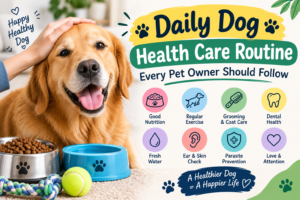

Taking care of a dog involves much more than providing food and a comfortable place to sleep. Dogs need regular exercise, proper nutrition, grooming, dental care, mental stimulation, and routine health checks to stay happy and healthy.
A consistent daily dog health care routine can help you notice changes in your pet’s behavior or appearance early. It can also prevent some common problems and help your dog maintain a healthy weight, clean coat, strong teeth, and good overall well-being.
The good news is that daily dog care does not have to be complicated. With a few simple habits, you can create a routine that supports your dog’s physical and emotional health.
Why Is a Daily Dog Health Care Routine Important?
Dogs often hide signs of illness or discomfort. A small change in appetite, energy, bathroom habits, skin, coat, or behavior may be easier to notice when you interact with your dog every day.
A daily routine can help you:
- Monitor your dog’s appetite
- Maintain a healthy weight
- Support good dental hygiene
- Keep the skin and coat clean
- Provide enough physical activity
- Reduce boredom and stress
- Notice unusual health changes
- Build a stronger bond with your pet
Your dog’s routine should be adjusted according to age, breed, size, activity level, lifestyle, and individual health needs.
1. Start the Day With Fresh Water
Fresh, clean water should always be available to your dog.
Dogs need water to support normal body functions, including temperature regulation and digestion. Water requirements vary depending on factors such as body size, diet, activity, weather, and health.
Every morning, check your dog’s water bowl and refill it with clean water. Wash the bowl regularly to prevent buildup.
During hot weather or after exercise, your dog may need more water than usual.
Watch for Changes in Drinking
A sudden increase or decrease in water consumption can sometimes indicate an underlying problem. If your dog’s drinking habits change noticeably and persist, contact your veterinarian.
2. Feed a Balanced Diet
Nutrition is one of the most important parts of a daily dog health care routine.
Choose a complete and balanced dog food appropriate for your dog’s:
- Age
- Size
- Activity level
- Life stage
- Specific nutritional needs
Puppies, adult dogs, and senior dogs can have different dietary requirements.
Follow the feeding guidelines on the food packaging, but remember that individual needs vary. Your veterinarian can help determine an appropriate feeding amount based on your dog’s body condition and lifestyle.
Avoid making table scraps a major part of your dog’s diet. Some human foods can also be dangerous for dogs, including chocolate, grapes and raisins, onions, garlic, and products containing xylitol.
3. Give Your Dog Daily Exercise
Exercise is essential for maintaining a healthy body and mind.
The amount of exercise your dog needs depends on its breed, age, size, fitness level, and health.
Daily activities may include:
- Walking
- Playing fetch
- Running
- Swimming where appropriate
- Interactive games
- Training exercises
- Safe off-leash activity in suitable areas
Dogs with high energy levels may need considerably more activity than dogs with lower exercise requirements.
Avoid suddenly increasing exercise intensity, especially if your dog is older, overweight, or not accustomed to strenuous activity.
Look for Signs of Overexertion
During exercise, watch for excessive panting, weakness, difficulty breathing, stumbling, or unusual fatigue.
If your dog appears distressed, stop the activity and allow it to rest. In hot weather, exercise during cooler parts of the day and take appropriate precautions against overheating.
4. Check Your Dog’s Paws
Your dog’s paws experience a lot of daily wear and tear.
Take a few seconds to inspect the paws for:
- Cuts
- Cracks
- Swelling
- Foreign objects
- Redness
- Broken nails
- Irritation between the toes
Hot pavement, ice, chemicals, rough surfaces, and sharp objects can injure paw pads.
After outdoor walks, especially in areas with chemicals or debris, gently clean your dog’s paws if necessary.
5. Brush Your Dog’s Coat
Regular brushing helps remove loose hair, dirt, and debris while keeping the coat looking healthy.
The frequency depends on your dog’s coat type.
Long-haired dogs may need brushing every day or several times a week, while short-haired breeds may require less frequent brushing.
Brushing can also help you notice:
- Fleas
- Ticks
- Skin redness
- Lumps
- Dry patches
- Mats
- Unusual odor
Choose a brush appropriate for your dog’s coat. If mats are severe or close to the skin, professional grooming may be safer than trying to cut them out yourself.
6. Maintain Good Dental Hygiene
Dental health is an important but sometimes overlooked part of dog care.
Plaque and tartar can build up on the teeth and contribute to gum disease and bad breath.
Ideally, brush your dog’s teeth regularly with a toothbrush and toothpaste specifically made for dogs. Human toothpaste should not be used because some ingredients can be unsafe for pets.
Introduce tooth brushing gradually. Start by allowing your dog to become comfortable with having its mouth touched, then slowly introduce the toothbrush.
Regular veterinary dental examinations are also important.
7. Check the Ears
Take a quick look at your dog’s ears as part of your regular routine.
Healthy ears generally should not have a strong unpleasant odor, excessive discharge, or significant redness.
Watch for:
- Frequent head shaking
- Scratching
- Redness
- Swelling
- Bad odor
- Excessive wax
- Discharge
Do not insert cotton swabs deep into your dog’s ear canal. If you suspect an ear infection, have your veterinarian examine the ear.
8. Monitor Your Dog’s Skin
Your dog’s skin and coat can provide useful clues about overall health.
During grooming or petting, look for:
- New lumps
- Scabs
- Redness
- Hair loss
- Parasites
- Dry or flaky areas
- Excessive itching
- Unusual odor
Occasional scratching is normal, but persistent itching can indicate fleas, allergies, parasites, infections, or other conditions.
If your dog repeatedly scratches, bites, or licks its skin, a veterinary examination may be needed.
9. Keep Parasite Prevention Up to Date
Fleas, ticks, intestinal parasites, and other parasites can affect dogs.
Your veterinarian can recommend parasite prevention based on your dog’s age, lifestyle, geographic area, and exposure risk.
Check your dog’s coat after outdoor activities, particularly if your dog spends time in grassy or wooded areas.
Don’t use random parasite treatments without checking whether they are appropriate for your dog’s species, size, age, and health status.
10. Practice Daily Mental Stimulation
Physical exercise is only part of a healthy lifestyle. Dogs also need mental stimulation.
Boredom can contribute to unwanted behaviors such as excessive barking, chewing, digging, or restlessness.
Try activities such as:
- Puzzle toys
- Training sessions
- Hide-and-seek games
- Scent games
- Interactive toys
- Learning new commands
Even a short training session can provide valuable mental stimulation.
Use positive, reward-based training methods to encourage good behavior.
11. Monitor Bathroom Habits
Pay attention to your dog’s urination and bowel movements.
You don’t need to inspect every detail, but knowing your dog’s normal routine can help you notice changes.
Contact your veterinarian if you notice persistent:
- Diarrhea
- Constipation
- Blood in stool
- Difficulty urinating
- Frequent attempts to urinate
- Sudden changes in bathroom habits
Some changes may be temporary, but persistent or severe symptoms should not be ignored.
12. Maintain a Healthy Weight
Obesity can negatively affect a dog’s quality of life and increase the risk of several health problems.
You should regularly assess your dog’s body condition rather than relying only on the number on a scale.
Your veterinarian can help determine whether your dog is at an appropriate weight.
To support a healthy weight:
- Measure meals
- Limit excessive treats
- Provide regular exercise
- Choose appropriate food
- Monitor weight over time
Treats should generally make up only a small portion of a dog’s daily calorie intake.
13. Give Your Dog Plenty of Rest
Dogs need adequate sleep and rest.
Puppies and older dogs may sleep considerably more than healthy adult dogs.
Provide your dog with a quiet, comfortable sleeping area where it can rest without constant disturbance.
A sudden major change in sleeping patterns, particularly when combined with lethargy or other symptoms, may warrant veterinary attention.
14. Spend Quality Time Together
Emotional well-being is another important part of dog health care.
Spend time talking to your dog, petting it, playing, training, or simply relaxing together.
Dogs are social animals, and positive interaction can strengthen the bond between you and your pet.
Pay attention to your dog’s body language. If your dog appears uncomfortable with a particular type of handling, give it space and use positive interactions instead.
Simple Daily Dog Health Care Checklist
A simple checklist can make your routine easier.
Morning
- Provide fresh water
- Feed the appropriate meal
- Check appetite and energy
- Take your dog outside for bathroom needs
- Give age-appropriate exercise
- Quickly inspect paws and coat
During the Day
- Provide mental stimulation
- Monitor water intake
- Offer appropriate treats
- Give opportunities for rest
- Check for unusual behavior
Evening
- Provide the evening meal
- Take your dog outside
- Brush the coat if needed
- Check teeth and gums as part of regular dental care
- Inspect paws after outdoor activities
- Spend quality time together
You don’t have to perform every grooming task every day. The key is to build consistent habits and follow a schedule appropriate for your dog’s needs.
Weekly and Monthly Dog Care Tasks
Some tasks don’t need to be done daily but should still be part of your overall pet-care plan.
Weekly
- Wash food and water bowls thoroughly
- Check nails
- Inspect ears
- Brush the coat as needed
- Wash bedding
- Clean frequently used toys
Monthly or According to Your Vet’s Schedule
- Review parasite prevention
- Monitor weight
- Check grooming needs
- Review medications if applicable
- Check whether vaccinations or veterinary appointments are due
Preventive veterinary care should follow your veterinarian’s recommendations rather than a one-size-fits-all schedule.
When Should You Call the Veterinarian?
Knowing your dog’s normal behavior makes it easier to recognize warning signs.
Contact a veterinarian if your dog develops symptoms such as:
- Difficulty breathing
- Severe vomiting or diarrhea
- Collapse or extreme weakness
- Significant bleeding
- Seizures
- Severe pain
- Sudden inability to walk
- Repeated attempts to urinate without producing urine
- Major changes in appetite or drinking
- Persistent lethargy
Some situations are emergencies. If your dog has severe symptoms or appears critically ill, seek veterinary care promptly.
Final Thoughts
A good daily dog health care routine is built around simple, consistent habits. Fresh water, balanced nutrition, regular exercise, grooming, dental care, parasite prevention, mental stimulation, and plenty of rest can all contribute to your dog’s overall well-being.
Perhaps the most important habit is simply paying attention. Because you know your dog’s normal behavior better than anyone, you may be the first person to notice when something changes.
Daily care doesn’t need to be complicated or expensive. A few minutes of observation, grooming, exercise, and positive interaction each day can help your dog stay healthier, happier, and more comfortable throughout its life.
Always remember that routine home care does not replace professional veterinary care. Regular checkups and prompt attention to unusual symptoms are essential parts of responsible dog ownership.