
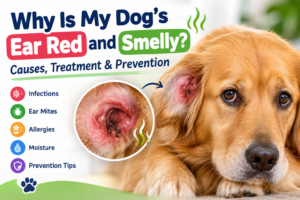

A dog’s ear that looks red, irritated, or swollen and has a bad smell is often a sign that something is wrong. While a small amount of normal ear wax can be healthy, a strong odor combined with redness, discharge, scratching, or head shaking should not be ignored.
The most common causes include ear infections, yeast overgrowth, bacterial infections, ear mites, allergies, trapped moisture, and foreign objects. Some dogs are also more prone to ear problems because of their ear shape, hair growth, or underlying skin allergies.
In this guide, we’ll explain why your dog’s ear may be red and smelly, the symptoms to watch for, treatment options, safe home care, and how to prevent recurring ear problems.
Why Is My Dog’s Ear Red and Smelly?
When a dog’s ear becomes red and develops an unpleasant odor, inflammation or infection is one of the most common explanations.
A healthy dog ear generally does not have a strong or foul smell. If you notice a sudden change in odor along with redness or irritation, your dog may have an ear problem that requires veterinary attention.
Common causes include:
- Yeast ear infections
- Bacterial ear infections
- Ear mites
- Allergies
- Excessive moisture
- Wax buildup
- Foreign objects
- Trauma or excessive scratching
- Skin conditions
- Polyps or other growths
Identifying the underlying cause is important because different ear problems require different treatments.
1. Yeast Ear Infection
A yeast infection is one of the most common causes of smelly dog ears. Yeast naturally exists on the skin, but excessive growth can occur when the ear environment becomes warm, moist, or inflamed.
Dogs with floppy ears are particularly vulnerable because their ear canals can retain moisture and have less airflow.
Signs of a yeast ear infection may include:
- Red or inflamed ear canal
- Strong musty or sour smell
- Dark brown or waxy discharge
- Frequent scratching
- Head shaking
- Rubbing the ear on furniture or the floor
- Thickened ear skin
Yeast infections often occur alongside allergies, so dogs with recurring ear problems may need evaluation for an underlying allergy or skin condition.
2. Bacterial Ear Infection
Bacteria can multiply inside an irritated ear canal and cause significant inflammation. A bacterial ear infection may produce a particularly unpleasant odor.
You may notice:
- Bright red ears
- Yellow, cream, or greenish discharge
- Swelling
- Pain when the ear is touched
- Frequent head shaking
- Scratching
- A foul smell
Some bacterial ear infections can become painful quickly. If your dog appears uncomfortable or the ear is severely swollen, contact a veterinarian promptly.
3. Ear Mites
Ear mites are tiny parasites that can cause intense itching and irritation, particularly in puppies and dogs exposed to infected animals.
Common symptoms include:
- Severe scratching
- Frequent head shaking
- Dark, crumbly debris resembling coffee grounds
- Redness
- Irritation
- Hair loss around the ears
Ear mites are more common in cats, but dogs can also become infected. A veterinarian can examine the ear debris and determine whether mites are responsible.
4. Allergies
Allergies are an important cause of recurring ear inflammation in dogs.
Environmental allergies may involve things such as pollen, grasses, dust mites, or molds. Some dogs may also have food-related allergies or sensitivities.
Allergy-related ear problems often occur together with:
- Itchy paws
- Excessive licking
- Red skin
- Recurrent ear infections
- Scratching around the face
- Skin irritation
If your dog repeatedly develops red and smelly ears despite treatment, an underlying allergy may be contributing to the problem.
5. Water or Moisture in the Ear
Moisture creates an environment where yeast and bacteria can multiply more easily.
Dogs that frequently swim or receive baths may be more likely to develop ear problems if water remains inside the ear canal.
After bathing or swimming, gently dry the outer part of your dog’s ears. Avoid pushing cotton swabs deep into the ear canal.
6. Excessive Ear Wax
Some dogs naturally produce more ear wax than others. Excess wax can trap debris and moisture, potentially contributing to irritation and microbial overgrowth.
However, excessive wax can also be a symptom rather than the original cause of an ear infection.
If the wax is unusually dark, thick, foul-smelling, or accompanied by redness, scratching, or pain, your dog should be evaluated.
7. Something Is Stuck in the Ear
Grass seeds, plant material, dirt, or other foreign objects can become trapped inside a dog’s ear.
This can cause sudden:
- Head shaking
- Scratching
- Redness
- Pain
- Swelling
- Bad odor
If your dog suddenly develops severe ear irritation after walking through grass or vegetation, a foreign object could be responsible.
Do not attempt to dig deep into the ear yourself. A veterinarian can safely examine the ear canal and remove the object if necessary.
Symptoms of a Dog Ear Infection
A red and smelly ear is only one possible symptom. Watch your dog for other signs, including:
- Frequent head shaking
- Scratching the ear
- Rubbing the face or ear
- Redness
- Swelling
- Ear discharge
- Excessive wax
- Bad odor
- Pain when touched
- Tilting the head
- Reduced hearing
- Crusts or scabs around the ear
- Changes in behavior
If your dog has several of these symptoms at the same time, an ear infection or another ear disorder is more likely.
When Should You Take Your Dog to the Vet?
A mild ear issue can sometimes become much more serious if treatment is delayed.
Contact your veterinarian if your dog has:
- A strong or foul-smelling ear
- Significant redness or swelling
- Yellow, green, bloody, or thick discharge
- Severe itching
- Obvious pain
- Repeated ear infections
- Head tilting
- Balance problems
- Hearing changes
- Swelling around the ear
- Symptoms that do not improve
Head tilting, loss of balance, or unusual eye movements can indicate deeper ear involvement and require prompt veterinary assessment.
A veterinarian may examine the ear with an otoscope and take a sample of the discharge. Microscopic examination can help determine whether yeast, bacteria, mites, or another problem is present.
How Are Red and Smelly Dog Ears Treated?
Treatment depends on the underlying cause.
Yeast Infection Treatment
Veterinarians may recommend an appropriate antifungal ear medication, often combined with cleaning of the ear canal when appropriate.
Bacterial Infection Treatment
Bacterial infections may require prescription ear medication selected based on the organisms involved and the condition of the ear.
Ear Mites
If mites are diagnosed, your veterinarian can recommend an appropriate antiparasitic treatment. Other pets in the household may also need evaluation.
Allergies
If allergies are contributing to recurring ear infections, treatment may involve identifying triggers and managing the underlying allergic disease.
Foreign Objects
A foreign object may need to be removed by a veterinarian, particularly if it is deep inside the ear canal or causing significant pain.
Can You Clean a Dog’s Smelly Ear at Home?
You can sometimes clean the outer ear at home, but you should be careful.
If your veterinarian has recommended an ear-cleaning product, follow their instructions carefully.
General tips include:
- Use a veterinary-approved dog ear cleaner.
- Apply it according to the product or veterinarian’s instructions.
- Gently massage the base of the ear if instructed.
- Allow your dog to shake its head.
- Wipe away loosened debris from the visible outer ear with clean cotton or gauze.
Avoid Cotton Swabs Deep Inside the Ear
Do not push cotton swabs deep into your dog’s ear canal. This can push debris farther inside or potentially damage delicate structures.
Also avoid putting household products such as vinegar, alcohol, hydrogen peroxide, essential oils, or other DIY mixtures into an irritated ear unless specifically directed by a veterinarian.
Can a Red and Smelly Dog Ear Heal on Its Own?
Sometimes mild irritation may improve, but a red and foul-smelling ear should not automatically be assumed to be harmless.
An untreated infection can become increasingly painful and may extend deeper into the ear.
If your dog has persistent odor, discharge, redness, or itching, professional evaluation is the safest approach.
How to Prevent Dog Ear Infections
Prevention is especially important for dogs that have recurring ear problems.
Keep Ears Dry
After swimming or bathing, gently dry the visible parts of the ears.
Check the Ears Regularly
Look inside your dog’s ears once or twice a week for unusual redness, discharge, swelling, or odor.
Manage Allergies
If your dog has chronic itching or recurring ear infections, discuss allergy management with your veterinarian.
Avoid Over-Cleaning
Cleaning too frequently can irritate the ear canal. Use an ear-cleaning routine recommended for your individual dog.
Keep the Environment Clean
Regularly wash bedding and keep your dog’s living areas reasonably clean to reduce exposure to dirt and potential irritants.
Follow Veterinary Treatment Instructions
If your dog receives medication for an ear infection, use it exactly as directed. Stopping treatment too early can contribute to persistent or recurring problems.
Frequently Asked Questions
Why does my dog’s ear smell bad but look normal?
A bad smell can occur before obvious redness develops. Yeast, bacteria, excess wax, or other problems may be present even when the outer ear looks relatively normal.
Why is my dog’s ear red and smelly but not itchy?
Not every dog with an ear infection scratches. Some dogs primarily show odor, redness, discharge, head shaking, or discomfort.
Can I use human ear drops on my dog?
Do not use human ear drops unless your veterinarian specifically tells you to. Some products may be inappropriate for dogs, especially if the eardrum is damaged.
Why does my dog keep getting ear infections?
Recurring infections may be associated with allergies, ear anatomy, moisture, excessive wax, underlying skin disease, or other medical conditions. Your veterinarian can help identify the underlying cause.
Is a little ear wax normal in dogs?
Yes. A small amount of ear wax can be normal. However, excessive wax combined with strong odor, redness, discharge, or itching may indicate an ear problem.
Final Thoughts
If your dog’s ear is red and smelly, an ear infection, yeast overgrowth, bacterial infection, allergy, ear mites, moisture, or another underlying problem could be responsible.
Pay attention to additional symptoms such as scratching, head shaking, discharge, swelling, pain, or head tilting. Avoid using random home remedies or human medications inside the ear because they can sometimes make the problem worse.
For persistent, painful, severely inflamed, or foul-smelling ears, a veterinary examination is the best way to identify the cause and choose the right treatment.
With proper diagnosis, treatment, regular ear checks, and good ear-care habits, many dogs can maintain healthy and comfortable ears.