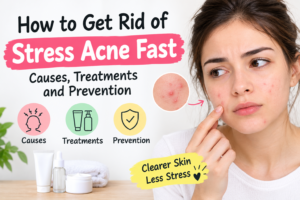

Stress can affect much more than your mood and energy levels. For many people, periods of stress are followed by unexpected pimples, clogged pores, redness, and breakouts. This is often called stress acne.
If you have noticed that your skin breaks out before exams, during busy work periods, after poor sleep, or when you are dealing with emotional stress, there may be a connection.
The good news is that you can take practical steps to calm a stress-related breakout and reduce the chances of new pimples appearing.
In this guide, you’ll learn how to get rid of stress acne fast, what causes stress breakouts, the best treatments, skincare mistakes to avoid, and how to prevent stress acne naturally.
What Is Stress Acne?
Stress acne refers to breakouts that may become worse during periods of physical or emotional stress.
Stress itself does not necessarily create acne from nothing. Instead, stress can affect processes in the body that contribute to acne, including oil production, inflammation, sleep, and skincare habits.
When you’re stressed, your body can release more stress-related hormones and chemical signals. These changes may increase oil production and inflammation in the skin, making existing acne worse or contributing to new breakouts.
Stress can also cause behaviors that indirectly affect your skin, such as sleeping less, touching your face more often, eating differently, or skipping your normal skincare routine.
What Causes Stress Acne?
Understanding the causes of stress acne can help you manage it more effectively.
1. Increased Oil Production
Stress can influence hormones that affect the sebaceous glands. Increased oil production can contribute to clogged pores, especially if dead skin cells and bacteria are also present.
Clogged pores can eventually develop into blackheads, whiteheads, or inflamed pimples.
2. Inflammation
Stress can affect the body’s inflammatory response. If you already have acne-prone skin, periods of stress may make existing blemishes appear more red or swollen.
3. Poor Sleep
Stress often makes it harder to get enough quality sleep. Poor sleep can affect overall skin health and may make it more difficult for the skin to recover from inflammation.
4. Touching Your Face
When people feel anxious or stressed, they may touch, rub, squeeze, or pick their face without realizing it.
Hands can transfer oil, dirt, and other substances to the skin. Picking pimples can also increase inflammation and the risk of post-acne marks.
5. Changes in Daily Routine
During stressful periods, people may skip cleansing, forget sunscreen, sleep in makeup, or use more products than usual.
These changes can contribute to clogged pores and irritation.
How to Get Rid of Stress Acne Fast
There is no guaranteed overnight cure for acne, but you can take steps to calm a breakout and prevent it from becoming worse.
1. Use a Gentle Cleanser
Start with a mild facial cleanser twice daily, especially in the morning and before bed.
A gentle cleanser can remove excess oil, sweat, sunscreen, and dirt without unnecessarily irritating the skin.
Avoid scrubbing your face aggressively. Scrubbing can damage the skin barrier and make inflamed acne feel worse.
2. Try Salicylic Acid
Salicylic acid is a popular acne-fighting ingredient that helps exfoliate inside pores.
It may be particularly useful for clogged pores, blackheads, whiteheads, and oily skin.
If you’re new to salicylic acid, start with a lower-strength product and use it according to the product directions.
Avoid combining several strong acne treatments immediately, as this can cause dryness and irritation.
3. Consider Benzoyl Peroxide for Inflamed Pimples
Benzoyl peroxide is another well-known acne treatment that can help reduce acne-causing bacteria and inflammation.
It is commonly used for red, inflamed pimples.
Because benzoyl peroxide can cause dryness and irritation, introduce it gradually and use moisturizer regularly.
It can also bleach fabrics, so be careful with towels, pillowcases, and clothing.
4. Use a Lightweight Moisturizer
Many people make the mistake of avoiding moisturizer when they have acne.
However, drying out the skin too much can lead to irritation and make your skincare routine harder to tolerate.
Choose a non-comedogenic moisturizer that feels comfortable on your skin.
Look for ingredients such as ceramides, glycerin, or hyaluronic acid if your skin needs additional hydration.
5. Apply Sunscreen Every Morning
Acne can leave behind dark marks, especially after inflammation.
Daily sunscreen can help protect your skin from UV exposure and reduce the chance that existing discoloration becomes more noticeable.
Choose a broad-spectrum sunscreen with at least SPF 30 and apply it every morning.
6. Don’t Pop Your Pimples
If you want to get rid of stress acne quickly, squeezing your pimples may seem tempting.
Unfortunately, picking can push inflammation deeper into the skin and increase the risk of scarring or dark marks.
Instead, leave the pimple alone or use an appropriate acne treatment.
Hydrocolloid pimple patches can also be useful for some surface-level pimples because they can protect the area from touching and picking.
Best Skincare Routine for Stress Acne
A simple routine is often better than using numerous active ingredients.
Morning Routine
Step 1: Gentle cleanser
Step 2: Optional acne treatment
Step 3: Lightweight moisturizer
Step 4: Broad-spectrum SPF 30+ sunscreen
Night Routine
Step 1: Gentle cleanser
Step 2: Acne treatment
Step 3: Moisturizer
If your skin becomes dry, burning, or excessively irritated, reduce the frequency of active treatments and focus on gentle cleansing and moisturizing until your skin feels comfortable again.
How to Prevent Stress Acne
Treating existing breakouts is only part of the solution. Managing the factors that contribute to stress breakouts can help reduce future flare-ups.
1. Get Enough Sleep
Aim for a consistent sleep schedule and enough sleep for your individual needs.
Poor sleep can make stressful periods feel even more difficult and may negatively affect your overall well-being.
Try reducing screen time before bed, keeping your sleeping environment comfortable, and maintaining a regular bedtime.
2. Manage Daily Stress
Stress management is an important part of managing stress-related breakouts.
You don’t need complicated techniques. Simple activities can help, including:
- Walking
- Stretching
- Deep breathing
- Meditation
- Journaling
- Listening to relaxing music
- Spending time outdoors
- Taking short breaks from work
- Talking with someone you trust
The goal isn’t to eliminate every stressful situation. Instead, find healthy ways to manage stress when it occurs.
3. Keep Your Hands Away From Your Face
Try to notice when you touch your face during stressful situations.
Avoid squeezing pimples, scratching irritated areas, or constantly checking your skin in the mirror.
Keeping your hands away from your face can reduce unnecessary irritation.
4. Change Pillowcases Regularly
Your pillowcase comes into contact with your face for several hours every night.
Changing it regularly can help remove accumulated oil, sweat, skincare products, and other residue.
If you use hair products or have oily skin, you may want to change your pillowcase more frequently.
5. Clean Makeup Brushes
Dirty makeup brushes can collect oil, dead skin cells, and product residue.
Clean your brushes regularly according to the manufacturer’s recommendations, particularly if you’re prone to breakouts.
Also avoid sharing makeup or makeup applicators with other people.
6. Choose Non-Comedogenic Products
When buying moisturizers, sunscreens, foundations, and other skincare products, look for products labeled non-comedogenic when possible.
These products are designed to be less likely to clog pores.
However, individual skin reactions vary, so even a non-comedogenic product can sometimes cause irritation or breakouts.
Can Stress Acne Go Away on Its Own?
Stress-related breakouts may improve when the stressful period ends and your routine becomes more stable.
However, acne can have multiple contributing factors, including genetics, hormones, skincare products, medications, and other conditions.
If breakouts continue even after your stress levels improve, stress may not be the only cause.
Persistent acne may require a more targeted treatment plan.
How Long Does Stress Acne Take to Go Away?
There is no exact timeline because acne varies from person to person.
Small pimples may improve relatively quickly, while deeper or inflamed acne can take much longer to resolve.
Trying multiple treatments at once usually isn’t the best way to speed up results. It can irritate the skin and potentially make the situation worse.
Consistency is more important than trying to achieve overnight results.
Stress Acne vs. Hormonal Acne
Stress acne and hormonal acne can sometimes look similar.
Hormonal acne is often associated with changes in hormone levels and may appear repeatedly around the lower face, jawline, and chin.
Stress can also influence hormonal and inflammatory pathways, potentially worsening acne that is already influenced by hormones.
If you repeatedly experience severe breakouts around your menstrual cycle or have persistent acne despite a consistent skincare routine, a dermatologist can help determine the likely cause.
When Should You See a Dermatologist?
Consider professional advice if:
- Your acne is painful or deep
- You develop frequent cyst-like breakouts
- Acne is leaving scars
- Dark marks are becoming widespread
- Over-the-counter treatments aren’t helping
- Your acne suddenly becomes severe
- Breakouts are significantly affecting your confidence or daily life
A dermatologist can determine whether your acne is related to stress, hormones, medications, skincare products, or another underlying factor and recommend appropriate treatment.
Final Thoughts
Learning how to get rid of stress acne fast starts with keeping your skincare routine simple and consistent.
Use a gentle cleanser, choose appropriate acne-fighting ingredients such as salicylic acid or benzoyl peroxide, moisturize regularly, and protect your skin with sunscreen. Most importantly, avoid picking or squeezing your pimples.
Because stress can contribute to breakouts, don’t focus only on skincare. Getting enough sleep, taking regular breaks, exercising, practicing relaxation techniques, and finding healthy ways to manage stress can also support your overall well-being.
Remember that acne rarely disappears overnight. Give your routine time to work, and seek professional advice if your breakouts are severe, painful, persistent, or leaving scars.
A consistent skincare routine combined with healthy stress-management habits can help you work toward clearer, calmer, healthier-looking skin.