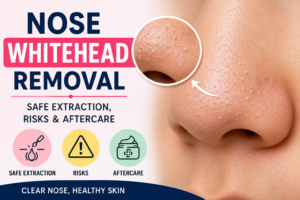

Whiteheads on the nose are one of the most common types of clogged pores. They can appear as tiny white or flesh-colored bumps and may make the nose look rough or uneven. Because they are easy to see and often feel like they can be squeezed out, many people try to remove them at home.
However, nose whitehead removal should be done carefully. Squeezing, digging, or using sharp tools can irritate the skin, cause inflammation, introduce bacteria, and potentially leave dark marks or scars.
The good news is that most whiteheads can be managed with a consistent skincare routine and appropriate acne treatments. Professional extraction may also be an option when stubborn clogged pores do not respond to home care.
What Are Whiteheads on the Nose?
Whiteheads are a type of closed comedone. They form when oil, dead skin cells, and other debris accumulate inside a hair follicle. Unlike blackheads, the opening remains closed, so the material inside does not become exposed to air.
They usually appear as:
- Small white or skin-colored bumps
- Tiny raised spots on the nose
- Rough-looking skin texture
- Non-inflammatory clogged pores
- Multiple small bumps grouped together
Whiteheads are different from sebaceous filaments, which are also extremely common on the nose.
Sebaceous filaments are natural structures that help move oil through pores. They often look like tiny gray, yellow, or skin-colored dots and tend to return after being removed. They are not the same thing as acne and usually do not need to be extracted.
What Causes Whiteheads on the Nose?
Several factors can contribute to clogged pores.
1. Excess Oil Production
The nose contains many sebaceous glands. When these glands produce excess sebum, oil can combine with dead skin cells and clog pores.
2. Dead Skin Cell Buildup
When dead skin cells are not shed properly, they can accumulate inside hair follicles and contribute to whiteheads.
3. Hormonal Changes
Hormonal fluctuations can increase oil production. This is why some people experience more clogged pores during puberty, menstrual cycles, pregnancy, or other periods of hormonal change.
4. Comedogenic Products
Some heavy skincare, makeup, or hair products may contribute to clogged pores in people who are acne-prone.
5. Sweat and Occlusion
Sweat, friction, and wearing tight face coverings for extended periods may contribute to congestion in susceptible skin.
6. Genetics
Some people naturally produce more oil or are more prone to clogged pores.
Should You Squeeze Whiteheads on Your Nose?
It is tempting to squeeze a visible whitehead, but forceful extraction at home is generally not recommended.
When you squeeze a clogged pore incorrectly, the contents may not come out cleanly. Instead, pressure can push material deeper into the surrounding tissue.
This can cause:
- Redness
- Swelling
- Inflammation
- Skin irritation
- Infection
- Post-inflammatory dark marks
- Scarring in some cases
If a whitehead is deep, painful, or repeatedly returns, professional treatment is safer than repeatedly squeezing it.
Safe Nose Whitehead Removal at Home
For most mild whiteheads, the goal should be to gradually unclog pores rather than force the contents out.
Step 1: Cleanse Gently
Wash your face with a gentle cleanser once or twice daily, depending on your skin type.
Avoid harsh scrubbing. Scrubbing aggressively does not remove whiteheads faster and can damage the skin barrier.
Use lukewarm water rather than very hot water.
Step 2: Use Salicylic Acid
Salicylic acid is one of the most useful ingredients for clogged pores. It is a beta hydroxy acid that can help loosen dead skin cells and oil inside pores.
A low-strength salicylic acid product may be useful for people with oily or acne-prone skin.
Start gradually, especially if you have sensitive skin. Excessive use can cause dryness and irritation.
Step 3: Consider a Retinoid
Topical retinoids can help normalize skin-cell turnover and prevent pores from becoming clogged.
They can be particularly helpful when whiteheads are frequent or accompanied by other forms of acne.
Retinoids can cause irritation when first introduced, so gradual use and moisturizer are important. If you are pregnant or trying to become pregnant, speak with a healthcare professional before using retinoid products.
Step 4: Moisturize
It may seem unnecessary to moisturize oily skin, but skipping moisturizer can increase dryness and irritation.
Choose a lightweight, non-comedogenic moisturizer that does not feel heavy on your skin.
Step 5: Use Sunscreen
Apply broad-spectrum SPF 30 or higher during the day.
Sun exposure can worsen discoloration that develops after irritated acne lesions. Sunscreen is especially important if you are using exfoliating acids or retinoids because your skin may become more sensitive.
Can You Use a Pore Strip for Nose Whiteheads?
Pore strips can temporarily remove surface debris, but they do not treat the underlying cause of clogged pores.
They may also remove sebaceous filaments, which naturally return.
If your nose appears cleaner immediately after using a pore strip, the effect may be temporary. Frequent use can irritate sensitive skin, especially if the adhesive is harsh.
For long-term management, ingredients such as salicylic acid and retinoids are generally more useful than repeatedly using pore strips.
What About Steam for Whitehead Removal?
Facial steaming may temporarily soften surface debris and make the skin feel smoother, but it does not permanently open pores or remove the cause of whiteheads.
If you enjoy facial steam, keep it comfortably warm rather than extremely hot. Excessive heat can cause irritation, redness, or dryness.
Steam should not be considered a replacement for acne treatment.
Professional Whitehead Extraction
If whiteheads are stubborn, numerous, or difficult to manage, a dermatologist or qualified skincare professional may perform controlled extraction.
Professional extraction uses appropriate tools and techniques to remove the contents of selected clogged pores while minimizing unnecessary trauma.
It can be particularly useful when:
- Whiteheads do not improve with skincare
- You have many clogged pores
- You are tempted to repeatedly squeeze them
- Your skin develops marks easily
- You have recurring acne
Extraction should be performed by someone properly trained rather than with an unsterilized home extraction tool.
Risks of DIY Whitehead Extraction
Using fingernails, needles, tweezers, or comedone extractors without proper training can cause more problems than it solves.
Skin Damage
Excessive pressure can break the skin and cause small wounds.
Infection
Breaking the skin creates an opportunity for bacteria to enter.
Post-Inflammatory Hyperpigmentation
Inflammation or injury can leave temporary or persistent dark marks, particularly in people prone to pigmentation.
Scarring
Repeated trauma can potentially result in scars, especially if the acne is inflamed or deep.
Increased Inflammation
A whitehead may become red, swollen, and painful after aggressive manipulation.
For these reasons, safe whitehead removal focuses on preventing and gradually treating clogged pores rather than forcing them out.
Nose Whitehead Aftercare
If a whitehead has been professionally extracted or has opened naturally, proper aftercare can help reduce irritation.
Keep the Area Clean
Use a gentle cleanser and avoid touching the area unnecessarily.
Avoid Harsh Products
For a short period after extraction, avoid strong exfoliants, scrubs, alcohol-heavy products, and other irritating treatments if the skin is red or damaged.
Apply a Gentle Moisturizer
A simple moisturizer can support the skin barrier and reduce dryness.
Use Sunscreen
Protecting the area from UV exposure can help reduce the risk of discoloration.
Don’t Pick the Healing Area
If a small scab develops, allow it to heal naturally. Picking can increase the risk of prolonged discoloration and scarring.
Best Skincare Routine for Preventing Nose Whiteheads
Consistency is more important than using many products.
Morning Routine
1. Gentle cleanser: Remove excess oil and surface debris.
2. Lightweight moisturizer: Keep the skin barrier comfortable.
3. Broad-spectrum sunscreen: Use SPF 30 or higher.
Evening Routine
1. Cleanser: Gently remove makeup, sunscreen, sweat, and oil.
2. Salicylic acid or another acne treatment: Use according to your skin’s tolerance and product directions.
3. Moisturizer: Help reduce dryness and irritation.
If a retinoid is part of your treatment plan, introduce it gradually rather than using multiple strong active ingredients simultaneously.
Mistakes to Avoid When Removing Nose Whiteheads
Avoid these common mistakes:
Scrubbing Too Hard
A rough scrub can irritate the skin without removing the deeper clog.
Using Too Many Acids
Combining multiple exfoliating products can cause burning, peeling, and barrier damage.
Picking With Fingernails
Fingernails contain bacteria and can damage the skin.
Using Dirty Extraction Tools
Unclean tools can introduce bacteria and increase the risk of infection.
Trying to Remove Every Dot
Not every dot on the nose is a whitehead. Some may be sebaceous filaments, which are a normal part of skin anatomy.
Ignoring Persistent Acne
If whiteheads are frequent or accompanied by inflammatory acne, treating the underlying acne is more effective than repeatedly extracting individual bumps.
How Long Does It Take to Get Rid of Nose Whiteheads?
There is no universal timeline.
Mild clogged pores may gradually improve over several weeks with consistent skincare. More persistent acne can take longer and may require professional treatment.
Avoid changing your entire routine every few days. Acne treatments generally need consistent use over time to show results.
If a product causes significant burning, swelling, or irritation, stop using it and seek professional advice if symptoms are severe or persistent.
When Should You See a Dermatologist?
Consider seeing a dermatologist if:
- Whiteheads are widespread or persistent.
- You also have painful pimples or cysts.
- Acne is leaving dark marks or scars.
- Your skin becomes irritated by over-the-counter products.
- You have tried consistent skincare without improvement.
- You are unsure whether the bumps are whiteheads or sebaceous filaments.
- You are considering professional extraction or cosmetic procedures.
A dermatologist can determine the type of bumps you have and recommend treatment based on your skin and acne severity.
Frequently Asked Questions
How can I remove whiteheads from my nose without squeezing?
Use a gentle cleanser and consider salicylic acid or a topical retinoid appropriate for your skin. These treatments can help prevent and gradually clear clogged pores without physically squeezing them.
Is it safe to extract nose whiteheads at home?
Aggressive extraction is not recommended. Squeezing or using sharp tools can cause irritation, infection, pigmentation, and potentially scarring. Professional extraction is safer when extraction is actually needed.
Are nose whiteheads the same as sebaceous filaments?
No. Whiteheads are clogged pores and a type of acne lesion. Sebaceous filaments are normal structures that help transport oil through pores and commonly appear on the nose.
Does toothpaste remove whiteheads?
No. Toothpaste is not designed for acne treatment and may irritate or burn the skin. It is better to use proven acne ingredients such as salicylic acid or dermatologist-recommended treatments.
Can salicylic acid remove nose whiteheads?
Salicylic acid can help loosen dead skin cells and oil inside clogged pores. With consistent use, it may reduce whiteheads and help prevent new ones.
Can whiteheads leave scars?
Whiteheads themselves are less likely to cause scars than deep inflammatory acne. However, picking, squeezing, or repeatedly traumatizing the area can increase the risk of skin damage and scarring.
Final Thoughts
Nose whitehead removal does not have to involve squeezing or digging at your skin. Whiteheads are usually closed clogged pores caused by a combination of oil and dead skin cells. A consistent skincare routine containing appropriate acne-fighting ingredients can help gradually clear them.
Salicylic acid, topical retinoids, gentle cleansing, moisturizer, and daily sunscreen can all play a role in managing acne-prone skin. Avoid aggressive scrubbing, fingernail squeezing, and unsterilized extraction tools because these methods can cause inflammation, infection, dark marks, and scarring.
If whiteheads are persistent or difficult to manage, professional extraction or dermatologist-guided treatment may provide safer and more effective results.
The key to clearer-looking skin is not removing every pore or dot on your nose—it is keeping pores from becoming repeatedly clogged while protecting your skin barrier.