
Dogs with short hair may look well protected because they still have a coat, but their skin can be more exposed to ultraviolet (UV) radiation than the skin of dogs with thick or long coats. This is especially important for dogs with white or light-colored fur, thin coats, hair loss, or lightly pigmented skin.
Just like humans, dogs can experience sunburn after excessive sun exposure. Repeated UV exposure can also contribute to more serious skin problems, including certain types of skin cancer.
For this reason, choosing the best sunscreen for dogs with short hair can be an important part of summer and outdoor care. However, sunscreen should be only one part of your dog’s sun-protection plan. Shade, protective clothing, fresh water, and avoiding prolonged exposure during intense sunlight are also important.
In this guide, you’ll learn how to choose dog-safe sunscreen, which areas need protection, ingredients to avoid, how to apply sunscreen correctly, and when your dog may need veterinary attention.
Do Dogs With Short Hair Need Sunscreen?
Not every short-haired dog needs sunscreen every time they go outside.
However, some short-haired dogs have a higher risk of sunburn because their skin receives more direct UV exposure. Dogs with short, fine, sparse, or light-colored coats are particularly worth protecting during prolonged periods outdoors.
Dogs may be more vulnerable if they have:
- Short or very thin hair
- White or light-colored fur
- Lightly pigmented skin
- A pink or lightly colored nose
- Light-colored ear tips
- Hair loss or shaved areas
- A history of sun sensitivity
- Prolonged outdoor activity
Areas with little hair coverage are often more exposed than the rest of the body.
What Is the Best Sunscreen for Dogs?
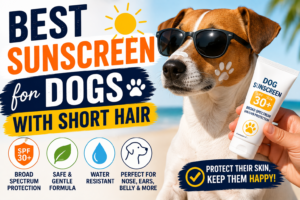
The best sunscreen for dogs with short hair should be specifically formulated for canine use and appropriate for areas that may be exposed to sunlight.
According to the American Kennel Club, dog sunscreens should be dog-specific and should not contain zinc oxide or PABA, because dogs may lick the product and ingest these ingredients.
When shopping for a dog sunscreen, look for:
- Dog-specific formulation
- Broad-spectrum UV protection
- Water-resistant formula when appropriate
- Fragrance-free or unscented formula
- Easy-to-apply lotion, spray, or balm
- No zinc oxide
- No PABA
- Clear ingredient labeling
If you’re uncertain about a particular product, ask your veterinarian before applying it.
1. Dog-Specific Broad-Spectrum Sunscreen
A dog-specific broad-spectrum sunscreen is usually the best starting point for short-haired dogs that need additional sun protection.
Broad-spectrum protection is intended to cover more than one type of UV radiation.
Choose a product clearly labeled for dogs rather than assuming that a human sunscreen is safe.
The American Kennel Club recommends dog sunscreen with an SPF around 30 for dogs that need sun protection and advises choosing water-resistant, unscented formulas.
Remember that sunscreen should not be considered a license for your dog to stay in direct sunlight all day.
2. Dog Sunscreen Balm for Sensitive Areas
A sunscreen balm can be convenient for small areas such as the nose or ear tips, depending on the product’s label.
Balms can be easier to control than sprays and may be useful when you need to apply a small amount precisely.
Always make sure the product is intended for dogs and avoid getting it into the eyes or mouth.
Because dogs can lick their noses and other body parts, ingredient safety is especially important.
3. Dog Sunscreen Spray
A dog sunscreen spray can be convenient for short-haired dogs because it may be easier to distribute across larger areas.
However, sprays require careful application.
Do not spray directly toward your dog’s face. Instead, apply the product according to the manufacturer’s directions and use your hand to distribute it around sensitive areas.
Prevent your dog from licking the sunscreen until it has been absorbed or dried according to the product’s instructions.
4. Sunscreen Wipes for Dogs
Some pet sunscreens are available in wipe form.
These can be useful for quick outdoor trips or for applying sunscreen to specific exposed areas.
However, wipes may not provide the same coverage as a properly applied sunscreen product, so follow the product instructions carefully.
They can be particularly convenient for travel, hiking, beach trips, and outdoor events.
Important Ingredients to Avoid
Choosing a dog sunscreen isn’t only about finding SPF. The ingredients matter.
Zinc Oxide
Avoid sunscreen containing zinc oxide unless your veterinarian specifically directs its use.
Dogs commonly lick products applied to their skin. Veterinary sources warn that zinc oxide in human sunscreen can cause gastrointestinal problems and can damage red blood cells if ingested.
PABA
The American Kennel Club specifically advises avoiding PABA in dog sunscreen because it can be toxic if ingested.
Human Sunscreen
Do not assume that a sunscreen made for people is automatically safe for dogs.
Some human sunscreens contain ingredients that can be harmful if dogs lick and swallow them. VCA Animal Hospitals specifically advises using pet-friendly sunscreen rather than sharing human sunscreen with pets.
If you are considering a human sunscreen because you cannot find a dog product, consult your veterinarian first.
Which Parts of a Short-Haired Dog Need Sunscreen?
You don’t necessarily need to cover your dog’s entire body with sunscreen.
Pay particular attention to areas with sparse hair or light pigmentation.
These can include:
Nose and Muzzle
The bridge of the nose and surrounding lightly pigmented skin can receive significant sun exposure.
Ear Tips
Dogs with short hair on their ears may have exposed skin that is vulnerable to sunlight.
Belly
The underside of the body can receive sun exposure when a dog lies on their back.
Groin and Inner Thighs
These areas may have less hair and lighter pigmentation.
Areas With Hair Loss
Any area where the coat is unusually thin or missing may require additional protection.
The AKC specifically lists the bridge of the nose, ear tips, areas around the lips, groin, and inner thighs among places that may need sunscreen.
How to Apply Sunscreen to a Dog
Applying sunscreen correctly is just as important as choosing the right product.
Step 1: Choose a Dog-Safe Product
Read the entire label before application.
Make sure the sunscreen is formulated for dogs and does not contain ingredients that are unsafe if ingested.
Step 2: Perform a Small Patch Test
Apply a small amount to one area first.
Watch for signs of irritation or an allergic reaction.
If redness, swelling, itching, or discomfort develops, stop using the product and contact your veterinarian if needed.
Step 3: Apply Before Going Outside
The AKC recommends applying dog sunscreen approximately 20 minutes before outdoor exposure.
This gives the product time to settle according to its directions.
Step 4: Focus on Exposed Areas
Apply sunscreen to lightly pigmented or sparsely haired areas rather than automatically coating the entire dog.
Avoid the eyes, mouth, and other sensitive areas unless the product specifically says it is safe there.
Step 5: Prevent Licking
Dogs naturally lick their bodies.
Try to prevent your dog from licking the sunscreen until the product has been absorbed or dried as directed.
Step 6: Reapply as Needed
The AKC recommends reapplying sunscreen every four to six hours for dogs exposed to the sun and after swimming. Always follow the specific product label as well.
Sunscreen Alternatives for Short-Haired Dogs
Sunscreen is helpful, but it isn’t the only way to protect your dog.
1. Provide Shade
Shade is one of the simplest ways to reduce direct UV exposure.
If you’re spending time outside, make sure your dog can move into a shaded area whenever they want.
2. Use Protective Clothing
Dog sun shirts and UV-protective clothing can cover larger areas of the body and reduce the amount of sunscreen needed.
The AKC notes that sun shirts and cooling vests can provide additional protection for dogs outdoors.
Make sure clothing fits properly and doesn’t cause overheating.
3. Avoid Peak Sun
Try to schedule walks and outdoor activities when the sun is less intense.
The AKC recommends limiting direct sun exposure, particularly during peak sunlight hours, and emphasizes shade as a key protective measure.
4. Provide Fresh Water
Sun exposure and hot weather aren’t only about skin damage.
Dogs can also develop heat-related illness.
Always provide access to fresh drinking water and a cool, shaded resting area when your dog is outdoors.
Signs of Sunburn in Dogs
Knowing what sunburn looks like can help you respond quickly.
Possible signs include:
- Red skin
- Warm skin
- Flaking
- Tenderness
- Hair loss
- Dry or irritated patches
- Blistering in more severe cases
Sunburn may be particularly noticeable on areas with little hair or light pigmentation.
If you notice redness or warmth after sun exposure, move your dog into shade or indoors. Cool compresses may help soothe minor discomfort, while severe burns require veterinary attention.
When Should You Call a Veterinarian?
Contact your veterinarian if your dog develops:
- Severe redness
- Blisters
- Open sores
- Significant pain
- Swelling
- Persistent skin irritation
- Repeated sunburn
- Unusual skin growths
- Skin changes that don’t heal
Sun exposure can contribute to certain skin cancers in dogs, so persistent or unusual skin lesions should not simply be treated with sunscreen at home.
Best Sun Protection Routine for Short-Haired Dogs
A simple routine can make outdoor activities safer.
Before Going Outside
- Check the weather and sunlight conditions.
- Apply dog-safe sunscreen to vulnerable areas when appropriate.
- Use protective clothing if recommended or useful.
- Bring fresh water.
- Make sure shade is available.
During Outdoor Activities
Watch your dog for signs of discomfort, excessive panting, weakness, or overheating.
Give regular opportunities to rest in the shade.
After Outdoor Activities
Check the dog’s skin, particularly the nose, ears, belly, and other lightly pigmented areas.
If your dog went swimming, follow the sunscreen label regarding reapplication.
Final Thoughts
The best sunscreen for dogs with short hair is a sunscreen specifically formulated for dogs, designed for safe use on canine skin, and free from ingredients such as zinc oxide and PABA that can pose risks if swallowed.
Dogs with short, thin, white, or lightly pigmented coats may need extra protection from UV exposure. However, sunscreen should be combined with shade, protective clothing, fresh water, and sensible outdoor scheduling.
Never use human sunscreen on your dog without veterinary guidance. Because dogs can lick products from their skin, ingredient safety is extremely important.
With the right precautions, you can enjoy outdoor activities with your dog while helping protect their skin from unnecessary sun exposure.
Frequently Asked Questions
Can I use human sunscreen on my short-haired dog?
It is best not to use human sunscreen without veterinary guidance. Some human products contain zinc oxide or other ingredients that can be harmful if dogs lick and ingest them.
What SPF is best for dogs?
The AKC recommends considering a dog sunscreen with SPF 30 for dogs that need sun protection. Choose a product specifically formulated for dogs and follow its label directions.
Do short-haired dogs get sunburned?
Yes. Dogs with short, thin, white, or lightly pigmented coats can be particularly vulnerable to sunburn.
Can dogs wear sunscreen every day?
Some dogs may need regular sunscreen because of frequent sun exposure, but the appropriate product and frequency depend on the dog and circumstances. Ask your veterinarian if your dog requires ongoing sun protection.
Can sunscreen prevent skin cancer in dogs?
Sunscreen can reduce UV exposure and help prevent sunburn, but it cannot guarantee prevention of skin cancer. Limiting direct sun exposure and using shade and protective clothing are also important.