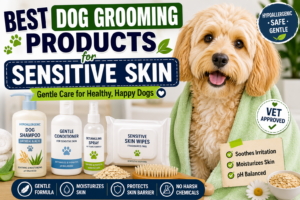

Dogs with sensitive skin need more than a regular bath. The wrong shampoo, conditioner, grooming spray, or brush can leave your dog with dryness, redness, itching, or irritation. Choosing gentle grooming products can help maintain a healthy skin barrier while keeping your dog’s coat clean, soft, and comfortable.
The best dog grooming products for sensitive skin are generally designed to minimize irritation and avoid unnecessary fragrances, harsh detergents, and ingredients that can strip natural skin oils. Veterinary guidance commonly recommends dog-specific, hypoallergenic, fragrance-free products for dogs with sensitive skin.
In this guide, we’ll cover the most useful grooming products for sensitive-skinned dogs, what ingredients to look for, what to avoid, and how to create a gentle grooming routine at home.
What Causes Sensitive Skin in Dogs?
Sensitive skin can occur for many reasons. Some dogs naturally have more reactive skin, while others develop irritation because of allergies, parasites, environmental factors, excessive bathing, or unsuitable grooming products.
Common signs of sensitive skin include:
- Frequent scratching
- Red or irritated skin
- Dry or flaky patches
- Excessive licking
- Hot spots
- Hair thinning or excessive shedding
- Unpleasant skin odor
- Bumps or small rashes
- Discomfort after grooming
Allergies can also cause persistent itching and skin inflammation. If your dog is constantly scratching, chewing their paws, developing sores, or experiencing recurring skin infections, grooming products alone may not solve the underlying problem. A veterinarian may need to determine whether allergies, parasites, infection, or another condition is involved.
1. Hypoallergenic Dog Shampoo
A gentle hypoallergenic dog shampoo is one of the most important grooming products for sensitive skin.
Veterinary guidance recommends choosing a shampoo formulated specifically for dogs rather than using human or baby shampoo. Dogs have different skin thickness and pH, so human shampoos can be too harsh and may contribute to dryness and irritation.
What to look for
Choose a dog shampoo that is:
- Hypoallergenic
- Fragrance-free or very lightly scented
- Soap-free
- pH-balanced for dogs
- Designed for sensitive skin
- Moisturizing
- Easy to rinse
Ingredients such as oatmeal and aloe are commonly used in gentle dog grooming products. Oatmeal-based formulas can be especially useful when the goal is to soothe dry or irritated skin.
Avoid choosing a shampoo simply because it has a strong fragrance. A dog does not need to smell like perfume after a bath.
2. Oatmeal Dog Shampoo
Oatmeal is a popular ingredient in products designed for dry and sensitive skin.
An oatmeal dog shampoo can help provide a soothing and moisturizing bathing experience, particularly for dogs that become dry after regular bathing.
When shopping, look for a formula specifically made for dogs and intended for sensitive or dry skin.
Remember that oatmeal shampoo can support skin comfort, but it cannot treat every cause of itching. If your dog has a bacterial or fungal infection, parasites, or significant allergies, a veterinarian may recommend a different treatment.
3. Gentle Dog Conditioner
A good conditioner can be particularly helpful for dogs with dry skin or long coats.
Shampoo removes dirt and oils from the coat, while conditioning products can help restore moisture and make the hair easier to brush.
A conditioner may also reduce tangling, which means you may need less pulling during brushing.
For sensitive dogs, choose a conditioner that is:
- Fragrance-free or low-fragrance
- Designed for dogs
- Moisturizing
- Easy to rinse
- Suitable for sensitive skin
Veterinary sources note that conditioning after bathing can help restore moisture and minimize dryness or dandruff.
4. Soft-Bristle Dog Brush
The right brush is just as important as the right shampoo.
For dogs with sensitive skin, a brush with soft or appropriately designed bristles can help remove loose hair and dirt without excessive scratching.
The correct brush depends on your dog’s coat.
For example:
- Short coats may need a soft-bristle brush or grooming mitt.
- Medium coats may benefit from a slicker brush used gently.
- Long coats may require a combination of brushes and combs.
- Double-coated dogs may need specialized deshedding tools.
Never assume that a stronger brush is better. Aggressive brushing can irritate the skin.
AKC guidance emphasizes that different coats require different grooming tools and techniques.
5. Wide-Tooth Comb for Long Hair
Dogs with long or curly coats can develop tangles and mats close to the skin.
A wide-tooth comb can help gently separate hair after brushing.
Work slowly from the ends of the hair toward the skin rather than pulling directly through a large knot.
Never cut a tight mat with household scissors. Cutting close to the skin can result in accidental injury, particularly if the dog suddenly moves. Professional groomers are trained to handle difficult mats safely.
6. Sensitive-Skin Dog Wipes
Dog grooming wipes can be useful between baths, especially for cleaning dirty paws or removing surface dirt from the coat.
For sensitive skin, choose wipes specifically made for dogs and avoid unnecessary fragrances.
A good sensitive-skin wipe should ideally be:
- Alcohol-free
- Gentle
- Fragrance-free or low-fragrance
- Designed for pets
- Suitable for the intended body area
Do not use household cleaning wipes or heavily fragranced human wipes on your dog.
If your dog develops redness after using a wipe, discontinue it and rinse the affected area if appropriate.
7. Paw Cleaning Products
Dogs’ paws can collect dirt, grass particles, mud, and other outdoor debris.
A gentle paw-cleaning product can be useful after walks, particularly for dogs with sensitive paws.
You can use a soft damp cloth for light cleaning or a pet-safe paw cleanser when necessary.
After cleaning, dry the paws carefully, particularly between the toes.
If your dog constantly licks or chews their paws, don’t assume that the problem is simply dirt. Persistent paw licking can be associated with allergies, irritation, infection, or other conditions and may require veterinary evaluation.
8. Dog-Safe Grooming Spray or Detangler
Long-haired dogs can benefit from a gentle detangling spray.
A suitable dog detangler can help make brushing easier by reducing friction between hairs.
This is especially helpful for breeds with curly, silky, or long coats.
For sensitive dogs, avoid heavily perfumed grooming sprays. Fragrances can irritate some dogs, and AKC veterinary guidance specifically advises against using non-veterinarian-approved perfumes on dogs.
Always choose products formulated for dogs and follow the manufacturer’s instructions.
9. Gentle Dog Ear-Cleaning Solution
Ear care is another important part of dog grooming.
A veterinarian-approved ear-cleaning solution can help maintain ear hygiene when used appropriately.
However, do not put random household liquids, oils, or homemade mixtures into your dog’s ears.
If you notice:
- Strong odor
- Excessive ear wax
- Redness
- Swelling
- Discharge
- Frequent head shaking
- Persistent scratching
your dog may have an ear problem requiring veterinary care.
A grooming product should not be used as a substitute for diagnosis and treatment.
10. Dog-Safe Nail Clippers or Grinder
Long nails can affect a dog’s comfort and movement.
A suitable nail clipper or grinder can help maintain healthy nail length.
For sensitive or anxious dogs, a grinder may be easier for some owners because it allows gradual removal of nail material. However, it can also frighten dogs if they are not introduced to the sound slowly.
If you’re inexperienced with nail trimming, ask a groomer or veterinarian to demonstrate the correct technique.
Avoid cutting too deeply because the nail contains a sensitive blood supply known as the quick.
Ingredients to Look for in Sensitive-Skin Grooming Products
When shopping for dog grooming products, the ingredient list matters.
Commonly used ingredients that may be appropriate in gentle formulas include:
Colloidal Oatmeal
Often included in products designed to soothe and moisturize dry skin.
Aloe Vera
Aloe is commonly used in dog shampoos for its moisturizing and soothing properties.
Vitamin E
Vitamin E is used in some grooming formulas to support moisturization and coat conditioning.
Glycerin
Glycerin is a moisturizing ingredient found in some pet grooming formulas.
However, the presence of a “natural” ingredient does not automatically mean a product is safe for every dog. Individual sensitivities vary.
Ingredients and Products to Avoid
For sensitive dogs, simpler is often better.
Be cautious with products containing:
- Strong artificial fragrances
- Harsh detergents
- Excessive dyes
- Unnecessary essential oils
- Human shampoo
- Household soap
- Dishwashing detergent
- Human perfume
Dogs should generally be bathed with products formulated for their skin. Human shampoos can disrupt the dog’s skin barrier because canine skin has a different pH and structure.
Also avoid applying concentrated essential oils to your dog unless specifically directed by a veterinarian. Some essential oils can be harmful to pets.
How to Bathe a Dog With Sensitive Skin
Choosing a gentle shampoo is only part of the process. How you bathe your dog also matters.
Step 1: Brush Before the Bath
Remove loose hair and gently work through manageable tangles before getting the coat wet.
Step 2: Use Comfortable Water
Use warm water that is comfortable for your dog. Avoid extremely hot water.
Step 3: Apply Dog Shampoo
Massage the shampoo gently through the coat.
Do not aggressively scrub the skin.
Step 4: Rinse Thoroughly
Rinsing is extremely important.
Leftover shampoo can irritate sensitive skin. Veterinary and grooming guidance emphasizes thorough rinsing after bathing.
Step 5: Condition if Appropriate
For dogs with dry skin or longer coats, apply an appropriate conditioner according to the product directions.
Step 6: Dry Carefully
Towel-dry gently. Avoid excessive rubbing.
If using a dryer, use an appropriate low or comfortable setting and monitor your dog’s reaction.
How Often Should You Groom a Dog With Sensitive Skin?
There is no single bathing schedule that works for every dog.
Bathing frequency depends on:
- Breed
- Coat type
- Activity level
- Skin condition
- Environment
- Medical needs
Some dogs need frequent bathing because of allergies or veterinary treatment, while others need much less frequent baths.
If your dog requires frequent bathing because of itching, allergies, or a diagnosed skin condition, talk to your veterinarian. Medicated shampoos may sometimes be recommended as part of treatment.
When Should You See a Veterinarian?
Grooming products can help maintain healthy skin, but they are not a cure for every skin condition.
Contact your veterinarian if your dog has:
- Persistent itching
- Open sores
- Severe redness
- Hair loss
- Recurrent hot spots
- Bad skin odor
- Pus or discharge
- Repeated ear infections
- Excessive paw licking
- Bleeding or painful skin
- Skin problems that keep returning
Some skin problems require prescription medication, allergy management, antifungal treatment, antibiotics, or other veterinary care.
Final Thoughts
The best dog grooming products for sensitive skin are gentle, dog-specific, and suited to your pet’s coat and individual needs.
A good basic grooming kit may include a hypoallergenic shampoo, moisturizing conditioner, soft brush, wide-tooth comb, sensitive-skin wipes, paw cleanser, ear cleaner, and appropriate nail-care tools.
Look for simple formulas and avoid strong fragrances and harsh products. Most importantly, remember that grooming products should support healthy skin rather than mask an underlying medical problem.
With the right products and gentle grooming techniques, you can help keep your dog’s coat clean, comfortable, and healthy while making grooming a more pleasant experience for both of you.
Frequently Asked Questions
What is the best shampoo for dogs with sensitive skin?
A gentle, hypoallergenic, dog-specific shampoo without added perfume is generally a good starting point. Oatmeal- or aloe-containing formulas are commonly used for sensitive or dry skin. Your veterinarian can recommend a product if your dog has a diagnosed skin condition.
Can I use human shampoo on my dog?
It is best to use shampoo formulated specifically for dogs. Human shampoo can be too harsh for canine skin and may contribute to dryness and irritation.
Is oatmeal shampoo good for dogs with itchy skin?
Oatmeal is commonly used in gentle dog shampoos and can help soothe and moisturize dry skin. However, persistent itching may have an underlying cause that requires veterinary attention.
How often should I bathe a dog with sensitive skin?
The ideal frequency depends on your dog’s coat, lifestyle, and skin condition. Dogs requiring frequent therapeutic bathing should be managed according to veterinary advice.
Are scented grooming products safe for sensitive dogs?
Strongly fragranced products may irritate some sensitive dogs. Fragrance-free or minimally fragranced products are generally a better starting point for dogs with sensitive skin.