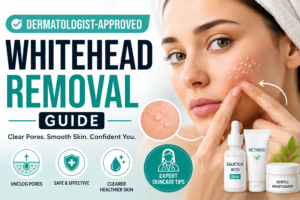

Whiteheads are one of the most common types of acne, and they can appear even when you follow a regular skincare routine. These small, flesh-colored or white bumps usually develop when dead skin cells and excess oil clog a pore. Although whiteheads are generally harmless, they can make the skin look rough, uneven, and congested.
The good news is that whiteheads can often be improved with the right skincare routine and acne treatments. Dermatologists typically recommend ingredients that help unclog pores, control excess oil, and prevent new blockages from forming.
In this dermatologist-approved whitehead removal guide, you’ll learn what causes whiteheads, how to remove them safely, which skincare ingredients work best, common mistakes to avoid, and when professional treatment may be necessary.
What Are Whiteheads?
Whiteheads are a type of closed comedonal acne. They form when oil, dead skin cells, and other debris accumulate inside a hair follicle.
Unlike blackheads, the opening of a whitehead remains closed. Because the material inside the pore is not exposed to air, it does not develop the dark appearance associated with blackheads.
Whiteheads commonly appear on:
- Forehead
- Nose
- Chin
- Cheeks
- Jawline
- Around the mouth
They are especially common in people with oily or combination skin, but anyone can develop them.
What Causes Whiteheads?
Understanding the causes of whiteheads can make them easier to prevent.
1. Excess Sebum Production
Sebum is the natural oil produced by your skin. It helps protect and moisturize the skin, but excessive sebum can combine with dead skin cells and clog pores.
People with naturally oily skin may therefore be more prone to whiteheads.
2. Dead Skin Cell Buildup
Your skin naturally sheds dead cells. When these cells do not shed properly, they can accumulate inside pores and contribute to congestion.
This is one reason exfoliating ingredients can be useful for people who frequently develop whiteheads.
3. Hormonal Changes
Hormonal fluctuations can increase oil production and contribute to clogged pores. Whiteheads may become more noticeable during puberty, menstrual cycles, pregnancy, or periods of hormonal change.
4. Comedogenic Products
Some heavy skincare, makeup, or hair-care products may contribute to clogged pores in people who are prone to acne.
Look for products labeled non-comedogenic, particularly if whiteheads frequently appear on your forehead, cheeks, or chin.
5. Poor Skincare Habits
Not cleansing the skin regularly, sleeping with makeup on, or frequently touching your face can contribute to congestion.
However, over-cleansing can also cause irritation and dryness, so more washing is not necessarily better.
How to Remove Whiteheads Safely
The most effective approach is usually not aggressive extraction. Instead, dermatologists often recommend a consistent routine using ingredients that gradually unclog pores and reduce new breakouts.
Step 1: Use a Gentle Cleanser
Start with a mild facial cleanser designed for your skin type.
A good cleanser should remove excess oil, sunscreen, makeup, and dirt without leaving your skin extremely tight or irritated.
Wash your face twice daily—once in the morning and once before bed.
Avoid harsh scrubbing because physical irritation can make acne-prone skin more inflamed.
Step 2: Try Salicylic Acid
Salicylic acid is one of the most useful ingredients for whiteheads and clogged pores.
It is a beta hydroxy acid (BHA) that can penetrate into oily pores and help loosen dead skin cells and excess sebum.
For beginners, a lower-strength salicylic acid product may be easier for the skin to tolerate.
Start gradually rather than applying it several times a day.
Why Salicylic Acid Helps Whiteheads
Salicylic acid can help:
- Unclog pores
- Reduce excess buildup
- Improve skin texture
- Prevent new comedones
- Reduce the appearance of existing whiteheads
If your skin becomes excessively dry, red, or irritated, reduce how often you use it.
Step 3: Consider a Retinoid
Topical retinoids are another important option for comedonal acne.
Retinoids help regulate skin-cell turnover and can prevent dead skin cells from accumulating inside pores.
Adapalene, an over-the-counter topical retinoid in some countries, is commonly used for acne treatment.
Because retinoids can cause dryness and irritation when first introduced, start slowly and follow the product instructions.
Apply a thin layer rather than using a large amount.
Step 4: Use a Lightweight Moisturizer
Many people with oily skin make the mistake of skipping moisturizer.
However, acne treatments can cause dryness and irritation. A lightweight, non-comedogenic moisturizer can help maintain the skin barrier while you treat whiteheads.
Look for ingredients such as:
- Ceramides
- Glycerin
- Hyaluronic acid
- Niacinamide
A healthy skin barrier can make it easier to tolerate acne treatments consistently.
Step 5: Wear Sunscreen Every Day
Daily sunscreen is an important part of an acne-friendly skincare routine.
Choose a lightweight, non-comedogenic sunscreen with broad-spectrum protection.
Sun exposure can worsen post-acne discoloration and may make marks left after breakouts more noticeable.
Aim for broad-spectrum SPF 30 or higher when appropriate for your skin and environment.
Best Ingredients for Whitehead Removal
If you’re searching for the best products for whiteheads, focus on proven acne-fighting ingredients rather than complicated routines.
Salicylic Acid
Best for clogged pores, oily skin, and comedonal acne.
Adapalene
Useful for preventing clogged pores and treating acne over time.
Benzoyl Peroxide
Benzoyl peroxide is particularly useful when whiteheads occur alongside inflammatory pimples because it targets acne-causing bacteria and inflammation.
It can be drying and may bleach fabrics.
Niacinamide
Niacinamide can help support the skin barrier and may help regulate excess oil in some people.
Azelaic Acid
Azelaic acid can be helpful for acne-prone skin and may also improve the appearance of post-acne discoloration.
Can You Pop Whiteheads?
It’s tempting to squeeze a whitehead, especially when it looks ready to come out. However, popping whiteheads at home is generally not recommended.
Squeezing can:
- Push material deeper into the skin
- Increase inflammation
- Damage the skin
- Cause temporary swelling
- Increase the risk of post-acne marks
- Potentially lead to scarring
If extraction is necessary, professional extraction performed by a trained dermatologist or qualified skincare professional is safer than aggressive squeezing at home.
How to Prevent Whiteheads From Coming Back
Removing existing whiteheads is only part of the solution. Preventing new clogged pores is equally important.
Keep Your Routine Simple
A complicated skincare routine can sometimes cause unnecessary irritation.
A basic acne-friendly routine may include:
Morning:
- Gentle cleanser
- Treatment product if appropriate
- Lightweight moisturizer
- Broad-spectrum sunscreen
Night:
- Gentle cleanser
- Acne treatment
- Moisturizer
Introduce new products gradually so you can identify what works for your skin.
Avoid Over-Exfoliating
Exfoliating too frequently does not necessarily clear whiteheads faster.
Using several exfoliating acids, scrubs, and acne treatments simultaneously can damage the skin barrier and cause irritation.
More aggressive treatment is not always more effective.
Choose Non-Comedogenic Products
If you’re prone to clogged pores, choose makeup, sunscreen, moisturizers, and other facial products labeled non-comedogenic.
This does not guarantee that a product will never cause a breakout, but it can be a useful starting point.
Clean Makeup Brushes
Dirty makeup brushes can accumulate oil, dead skin cells, makeup residue, and microorganisms.
Clean brushes regularly, particularly those used frequently on acne-prone areas.
Keep Hair Products Away From Your Face
Oily hair products can sometimes contribute to small bumps around the forehead and hairline.
If you notice whiteheads primarily in these areas, examine your shampoo, conditioner, styling products, and hair oils.
Whitehead Removal Mistakes to Avoid
Several common mistakes can make clogged pores worse.
Using Lemon Juice
Lemon juice is often promoted as a natural acne treatment, but applying acidic kitchen ingredients directly to the skin can cause irritation.
Using Baking Soda
Baking soda is not an appropriate substitute for dermatologist-recommended acne treatments. It can disrupt the skin’s natural barrier and cause dryness.
Scrubbing Aggressively
Harsh scrubs may temporarily make skin feel smoother but can cause irritation and inflammation.
Picking Constantly
Repeatedly touching or squeezing acne can increase irritation and may contribute to marks and scarring.
Changing Products Too Quickly
Acne treatments often need consistent use over time. Constantly switching products can make it difficult to determine what works and may irritate the skin.
How Long Does It Take to Get Rid of Whiteheads?
Whitehead treatment usually requires patience.
Some people notice improvements within several weeks, while more significant changes can take longer.
The key is consistency.
Using a treatment once and expecting immediate results is unlikely to work. Acne-prone skin generally benefits from a simple routine followed consistently.
If your skin becomes severely irritated, painful, or increasingly inflamed, stop using irritating products and seek professional advice.
When Should You See a Dermatologist?
You should consider seeing a dermatologist if:
- Whiteheads are widespread or persistent
- Over-the-counter treatments aren’t helping
- Acne is becoming painful or inflamed
- You are developing acne scars
- Breakouts are affecting your confidence
- You are unsure whether the bumps are actually whiteheads
A dermatologist can determine whether you’re dealing with comedonal acne or another skin condition and recommend a treatment plan based on your skin type and acne severity.
Professional treatments may include prescription retinoids, chemical peels, or other acne therapies when appropriate.
Frequently Asked Questions About Whiteheads
What is the fastest way to get rid of whiteheads?
There is no guaranteed overnight solution. A consistent routine containing appropriate acne-fighting ingredients such as salicylic acid or a topical retinoid can help improve clogged pores over time.
Is salicylic acid good for whiteheads?
Yes. Salicylic acid is commonly used for clogged pores and comedonal acne because it helps remove excess dead skin cells and buildup inside pores.
Should I squeeze whiteheads?
It’s best to avoid squeezing them yourself. Picking can increase inflammation and may increase the risk of post-acne marks or scarring.
Can moisturizer cause whiteheads?
Some products may contribute to clogged pores in acne-prone individuals. Choosing a lightweight, non-comedogenic moisturizer can reduce the likelihood of product-related congestion.
How can I prevent whiteheads naturally?
Gentle cleansing, avoiding pore-clogging products, keeping hair products away from the face, not picking the skin, and maintaining a consistent skincare routine can help reduce whiteheads.
Are whiteheads the same as blackheads?
No. Both are forms of comedonal acne, but whiteheads are closed comedones while blackheads are open comedones. Blackheads appear dark because the material inside the pore is exposed to air.
Final Thoughts
Whiteheads are common, but they don’t have to become a permanent part of your skin. The best whitehead removal strategy is usually a consistent, gentle skincare routine rather than aggressive extraction.
Ingredients such as salicylic acid, adapalene, benzoyl peroxide, niacinamide, and azelaic acid may be useful depending on your skin and the type of acne you have.
Most importantly, avoid squeezing or scrubbing whiteheads aggressively. Give acne treatments enough time to work, protect your skin barrier, and use sunscreen consistently.
If persistent whiteheads don’t improve with an appropriate over-the-counter routine, a dermatologist can help identify the underlying cause and create a personalized treatment plan.