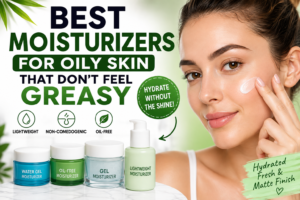

Many people with oily skin believe they should skip moisturizer because they already produce excess oil. However, this is one of the biggest skincare mistakes. Oily skin still needs hydration. Without enough moisture, your skin may produce even more oil to compensate, leading to clogged pores, acne breakouts, and an even shinier appearance.
The key is choosing a lightweight, oil-free moisturizer that hydrates without leaving a heavy or sticky feeling.
In this guide, you’ll learn exactly what ingredients to look for, which products dermatologists often recommend, and how to keep oily skin healthy while maintaining a fresh, matte finish.
Why Oily Skin Still Needs Moisturizer
Your skin produces natural oils (sebum) to protect itself. But oil and hydration are not the same thing.
When oily skin becomes dehydrated due to harsh cleansers, acne treatments, or weather changes, the skin often responds by producing even more oil.
Benefits of moisturizing oily skin include:
- Balances natural oil production
- Prevents dehydration
- Strengthens the skin barrier
- Reduces irritation
- Helps acne medications work better
- Leaves skin smoother and healthier
Skipping moisturizer may actually make oily skin worse over time.
What Makes a Moisturizer Feel Greasy?
Not every moisturizer is designed for oily skin.
Heavy creams often contain rich oils and occlusive ingredients that sit on the skin’s surface, making the face appear shiny.
Greasy moisturizers usually contain:
- Mineral oil in high amounts
- Thick plant butters
- Heavy waxes
- Petrolatum
- Rich emollients designed for dry skin
These ingredients are excellent for extremely dry skin but may feel uncomfortable on oily complexions.
What to Look for in a Moisturizer for Oily Skin
The best moisturizers for oily skin have several important characteristics.
Oil-Free Formula
Oil-free moisturizers hydrate without adding extra shine.
Non-Comedogenic
Non-comedogenic means the product is designed not to clog pores.
This is especially important for acne-prone skin.
Lightweight Texture
Gel or water-based moisturizers absorb quickly and leave little residue.
Common textures include:
- Gel
- Gel-cream
- Water cream
- Fluid lotion
Fragrance-Free (If Sensitive)
Artificial fragrances can irritate sensitive or acne-prone skin.
Fast Absorption
The ideal moisturizer should disappear into the skin within seconds instead of leaving a sticky layer.
Best Ingredients for Oily Skin
Hyaluronic Acid
One of the most effective hydrating ingredients.
Benefits include:
- Attracts water
- Lightweight
- Doesn’t feel oily
- Keeps skin hydrated all day
Niacinamide
Niacinamide is one of the best skincare ingredients for oily skin.
Benefits:
- Controls excess oil
- Minimizes pores
- Reduces redness
- Supports skin barrier
- Improves uneven skin tone
Glycerin
A gentle humectant that draws moisture into the skin.
It hydrates without clogging pores.
Ceramides
Ceramides repair the protective skin barrier while remaining lightweight.
Green Tea Extract
Known for:
- Antioxidant protection
- Calming redness
- Helping reduce oil production
Panthenol (Vitamin B5)
Excellent for hydration and soothing irritated skin.
Ingredients to Avoid
If your skin becomes greasy quickly, try limiting products with:
- Coconut oil
- Cocoa butter
- Heavy mineral oil
- Thick petrolatum
- Lanolin (if acne-prone)
- Heavy silicones in rich creams
These ingredients may work well for dry skin but often feel too heavy for oily skin.
Best Types of Moisturizers for Oily Skin
Gel Moisturizers
The most popular choice.
Advantages:
- Extremely lightweight
- Cooling
- Fast absorbing
- Matte finish
Water Creams
Water creams contain a high percentage of water and hydrating ingredients.
Ideal for:
- Humid weather
- Combination skin
- Oily skin
Gel-Cream Moisturizers
A balance between hydration and comfort.
Perfect if your skin is oily but slightly dehydrated.
Oil-Free Lotions
Lotions are lighter than creams and work well for daily use.
Top Moisturizers for Oily Skin
1. CeraVe PM Facial Moisturizing Lotion
Best for:
- Oily skin
- Combination skin
- Acne-prone skin
Key ingredients:
- Ceramides
- Niacinamide
- Hyaluronic acid
Pros:
- Lightweight
- Oil-free
- Non-comedogenic
2. Neutrogena Hydro Boost Water Gel
Excellent for:
- Summer weather
- Oily skin
- Fast hydration
Benefits:
- Water-based
- Hyaluronic acid
- Refreshing feel
- Quick absorption
3. La Roche-Posay Toleriane Double Repair Moisturizer
Ideal for:
- Sensitive skin
- Oily skin
- Damaged skin barrier
Contains:
- Ceramides
- Niacinamide
- Glycerin
4. Cetaphil Oil-Free Hydrating Lotion
Great everyday moisturizer.
Features:
- Lightweight
- Gentle
- Fragrance-free
- Doesn’t clog pores
5. Bioderma Sébium Hydra
Especially helpful for acne treatments that cause dryness.
Benefits:
- Hydrating
- Non-greasy
- Restores comfort
Morning Moisturizing Routine
A simple morning routine:
- Gentle cleanser
- Niacinamide serum (optional)
- Lightweight moisturizer
- Sunscreen SPF 30+
This routine keeps oily skin balanced without excessive shine.
Night Routine
Evening routine:
- Remove makeup
- Cleanser
- Acne treatment if needed
- Lightweight moisturizer
Nighttime hydration helps repair the skin barrier while you sleep.
Common Moisturizing Mistakes
Using Too Much Product
A pea-sized amount is usually enough.
Skipping Moisturizer
This often leads to increased oil production.
Choosing Thick Creams
Rich creams may clog pores and leave skin shiny.
Applying on Dry Skin
Moisturizer works best when applied to slightly damp skin.
Forgetting Sunscreen
Hydrated skin still needs daily UV protection.
Tips to Reduce Oily Skin Naturally
Along with using the right moisturizer:
- Wash your face twice daily.
- Avoid harsh scrubs.
- Use blotting papers instead of overwashing.
- Drink enough water.
- Eat a balanced diet rich in fruits and vegetables.
- Avoid touching your face frequently.
- Remove makeup before bed.
- Clean makeup brushes regularly.
Frequently Asked Questions
Should oily skin use moisturizer every day?
Yes. Daily moisturizing helps balance oil production and maintain a healthy skin barrier.
Can moisturizer cause acne?
A heavy or pore-clogging moisturizer can contribute to breakouts. Choosing a non-comedogenic, oil-free formula reduces this risk.
Is gel moisturizer better than cream?
For most people with oily skin, gel moisturizers absorb faster and feel lighter than creams.
Can moisturizer make skin less oily?
It can help balance hydration, which may reduce excess oil production over time, though it won’t eliminate oil completely.
Is hyaluronic acid good for oily skin?
Yes. Hyaluronic acid hydrates without adding oil, making it an excellent ingredient for oily and acne-prone skin.
Final Thoughts
Finding the best moisturizer for oily skin that doesn’t feel greasy can transform your skincare routine. Instead of avoiding moisturizers, choose lightweight, oil-free formulas with hydrating ingredients such as hyaluronic acid, niacinamide, glycerin, and ceramides. These ingredients help maintain moisture without adding shine or clogging pores.
Consistency is just as important as product choice. Apply moisturizer every morning and evening after cleansing, and always pair it with sunscreen during the day. With the right routine, oily skin can stay balanced, hydrated, and comfortable—without the heavy, greasy feeling.