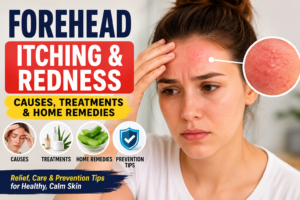

Forehead itching and redness are common skin problems that can affect people of all ages. Sometimes the irritation is mild and disappears within a few hours, while in other cases it can become persistent and uncomfortable. The symptoms may be caused by dry skin, allergies, eczema, contact dermatitis, fungal infections, excessive sweating, or reactions to skincare products.
Understanding the cause is the first step toward choosing the right treatment. In this guide, you’ll learn the common causes of forehead itching and redness, effective treatments, home remedies, prevention tips, and when it’s time to seek medical care.
What Is Forehead Itching and Redness?
Forehead itching and redness occur when the skin becomes irritated or inflamed. The affected area may feel itchy, warm, flaky, swollen, or sensitive. Some people also notice small bumps, peeling skin, or a burning sensation.
The condition may last for a few hours or continue for several weeks depending on its underlying cause.
Common Symptoms
Symptoms can vary from person to person but often include:
- Persistent itching
- Red or pink patches
- Dry or flaky skin
- Burning sensation
- Tiny bumps or rash
- Tight skin
- Swelling
- Peeling
- Increased sensitivity
- Cracked skin in severe cases
What Causes Forehead Itching and Redness?
1. Dry Skin
Dry skin is one of the most common causes. Cold weather, excessive washing, and harsh soaps remove the skin’s natural oils, leading to irritation.
Signs include:
- Rough skin
- Tightness
- Mild itching
- Flaking
2. Contact Dermatitis
Your forehead may react to:
- Shampoo
- Hair dye
- Hair gel
- Sunscreen
- Makeup
- Face wash
- Perfume
- Moisturizer
Symptoms usually appear within hours after using the product.
3. Allergic Reactions
Allergies can trigger:
- Redness
- Severe itching
- Swelling
- Rash
Common allergens include fragrances, preservatives, pollen, pet dander, and certain cosmetics.
4. Eczema (Atopic Dermatitis)
Eczema causes chronic inflammation that results in:
- Intense itching
- Dry patches
- Red skin
- Cracked areas
Stress often makes eczema worse.
5. Seborrheic Dermatitis
This condition affects oily areas of the face.
Symptoms include:
- Yellow or white flakes
- Red patches
- Greasy skin
- Mild itching
It commonly appears near the hairline and eyebrows.
6. Heat Rash
Hot weather and sweating can block sweat glands, leading to:
- Small red bumps
- Itching
- Prickly sensation
7. Fungal Infection
Certain fungi can infect facial skin.
Signs include:
- Ring-shaped rash
- Red borders
- Itching
- Peeling skin
Medical treatment is usually required.
8. Psoriasis
Psoriasis causes rapid skin cell buildup, resulting in:
- Thick red patches
- Silvery scales
- Itching
- Dry skin
9. Acne Treatments
Products containing:
- Benzoyl peroxide
- Retinoids
- Salicylic acid
may irritate sensitive skin, causing temporary redness and itching.
10. Sunburn
Too much sun exposure damages the skin and causes:
- Redness
- Pain
- Itching
- Peeling
Risk Factors
You may be more likely to experience forehead itching and redness if you:
- Have sensitive skin
- Have eczema or allergies
- Sweat frequently
- Live in a dry climate
- Use multiple skincare products
- Spend long hours outdoors
- Frequently wear hats or helmets
Home Remedies
Apply a Cool Compress
A clean cool cloth helps reduce inflammation and itching.
Apply for 10–15 minutes several times daily.
Use Aloe Vera Gel
Pure aloe vera provides soothing and moisturizing effects that may calm irritated skin.
Moisturize Daily
Choose fragrance-free moisturizers containing:
- Ceramides
- Glycerin
- Hyaluronic acid
These ingredients strengthen the skin barrier.
Avoid Scratching
Scratching increases inflammation and may lead to infection.
Wash With a Gentle Cleanser
Use lukewarm water instead of hot water and avoid harsh scrubs.
Avoid Irritating Products
Temporarily stop using:
- Strong exfoliants
- Alcohol-based toners
- Retinoids
- Fragranced skincare
Stay Hydrated
Drinking enough water supports healthy skin hydration.
Medical Treatments
Depending on the cause, a healthcare provider may recommend:
- Hydrocortisone cream
- Antihistamines
- Prescription moisturizers
- Antifungal creams
- Antibiotics (if infected)
- Calcineurin inhibitors
- Prescription steroid creams
Never use steroid creams for extended periods without medical advice.
When Should You See a Doctor?
Seek medical attention if:
- Symptoms last longer than two weeks
- The rash spreads quickly
- You develop fever
- There is pus or drainage
- The itching becomes severe
- Home treatment doesn’t help
- The skin becomes extremely painful
Prevention Tips
Prevent future flare-ups by:
- Moisturizing daily
- Using fragrance-free skincare
- Wearing sunscreen every day
- Avoiding known allergens
- Washing sweat off after exercise
- Keeping hats and pillowcases clean
- Managing stress
- Drinking enough water
Foods That Support Healthy Skin
Consider eating:
- Salmon
- Walnuts
- Almonds
- Avocados
- Spinach
- Blueberries
- Sweet potatoes
- Oranges
- Yogurt
- Green tea
These foods provide vitamins, antioxidants, and healthy fats that support skin health.
Frequently Asked Questions
Why is my forehead itchy and red?
Common causes include dry skin, eczema, allergies, contact dermatitis, fungal infections, heat rash, and irritation from skincare products.
Can stress cause forehead itching?
Yes. Stress can worsen eczema, psoriasis, and other inflammatory skin conditions, leading to increased itching and redness.
Can sunscreen cause forehead redness?
Some sunscreens contain ingredients that may irritate sensitive skin or trigger allergic reactions. Switching to a fragrance-free mineral sunscreen may help.
Is forehead itching a sign of an allergy?
It can be. Allergic reactions to cosmetics, hair products, or environmental allergens often cause itching and redness.
How long does forehead irritation last?
Mild irritation may improve within a few days, while chronic skin conditions such as eczema or psoriasis may require ongoing treatment.
Conclusion
Forehead itching and redness are often caused by dry skin, allergic reactions, eczema, heat rash, or irritation from skincare products. Identifying the underlying cause is essential for effective treatment. Gentle skincare, regular moisturizing, and avoiding known irritants can help most mild cases improve. If symptoms become severe, spread rapidly, or fail to improve after home care, consult a qualified healthcare professional for diagnosis and treatment.