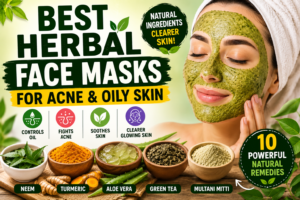

Acne and oily skin are two of the most common skincare concerns affecting teenagers and adults alike. Excess oil, clogged pores, bacteria, and inflammation can lead to frequent breakouts, blackheads, and shiny skin. While many over-the-counter acne treatments are available, herbal face masks remain a popular choice because they are made from natural ingredients that may help cleanse, soothe, and refresh the skin.
Herbal face masks have been used in traditional skincare for centuries. Ingredients such as neem, turmeric, aloe vera, green tea, and Multani Mitti are known for their antibacterial, anti-inflammatory, and oil-absorbing properties. When used correctly, these ingredients can support a healthy skincare routine and improve the appearance of acne-prone skin.
In this guide, we’ll explore the best herbal face masks for acne and oily skin, explain how they work, and help you choose the right mask for your skin type.
Why Herbal Face Masks Work for Acne
Acne develops when pores become blocked with excess oil (sebum), dead skin cells, and bacteria. Herbal ingredients may help address some of these contributing factors.
Many plant-based ingredients contain natural compounds that can:
- Reduce excess oil
- Calm skin irritation
- Help keep pores clean
- Support the skin’s natural healing process
- Provide antioxidant protection
- Improve overall skin appearance
Although herbal remedies can be helpful for mild acne, they are not a replacement for medical treatment in people with moderate or severe acne.
Benefits of Herbal Ingredients for Acne-Prone Skin
Natural herbs contain vitamins, minerals, antioxidants, and plant compounds that support skin health.
Some of the most common benefits include:
Helps Control Excess Oil
Certain herbal ingredients absorb excess sebum, making the skin feel fresher and less greasy.
Supports Healthy Skin Barrier
A healthy skin barrier protects against environmental damage and helps maintain moisture balance.
Helps Calm Redness
Inflamed pimples often appear red and swollen. Some herbs contain compounds that help soothe irritated skin.
Rich in Antioxidants
Antioxidants help protect skin cells from free radical damage caused by pollution and UV exposure.
Gentle Cleansing
Many herbal face masks remove dirt and impurities without using harsh chemicals.
May Improve Skin Texture
Regular use can help the skin appear smoother and healthier over time.
How to Choose the Right Herbal Face Mask
Not every herbal ingredient works equally well for every skin type.
Oily Skin
Look for ingredients that absorb oil, such as:
- Neem
- Multani Mitti
- Green tea
Acne-Prone Skin
Choose ingredients with antibacterial and anti-inflammatory properties, including:
- Neem
- Turmeric
- Tea tree
- Tulsi
Sensitive Skin
Choose soothing ingredients like:
- Aloe vera
- Oatmeal
- Chamomile
Always perform a patch test before trying a new product or DIY mask.
1. Neem Face Mask
Neem has been used in Ayurvedic skincare for centuries and is one of the best-known herbal ingredients for acne-prone skin.
Benefits of Neem
Neem contains natural compounds with antibacterial and anti-inflammatory properties that may help reduce acne-causing bacteria and calm irritated skin.
It may also:
- Help control oil
- Keep pores cleaner
- Reduce redness
- Support healthy skin healing
Best For
- Oily skin
- Combination skin
- Mild acne
- Blackheads
Simple DIY Neem Face Mask
Ingredients
- 2 teaspoons neem powder
- 1–2 teaspoons plain yogurt or rose water
Directions
- Mix into a smooth paste.
- Apply evenly to the face.
- Leave on for 10–15 minutes.
- Rinse with lukewarm water.
- Use 1–2 times per week.
2. Turmeric Face Mask
Turmeric is one of the most widely used herbal ingredients for improving skin appearance.
Its active compound, curcumin, is known for its antioxidant and anti-inflammatory properties.
Benefits of Turmeric
Turmeric may help:
- Calm redness
- Support healing
- Brighten dull skin
- Improve the appearance of post-acne marks
- Protect skin from oxidative stress
Best For
- Inflamed acne
- Acne marks
- Sensitive skin
- Uneven skin tone
Simple DIY Turmeric Face Mask
Ingredients
- ½ teaspoon turmeric powder
- 1 tablespoon plain yogurt
- 1 teaspoon honey
Directions
Mix well, apply for 10–15 minutes, then rinse thoroughly. Use once weekly to help avoid temporary staining.
3. Aloe Vera Face Mask
Aloe vera is one of the gentlest herbal ingredients for irritated or sensitive skin.
Its gel is rich in vitamins, minerals, amino acids, and antioxidants.
Benefits of Aloe Vera
Aloe vera may:
- Hydrate the skin
- Calm irritation
- Support wound healing
- Reduce redness
- Leave skin feeling refreshed
Best For
- Sensitive skin
- Dry acne-prone skin
- Red, irritated skin
DIY Aloe Vera Face Mask
Ingredients
- Fresh aloe vera gel
- 1 teaspoon honey
Apply a thin layer for 15 minutes before rinsing with cool water.
4. Green Tea Face Mask
Green tea is packed with polyphenols and antioxidants that help protect the skin from environmental stress.
It is especially popular among people with oily skin.
Benefits of Green Tea
Green tea may help:
- Reduce excess oil
- Soothe inflamed skin
- Refresh tired-looking skin
- Provide antioxidant protection
Best For
- Oily skin
- Combination skin
- Mild acne
DIY Green Tea Face Mask
Ingredients
- 1 teaspoon green tea powder
- 1 tablespoon plain yogurt
Mix into a smooth paste and leave on the skin for 10–15 minutes before rinsing.
5. Multani Mitti (Fuller’s Earth) Face Mask
Multani Mitti has been used for generations to absorb excess oil and cleanse the skin.
It is especially popular in South Asian skincare routines.
Benefits of Multani Mitti
It may help:
- Absorb excess oil
- Remove impurities
- Refresh the skin
- Reduce shine
- Leave pores looking cleaner
Best For
- Very oily skin
- Blackheads
- Whiteheads
- Combination skin
DIY Multani Mitti Face Mask
Ingredients
- 2 tablespoons Multani Mitti
- Rose water (enough to make a paste)
Apply evenly and allow it to dry for about 10–15 minutes before rinsing with lukewarm water.
Comparison Table
| Herbal Face Mask | Best For | Main Benefits |
|---|---|---|
| Neem | Oily, acne-prone skin | Helps reduce bacteria, controls excess oil, supports clearer pores |
| Turmeric | Inflamed acne, acne marks | Calms redness, supports healing, brightens skin |
| Aloe Vera | Sensitive or dry acne-prone skin | Hydrates, soothes irritation, supports skin repair |
| Green Tea | Oily and combination skin | Antioxidant protection, helps reduce excess oil, refreshes skin |
| Multani Mitti | Very oily skin | Absorbs oil, removes impurities, reduces shine |
6. Tea Tree Face Mask
Tea tree is one of the most popular natural ingredients for acne-prone skin. It contains compounds with antibacterial properties that may help reduce acne-causing bacteria on the skin.
Benefits
- Helps reduce acne-causing bacteria
- Supports cleaner pores
- Helps control excess oil
- Refreshes oily skin
- Reduces the appearance of blemishes
Best For
- Oily skin
- Mild acne
- Combination skin
DIY Tea Tree Face Mask
Ingredients
- 2 tablespoons aloe vera gel
- 1 drop of tea tree essential oil (do not use more)
- 1 teaspoon honey
Directions
- Mix all ingredients well.
- Apply a thin layer to the face.
- Leave on for 10 minutes.
- Rinse with lukewarm water.
Note: Tea tree oil is highly concentrated and should always be diluted. Never apply undiluted essential oils directly to the skin.
7. Tulsi (Holy Basil) Face Mask
Tulsi has been used in Ayurvedic skincare for centuries because of its antioxidant and soothing properties.
Benefits
- Helps cleanse the skin
- Supports healthy-looking pores
- Reduces excess oil
- Refreshes tired skin
- Provides antioxidant protection
Best For
- Oily skin
- Acne-prone skin
- Combination skin
DIY Tulsi Face Mask
Ingredients
- 2 teaspoons tulsi powder
- Rose water
Mix into a smooth paste, apply for 10–15 minutes, then rinse thoroughly.
8. Sandalwood Face Mask
Sandalwood is valued for its cooling and calming effects on the skin.
Benefits
- Helps soothe irritated skin
- Reduces the appearance of redness
- Leaves skin feeling refreshed
- Improves overall skin texture
Best For
- Sensitive skin
- Mild acne
- Redness
DIY Sandalwood Face Mask
Mix sandalwood powder with rose water until smooth. Apply for 10–15 minutes before rinsing.
9. Licorice Root Face Mask
Licorice root is widely used in skincare because it may help brighten the appearance of uneven skin tone.
Benefits
- Supports healthy-looking skin
- Helps improve the appearance of post-acne marks
- Provides antioxidant protection
- Helps calm irritated skin
Best For
- Acne marks
- Uneven skin tone
- Sensitive skin
10. Oatmeal & Chamomile Face Mask
This gentle combination is ideal for calming irritated or dry acne-prone skin.
Benefits
- Soothes irritation
- Supports the skin barrier
- Helps reduce temporary redness
- Leaves skin feeling soft
Best For
- Dry skin
- Sensitive skin
- Mild acne
DIY Recipe
Mix:
- 2 tablespoons finely ground oatmeal
- Cooled chamomile tea
- 1 teaspoon honey
Apply for 15 minutes before rinsing gently.
Best Herbal Face Mask by Skin Type
| Skin Type | Recommended Face Mask |
|---|---|
| Oily Skin | Neem, Multani Mitti, Green Tea |
| Acne-Prone Skin | Neem, Tea Tree, Tulsi |
| Sensitive Skin | Aloe Vera, Oatmeal & Chamomile |
| Dry Skin | Aloe Vera, Honey & Oatmeal |
| Acne Marks | Turmeric, Licorice Root |
| Combination Skin | Green Tea, Neem |
DIY Herbal Face Mask Tips
For better results:
- Use fresh, high-quality ingredients.
- Mix only enough for one use.
- Prepare masks in a clean bowl.
- Apply with clean hands or a clean brush.
- Avoid the eyes and lips.
- Rinse with lukewarm water.
- Moisturize afterward.
Common Mistakes to Avoid
Even natural ingredients can irritate the skin if used incorrectly.
Using Face Masks Too Often
Applying masks every day can dry out the skin and damage its natural barrier.
Scrubbing Too Hard
Harsh scrubbing may increase irritation and make acne worse.
Skipping Moisturizer
Oily skin still needs hydration. Choose a lightweight, non-comedogenic moisturizer.
Ignoring Sunscreen
Daily sunscreen helps prevent dark acne marks from becoming more noticeable.
Mixing Too Many Ingredients
Combining many active ingredients in one DIY mask increases the risk of irritation.
How Often Should You Apply Herbal Face Masks?
Frequency depends on your skin type.
- Oily skin: 2–3 times per week
- Combination skin: 2 times per week
- Sensitive skin: Once per week
- Dry skin: Once every 7–10 days
Avoid overuse, especially if your skin feels tight or irritated.
Are Herbal Face Masks Safe?
Most herbal face masks are safe when used correctly, but everyone’s skin is different.
Before using a new ingredient:
- Perform a patch test on your inner arm or behind the ear.
- Wait 24 hours for any reaction.
- Stop use if redness, itching, swelling, or burning occurs.
If you have eczema, rosacea, or severe acne, consult a dermatologist before trying DIY treatments.
Healthy Habits for Clearer Skin
Herbal face masks work best alongside a consistent skincare routine.
Cleanse Twice Daily
Use a gentle cleanser morning and evening to remove dirt, oil, and sunscreen.
Moisturize Every Day
Hydrated skin maintains a healthier barrier and may produce less excess oil over time.
Wear Sunscreen
Use a broad-spectrum SPF 30 or higher every day to protect healing skin and reduce the risk of dark marks.
Eat a Balanced Diet
A diet rich in vegetables, fruits, lean protein, whole grains, and healthy fats supports overall skin health.
Stay Hydrated
Adequate water intake supports your body’s normal functions and contributes to healthy-looking skin.
Get Enough Sleep
Quality sleep supports normal skin repair and overall wellness.
When Should You See a Dermatologist?
Natural face masks may help with mild acne, but professional care is recommended if you have:
- Painful cystic acne
- Deep nodules
- Acne scars
- Persistent breakouts despite proper skincare
- Frequent skin infections
- Severe redness or swelling
A dermatologist can recommend treatments based on your skin type and acne severity.
Frequently Asked Questions (FAQs)
Which herbal face mask is best for acne?
Neem is one of the best herbal ingredients for acne-prone skin because it helps reduce excess oil and supports cleaner pores.
Which face mask is best for oily skin?
Multani Mitti and green tea are excellent options for oily skin because they help absorb excess oil and refresh the complexion.
Can I use herbal face masks every day?
Most herbal masks should be used one to three times per week. Daily use may cause dryness or irritation.
Are homemade face masks effective?
Homemade face masks can support a healthy skincare routine for mild acne, but they are not a replacement for medical treatment if acne is moderate or severe.
Can herbal face masks remove acne scars?
Some ingredients, such as turmeric and licorice root, may gradually improve the appearance of post-acne marks, but deep scars usually require professional treatment.
Final Thoughts
Herbal face masks are a simple and affordable way to support healthy skin, especially for people with mild acne and oily skin. Ingredients such as neem, turmeric, aloe vera, green tea, Multani Mitti, tulsi, tea tree, sandalwood, licorice root, and oatmeal each offer unique benefits.
The key to success is choosing the right mask for your skin type, using it consistently—but not excessively—and combining it with a gentle cleanser, moisturizer, sunscreen, and a balanced lifestyle.
If your acne is severe, painful, or causing scars, seek advice from a dermatologist for a personalized treatment plan.