
Acne is one of the most common skin concerns worldwide, affecting teenagers and adults alike. While modern skincare ingredients like salicylic acid, benzoyl peroxide, and retinoids are widely used, many people are turning to natural remedies to help manage breakouts. Two of the most popular herbal ingredients are neem and turmeric.
Both have been used in traditional medicine for centuries because of their antibacterial, anti-inflammatory, and healing properties. However, they work differently, and each offers unique benefits for acne-prone skin.
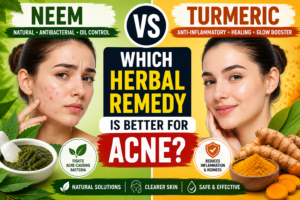
So, which herbal remedy is better for acne—neem or turmeric?
In this guide, we’ll compare their benefits, scientific evidence, safety, and effectiveness so you can choose the right option for your skin.
What Is Neem?
Neem (Azadirachta indica) is an evergreen tree native to the Indian subcontinent. Nearly every part of the tree—including its leaves, bark, seeds, and oil—has been used in traditional Ayurvedic medicine.
Neem contains powerful plant compounds such as:
- Nimbin
- Nimbidin
- Azadirachtin
- Quercetin
- Flavonoids
- Fatty acids
These natural compounds are known for their antibacterial, antifungal, antioxidant, and anti-inflammatory properties.
Because acne often involves bacteria, excess oil, and inflammation, neem has become a popular natural remedy for clearer skin.
What Is Turmeric?
Turmeric (Curcuma longa) is a bright yellow spice commonly used in cooking and traditional medicine. The active ingredient in turmeric is curcumin, a powerful antioxidant with anti-inflammatory properties.
Curcumin has been studied for its ability to support overall health, including skin health. It may help calm redness, reduce swelling, and support the skin’s natural healing process.
Turmeric has long been used in skincare masks and herbal treatments to improve skin tone and reduce blemishes.
Why Are Herbal Remedies Popular for Acne?
Many people prefer natural skincare because they are looking for gentler alternatives to harsh chemical treatments. Herbal ingredients can complement a good skincare routine, especially for mild acne.
Some reasons people choose herbal remedies include:
- Plant-based ingredients
- Affordable and widely available
- Rich in antioxidants
- May soothe irritated skin
- Often included in DIY face masks
- Can be used alongside other skincare products when appropriate
However, natural does not always mean risk-free. Even herbal ingredients can cause irritation or allergic reactions, so a patch test is always recommended before applying them to the face.
How Does Neem Help Acne?
Neem addresses several factors that contribute to acne.
1. Helps Reduce Acne-Causing Bacteria
One of neem’s best-known benefits is its natural antibacterial activity. Acne can worsen when bacteria multiply inside clogged pores. Neem may help reduce the growth of these bacteria on the skin.
2. Controls Excess Oil
Oily skin is one of the main causes of acne. Neem may help balance excess sebum production, reducing the likelihood of clogged pores.
People with oily or combination skin often find neem-based cleansers refreshing because they leave the skin feeling less greasy.
3. Reduces Skin Inflammation
Red, swollen pimples are caused by inflammation. Neem contains compounds that may help calm irritated skin, reducing redness and discomfort.
4. Supports Wound Healing
After a pimple heals, the skin needs time to recover. Neem may support the skin’s natural repair process and help reduce the chance of secondary infections.
5. Rich in Antioxidants
Environmental pollution and UV exposure create free radicals that damage skin cells. Neem contains antioxidants that help protect the skin from oxidative stress.
Benefits of Neem for Acne
Regular use of neem-based skincare may help:
- Reduce oily skin
- Minimize acne-causing bacteria
- Calm inflamed pimples
- Keep pores cleaner
- Support healthy skin healing
- Improve overall skin appearance
Neem is often found in:
- Face washes
- Cleansers
- Toners
- Clay masks
- Herbal soaps
- Spot treatments
How Does Turmeric Help Acne?
Turmeric works differently from neem. Instead of focusing mainly on bacteria, turmeric is best known for reducing inflammation and supporting skin healing.
1. Powerful Anti-Inflammatory Effects
Curcumin, turmeric’s active compound, helps calm inflammation. This can make inflamed pimples appear less red and swollen over time.
2. Antioxidant Protection
Turmeric is rich in antioxidants that help protect skin cells from damage caused by pollution, sunlight, and free radicals.
Healthy skin is often better able to recover from acne breakouts.
3. Supports Skin Healing
Many people use turmeric after acne begins to heal because it may support the skin’s natural repair process and improve the appearance of post-acne marks over time.
4. Helps Brighten Skin
Turmeric has traditionally been used to improve skin brightness and create a more even-looking complexion.
Although it is not an overnight solution, consistent use may help reduce the appearance of dull skin.
5. Helps Calm Sensitive Skin
When used correctly in skincare products, turmeric may help soothe irritation associated with mild acne.
However, excessive use or concentrated DIY mixtures can sometimes stain the skin or cause irritation.
Benefits of Turmeric for Acne
Turmeric may help:
- Reduce redness
- Calm inflamed pimples
- Support healing
- Improve skin tone
- Protect against oxidative stress
- Enhance overall skin appearance
It is commonly found in:
- Face masks
- Cleansers
- Serums
- Moisturizers
- Spot treatments
Scientific Evidence: Neem for Acne
Several laboratory and preliminary studies suggest that neem extracts have antibacterial and anti-inflammatory properties that may help manage acne-causing factors. Neem has also shown activity against certain microorganisms associated with skin infections.
While these findings are promising, more high-quality clinical trials in humans are needed to confirm exactly how effective neem is for treating acne compared with standard medical treatments.
Scientific Evidence: Turmeric for Acne
Curcumin has been widely studied for its anti-inflammatory and antioxidant effects. Research suggests it may help reduce inflammation involved in acne and support wound healing.
However, like neem, more large-scale clinical studies are needed to determine the best formulations, concentrations, and long-term effectiveness for acne treatment.
Neem vs Turmeric: Quick Comparison
| Feature | Neem | Turmeric |
|---|---|---|
| Best Known For | Antibacterial properties | Anti-inflammatory properties |
| Helps Oily Skin | ⭐⭐⭐⭐⭐ | ⭐⭐⭐ |
| Reduces Redness | ⭐⭐⭐ | ⭐⭐⭐⭐⭐ |
| Supports Healing | ⭐⭐⭐⭐ | ⭐⭐⭐⭐⭐ |
| Helps Acne Bacteria | ⭐⭐⭐⭐⭐ | ⭐⭐⭐ |
| Brightens Skin | ⭐⭐ | ⭐⭐⭐⭐⭐ |
| Rich in Antioxidants | ⭐⭐⭐⭐ | ⭐⭐⭐⭐⭐ |
| Suitable for Acne-Prone Skin | Excellent | Excellent |
Which Is Better for Oily Skin?
People with oily skin often experience acne because excess sebum mixes with dead skin cells and bacteria, clogging pores.
Why Neem Is Better
Neem is generally the better option for oily skin because it:
- Helps reduce excess oil production
- Has natural antibacterial properties
- Cleanses clogged pores
- Refreshes greasy skin
- May reduce acne-causing bacteria
Neem-based cleansers and face masks are especially popular for individuals with frequent breakouts.
Why Turmeric Helps Too
Turmeric doesn’t control oil as effectively as neem, but it can reduce redness and inflammation caused by pimples.
Winner for Oily Skin: ⭐ Neem
Which Is Better for Dry or Sensitive Skin?
Sensitive skin requires ingredients that calm irritation without stripping moisture.
Turmeric’s Benefits
Turmeric is often preferred because it:
- Helps soothe redness
- Supports skin healing
- Provides antioxidant protection
- Is less drying than many oil-control products
People with dry skin should avoid overusing neem, as it may leave the skin feeling tighter.
Winner for Sensitive Skin: ⭐ Turmeric
Which Is Better for Acne Scars?
After acne heals, many people are left with dark marks or uneven skin tone.
Turmeric for Post-Acne Marks
Turmeric has long been used to improve skin brightness and support the skin’s natural healing process. Consistent use in skincare products may gradually improve the appearance of post-inflammatory marks.
Neem’s Role
Neem supports healthy skin repair and may help reduce the risk of secondary infections, but it is less commonly used specifically for improving skin tone.
Winner for Acne Scars: ⭐ Turmeric
Which Is Better for Inflamed Pimples?
Large, red, painful pimples are often caused by inflammation.
Turmeric’s active compound, curcumin, is known for its anti-inflammatory effects, making it particularly useful for calming swollen blemishes.
Neem also helps reduce inflammation, but its strongest benefit is fighting bacteria.
Winner for Inflamed Acne: ⭐ Turmeric
Which Is Better for Preventing Future Breakouts?
If your goal is to reduce recurring acne, neem has an advantage because it helps address several acne-causing factors:
- Excess oil
- Bacteria
- Dirty pores
- Minor skin irritation
Regular cleansing with neem-based skincare products may help reduce the likelihood of new breakouts.
Winner for Prevention: ⭐ Neem
Can You Use Neem and Turmeric Together?
Yes. Many skincare products combine neem and turmeric because their benefits complement each other.
Together they may help:
- Clean pores
- Reduce bacteria
- Calm redness
- Support healing
- Protect the skin with antioxidants
If using DIY masks, avoid applying them too frequently. Two to three times per week is generally enough for most people.
Always perform a patch test before using any new skincare product.
How to Use Neem Safely
Neem is available in many forms:
- Face wash
- Soap
- Clay mask
- Toner
- Cream
- Gel
Tips for Safe Use
- Wash your face with a gentle cleanser first.
- Apply neem products according to the product instructions.
- Avoid rubbing the skin aggressively.
- Moisturize afterward if your skin feels dry.
- Discontinue use if irritation develops.
How to Use Turmeric Safely
Turmeric is commonly found in:
- Face masks
- Creams
- Serums
- Cleansers
Tips for Safe Use
- Use products formulated for skincare rather than cooking spices.
- Apply a thin layer.
- Rinse thoroughly after use if using a wash-off mask.
- Avoid leaving turmeric on the skin for extended periods, as it may temporarily stain light skin or fabrics.
- Follow with sunscreen during the day to protect healing skin.
Possible Side Effects
Although both herbs are natural, they are not suitable for everyone.
Neem Side Effects
Some people may experience:
- Dryness
- Mild irritation
- Allergic reactions
- Skin sensitivity
Turmeric Side Effects
Possible side effects include:
- Temporary yellow staining
- Contact dermatitis in sensitive individuals
- Mild irritation
- Allergic reactions
If you notice severe redness, itching, swelling, or a rash, stop using the product and seek medical advice.
Lifestyle Tips for Clearer Skin
Herbal remedies work best when combined with healthy skincare habits.
Cleanse Gently
Wash your face twice daily with a mild cleanser to remove excess oil, dirt, and sunscreen.
Avoid Picking Pimples
Picking or squeezing pimples can increase inflammation and raise the risk of scarring.
Moisturize Daily
Even oily skin needs hydration. Choose a non-comedogenic moisturizer that won’t clog pores.
Wear Sunscreen
Sun exposure can worsen post-acne marks. Use a broad-spectrum sunscreen with SPF 30 or higher every day.
Eat a Balanced Diet
A healthy diet rich in fruits, vegetables, whole grains, and lean proteins supports overall skin health. Some people may benefit from limiting high-glycemic foods if they notice these trigger breakouts.
Stay Hydrated
Drinking enough water supports normal body functions and contributes to healthy-looking skin, although it is not a direct acne treatment.
When Should You See a Dermatologist?
Natural remedies may help with mild acne, but they are not always enough.
Consult a dermatologist if you have:
- Large, painful cysts
- Deep nodules
- Acne that leaves scars
- Persistent acne despite several weeks of treatment
- Frequent breakouts affecting your confidence
- Signs of skin infection such as pus, severe swelling, or fever
A dermatologist can recommend evidence-based treatments tailored to your skin.
Frequently Asked Questions (FAQs)
Is neem better than turmeric for acne?
Neem may be more helpful for oily, acne-prone skin because of its antibacterial and oil-controlling properties. Turmeric is often preferred for reducing inflammation and improving the appearance of post-acne marks.
Can I use neem and turmeric every day?
It depends on the product. Daily use may be appropriate for gentle cleansers, while masks are generally used only a few times per week. Always follow the product instructions.
Does turmeric remove acne scars?
Turmeric may help improve the appearance of post-inflammatory marks over time, but it is unlikely to remove deep acne scars completely.
Can neem cure acne permanently?
No. Acne has many causes, including hormones and genetics. Neem may help reduce breakouts, but it is not a permanent cure.
Which is better for teenagers?
Both can be useful as part of a gentle skincare routine, but teenagers with moderate or severe acne should consult a healthcare professional for personalized treatment.
Final Verdict
Both neem and turmeric offer valuable benefits for acne-prone skin, but they excel in different areas.
Choose neem if your main concern is excess oil, clogged pores, or recurring breakouts. Its antibacterial and cleansing properties make it a strong option for oily skin.
Choose turmeric if your focus is reducing redness, calming inflamed pimples, or improving the appearance of post-acne marks. Its anti-inflammatory and antioxidant properties support the skin’s healing process.
For many people, the best approach is not choosing one over the other but using well-formulated skincare products that combine both ingredients with proven acne treatments when needed.