
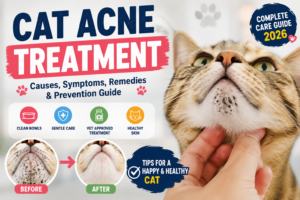

Cat acne is one of the most common skin conditions affecting cats of all breeds and ages. Many pet owners first notice tiny black dots on their cat’s chin and mistake them for dirt or flea droppings. However, these black spots are often the first signs of feline acne.
Fortunately, mild cat acne is usually easy to treat if caught early. With proper hygiene, veterinary care when needed, and a few preventive measures, most cats recover completely.
This guide explains everything you need to know about cat acne treatment, including its causes, symptoms, home care, medications, and prevention.
What Is Cat Acne?
Cat acne, also called feline acne, is a skin condition caused by blocked hair follicles and overactive oil glands around the chin and lips.
The clogged follicles become filled with:
- Natural skin oils
- Dead skin cells
- Dirt
- Bacteria
These plugs appear as blackheads or small bumps.
While some cats experience only mild acne throughout their lives, others develop painful infections requiring veterinary treatment.
What Causes Cat Acne?
The exact cause remains unknown, but veterinarians believe several factors contribute to feline acne.
1. Overactive Oil Glands
Cats naturally produce oils that protect their skin.
Sometimes these glands produce too much oil, leading to clogged follicles.
2. Poor Grooming
Older cats, overweight cats, or sick cats may not clean their chin properly.
Oil and debris build up over time, increasing acne risk.
3. Plastic Food Bowls
Plastic bowls are one of the most common causes.
Small scratches in plastic trap bacteria that transfer onto your cat’s chin.
Replacing plastic with:
- Stainless steel bowls
- Ceramic bowls
can significantly reduce acne.
4. Stress
Stress weakens the immune system and can trigger skin problems.
Common stressors include:
- Moving house
- New pets
- Loud noises
- Boarding
- Changes in routine
5. Allergies
Food allergies and environmental allergies may increase skin inflammation.
6. Hormonal Changes
Although less common than in humans, hormonal changes may contribute to excessive oil production.
7. Weak Immune System
Cats with weakened immunity are more likely to develop bacterial infections that worsen acne.
Symptoms of Cat Acne
Symptoms vary depending on severity.
Early signs include:
- Tiny black dots
- Blackheads
- Dirty-looking chin
- Mild redness
As acne worsens, you may notice:
- Pimples
- Whiteheads
- Swelling
- Hair loss
- Crusts
- Bleeding
- Pus
- Pain when touched
- Bad odor
Severe infections can cause your cat to stop eating due to discomfort.
Stages of Cat Acne
Mild Acne
Symptoms include:
- Few blackheads
- No pain
- No swelling
Treatment is usually simple.
Moderate Acne
Cats may develop:
- Red bumps
- Small pimples
- Mild infection
Topical medications may be required.
Severe Acne
Symptoms include:
- Large swollen chin
- Pus-filled lesions
- Bleeding
- Thick scabs
- Deep bacterial infection
Veterinary treatment becomes essential.
Which Cats Are Most at Risk?
Cat acne can affect:
- Kittens
- Adult cats
- Senior cats
- Indoor cats
- Outdoor cats
- Long-haired breeds
- Short-haired breeds
There is no breed or gender that is completely immune.
How Veterinarians Diagnose Cat Acne
Most veterinarians diagnose feline acne through a physical examination.
However, severe cases may require additional tests.
These include:
Skin Scraping
Checks for mites or parasites.
Fungal Culture
Rules out ringworm.
Bacterial Culture
Identifies bacterial infections.
Biopsy
Rarely needed unless another skin disease is suspected.
Best Cat Acne Treatment Options
Treatment depends on severity.
1. Clean the Chin Daily
The first step is keeping the chin clean.
Veterinarians often recommend gently cleaning the affected area once or twice daily using:
- Warm water
- Pet-safe antiseptic wipes
- Chlorhexidine solution (only if recommended)
Never scrub aggressively.
Gentle cleaning helps remove oil and bacteria without irritating the skin.
2. Switch Food Bowls
Replace plastic bowls immediately.
The best choices include:
✔ Stainless steel
✔ Ceramic
Wash bowls daily using hot water and mild soap.
This simple change alone resolves acne in many cats.
3. Warm Compress
Applying a warm compress helps:
- Open clogged pores
- Improve circulation
- Reduce swelling
- Soften crusts
Apply for 3–5 minutes once or twice daily if your cat tolerates it.
4. Topical Veterinary Medications
Veterinarians may prescribe medicated products containing ingredients that reduce bacteria and inflammation.
These products should only be used as directed, since cats groom themselves and may ingest topical medications.
5. Antibiotics
If bacterial infection develops, your veterinarian may prescribe antibiotics.
Treatment often lasts one to several weeks depending on the severity of the infection.
It is important to complete the full course even if your cat appears better sooner.
6. Pain and Anti-Inflammatory Care
Cats with severe swelling or painful lesions may need medications to reduce discomfort and inflammation.
Only use medicines specifically prescribed for cats.
Can You Treat Cat Acne at Home?
Yes, mild cases can often be managed at home with good hygiene.
Helpful home care includes:
- Cleaning the chin gently each day
- Replacing plastic bowls
- Washing food and water dishes daily
- Keeping the chin dry after meals
- Brushing long-haired cats regularly
- Reducing stress in the home
Avoid squeezing blackheads or pimples, as this can worsen inflammation or cause infection.
hen treating feline acne, avoid using products intended for humans unless your veterinarian specifically recommends them. Cats have sensitive skin, and many common skincare products can be harmful if licked during grooming.
Do not use:
- Human acne creams containing benzoyl peroxide or salicylic acid
- Alcohol or hydrogen peroxide
- Tea tree oil or essential oils
- Human antibiotic ointments without veterinary approval
- Harsh soaps or scented cleansers
- Makeup removers or facial wipes
These products may cause skin irritation, allergic reactions, or poisoning if ingested.
Natural Home Remedies for Mild Cat Acne
Some gentle home care measures can help manage mild feline acne alongside proper hygiene.
1. Warm Compress
A warm, damp cloth applied to your cat’s chin for 3–5 minutes can:
- Soften blackheads
- Improve blood circulation
- Reduce inflammation
- Help loosen debris
Repeat once or twice daily if your cat is comfortable.
2. Keep the Chin Dry
After eating or drinking, gently pat your cat’s chin dry with a soft cloth. Moisture encourages bacterial growth and can worsen acne.
3. Wash Food and Water Bowls Daily
Even stainless steel or ceramic bowls should be washed every day with warm water and mild dish soap to remove food residue and bacteria.
4. Improve Grooming
Long-haired or overweight cats may need extra help keeping their chin clean. Gently wipe the chin after meals and brush regularly to reduce oil and debris buildup.
5. Reduce Stress
Stress can affect your cat’s immune system and skin health. Help reduce stress by:
- Keeping a consistent daily routine
- Providing quiet resting areas
- Offering interactive toys
- Using scratching posts and climbing trees
- Avoiding sudden environmental changes whenever possible
Recovery Time
Recovery depends on the severity of the acne.
Mild Cases
- Often improve within 1–2 weeks with daily cleaning and proper bowl hygiene.
Moderate Cases
- May take 2–4 weeks with topical veterinary treatment.
Severe Cases
- Can require 4–8 weeks or longer, especially if antibiotics or other medications are needed.
Some cats are prone to recurring acne and may require ongoing preventive care.
How to Prevent Cat Acne
Preventing feline acne is often easier than treating an active outbreak.
Switch to Stainless Steel or Ceramic Bowls
Replace all plastic food and water bowls with smooth, non-porous materials.
Wash Bowls Every Day
Clean bowls after each meal or at least once daily to prevent bacterial buildup.
Clean the Chin Regularly
Cats with recurring acne may benefit from gently wiping the chin several times a week using a veterinarian-approved cleansing wipe.
Feed a Balanced Diet
High-quality cat food supports healthy skin and a strong immune system. Make sure your cat also has constant access to fresh water.
Maintain a Healthy Weight
Healthy-weight cats are generally better able to groom themselves effectively, reducing oil and dirt accumulation.
Regular Veterinary Checkups
Routine examinations can help detect skin problems before they become severe.
Possible Complications of Untreated Cat Acne
Ignoring cat acne may lead to more serious health problems, including:
- Painful skin infections
- Swollen hair follicles
- Hair loss
- Abscesses
- Thick scabs
- Permanent scarring
- Chronic recurring infections
Prompt treatment greatly reduces the risk of these complications.
When Should You Visit a Veterinarian?
While mild acne can often be managed at home, seek veterinary care if you notice:
- Large swollen bumps
- Pus or bleeding
- A foul odor
- Severe redness
- Your cat refuses food because of pain
- Hair loss spreading beyond the chin
- No improvement after two weeks of home care
- Frequent recurrences
A veterinarian can rule out other skin conditions such as allergies, fungal infections, parasites, or tumors.
Can Cat Acne Spread to Humans or Other Pets?
No. Cat acne is not contagious.
It cannot spread:
- To humans
- To dogs
- To other cats through normal contact
However, if the underlying issue is a contagious skin disease (such as ringworm), your veterinarian will diagnose it separately.
Frequently Asked Questions (FAQs)
Is cat acne painful?
Mild cat acne is usually not painful. Severe or infected acne can become swollen, tender, and uncomfortable.
Can kittens get acne?
Yes. Although it is more common in adult cats, kittens can also develop feline acne.
Does changing food help?
Changing food usually does not cure acne unless your cat has a food allergy contributing to skin inflammation.
Should I squeeze my cat’s blackheads?
No. Squeezing blackheads can damage the skin, introduce bacteria, and worsen infection.
Will cat acne come back?
Some cats experience occasional flare-ups throughout life. Regular chin cleaning and good bowl hygiene can help prevent recurrence.
Are plastic bowls really a problem?
Yes. Scratches in plastic bowls can trap bacteria that may contribute to acne in some cats. Stainless steel and ceramic bowls are generally safer choices.
Can indoor cats develop acne?
Yes. Both indoor and outdoor cats can develop feline acne regardless of lifestyle.
Is surgery ever needed?
Surgery is rarely required. Most cases respond well to hygiene, topical treatments, and medications when necessary.
Final Thoughts
Cat acne is a common but manageable skin condition that often appears as blackheads or small bumps on the chin. While mild cases usually respond well to improved hygiene and replacing plastic bowls with stainless steel or ceramic ones, more severe infections require veterinary diagnosis and treatment.
The best approach is early intervention. Regularly inspect your cat’s chin, keep feeding bowls clean, and avoid using human acne products. If symptoms worsen, spread, or fail to improve within a couple of weeks, consult your veterinarian promptly.
With consistent care and preventive habits, most cats recover well and enjoy healthy, comfortable skin.