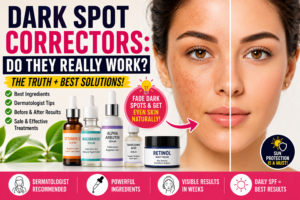

Dark spots are one of the most common skincare concerns, affecting people of all ages and skin tones. Whether they appear after acne, prolonged sun exposure, hormonal changes, or skin injuries, these patches of excess pigment can make the complexion look uneven and dull.
With countless serums, creams, and treatments claiming to erase pigmentation, it’s natural to wonder: Do dark spot correctors really work?
The short answer is yes—but only when they contain clinically proven ingredients and are used consistently. While no product can remove pigmentation overnight, many dermatologist-recommended formulas can visibly reduce dark spots within a few weeks when combined with proper sun protection.
In this guide, you’ll learn how dark spot correctors work, which ingredients are backed by science, and how to choose the best treatment for your skin type.
What Are Dark Spot Correctors?
Dark spot correctors are skincare products specifically designed to reduce hyperpigmentation, a condition caused by excess melanin production.
These products are available as:
- Serums
- Creams
- Gels
- Spot treatments
- Toners
- Chemical exfoliants
Most dark spot correctors contain active ingredients that either:
- Slow melanin production
- Increase skin cell turnover
- Reduce inflammation
- Brighten existing pigmentation
- Prevent new dark spots from forming
Unlike regular moisturisers, these products target the root causes of uneven skin tone rather than simply hydrating the skin.
What Causes Dark Spots?
Understanding the cause of your pigmentation helps you choose the right treatment.
1. Sun Exposure
Ultraviolet (UV) rays stimulate melanin production, leading to:
- Sunspots
- Age spots
- Uneven skin tone
Years of unprotected sun exposure can make pigmentation more difficult to treat.
2. Acne
Inflamed pimples often leave behind dark marks after healing.
This condition is known as Post-Inflammatory Hyperpigmentation (PIH) and is especially common in medium to darker skin tones.
Picking or squeezing pimples significantly increases the risk.
3. Hormonal Changes
Hormones can trigger melasma, which usually appears as brown patches on the:
- Forehead
- Cheeks
- Upper lip
- Nose
Pregnancy and certain hormonal medications are common triggers.
4. Skin Injuries
Cuts, burns, insect bites, cosmetic procedures, and even excessive rubbing can stimulate excess pigment production during healing.
5. Ageing
As people grow older, years of cumulative sun exposure often result in age spots, particularly on the face and hands.
Do Dark Spot Correctors Really Work?
Yes, but realistic expectations are important.
Dark spot correctors cannot erase pigmentation overnight. Instead, they gradually reduce excess melanin while encouraging healthier skin renewal.
Most people begin noticing improvements within:
- 4–8 weeks for mild pigmentation
- 2–4 months for moderate dark spots
- Several months for stubborn melasma or deep pigmentation
Results depend on:
- Skin type
- Cause of pigmentation
- Daily sunscreen use
- Product ingredients
- Consistency
- Overall skincare routine
If you stop using sunscreen, dark spots can quickly return—even after successful treatment.
How Do Dark Spot Correctors Work?
Different ingredients target pigmentation in different ways.
Some ingredients:
- Slow melanin production
- Prevent pigment transfer
- Remove dead skin cells
- Increase collagen production
- Speed skin renewal
Using complementary ingredients often produces better results than relying on a single product.
Best Ingredients That Actually Work
1. Vitamin C
Vitamin C remains one of the most effective ingredients for brightening skin.
Benefits
- Reduces sun damage
- Brightens dull skin
- Fades acne marks
- Protects against environmental damage
- Supports collagen production
Best for:
- Sunspots
- Mild pigmentation
- Uneven skin tone
2. Niacinamide
Niacinamide (Vitamin B3) is a favourite among dermatologists because it is gentle and suitable for most skin types.
Benefits
- Reduces melanin transfer
- Strengthens the skin barrier
- Improves skin texture
- Controls excess oil
- Reduces redness
Ideal for acne-prone and sensitive skin.
3. Alpha Arbutin
Alpha arbutin is widely used in modern pigmentation treatments.
It works by slowing melanin production while remaining gentle enough for daily use.
Suitable for:
- Melasma
- Sunspots
- Acne scars
- Uneven complexion
4. Azelaic Acid
Azelaic acid offers multiple benefits.
It can help:
- Treat acne
- Reduce inflammation
- Fade pigmentation
- Improve rosacea symptoms
- Brighten skin tone
This ingredient is especially useful for people who experience both acne and dark spots.
5. Retinol
Retinol speeds up skin cell turnover.
Benefits include:
- Faster fading of pigmentation
- Smoother skin texture
- Reduced fine lines
- Improved collagen production
Because retinol can increase sun sensitivity, it should generally be used at night with sunscreen during the day.
6. Tranexamic Acid
Tranexamic acid has become increasingly popular for stubborn pigmentation.
Research suggests it may be particularly effective for melasma when used consistently as part of a complete skincare routine.
7. Kojic Acid
Kojic acid is derived from certain fungi and has long been used in brightening products.
It works by reducing melanin production and is commonly combined with Vitamin C or alpha arbutin for enhanced results.
How to Choose the Right Dark Spot Corrector
Not every product is suitable for every skin type.
For Oily Skin
Look for:
- Lightweight serums
- Niacinamide
- Vitamin C
- Azelaic acid
For Dry Skin
Choose products containing:
- Ceramides
- Hyaluronic acid
- Vitamin C
- Alpha arbutin
These ingredients help maintain hydration while targeting pigmentation.
For Sensitive Skin
Opt for gentle formulas with:
- Niacinamide
- Azelaic acid
- Low-strength alpha arbutin
Avoid using several strong active ingredients at the same time to minimise irritation.
Signs a Dark Spot Corrector Is Working
You may notice:
- Dark spots gradually becoming lighter
- More even skin tone
- Improved skin brightness
- Smoother texture
- Fewer new areas of pigmentation
Photographing your skin every few weeks under the same lighting can help you track gradual progress more accurately.
Best Dark Spot Correctors by Skin Type
Choosing the right dark spot corrector depends on your skin type and the cause of your pigmentation. Using products designed for your skin can improve results while reducing irritation.
1. Oily and Acne-Prone Skin
If you have oily skin, look for lightweight, non-comedogenic serums.
Best ingredients:
- Niacinamide
- Vitamin C
- Azelaic Acid
- Salicylic Acid (for acne)
These ingredients help control oil production while fading post-acne marks.
2. Dry Skin
Dry skin needs hydration along with pigmentation treatment.
Look for products containing:
- Hyaluronic Acid
- Ceramides
- Vitamin C
- Alpha Arbutin
A well-moisturised skin barrier heals faster and tolerates active ingredients better.
3. Sensitive Skin
Sensitive skin benefits from gentle formulas.
Choose products with:
- Niacinamide
- Azelaic Acid
- Alpha Arbutin
- Panthenol
Avoid using several strong acids or retinoids together unless recommended by a dermatologist.
4. Mature Skin
For ageing skin, products that improve both pigmentation and wrinkles work best.
Recommended ingredients include:
- Retinol
- Vitamin C
- Peptides
- Tranexamic Acid
These ingredients help improve skin texture while reducing age spots.
Dermatologist Treatments That Work Faster
When over-the-counter products are not enough, professional treatments may provide quicker results.
Chemical Peels
Chemical peels use acids such as glycolic acid, salicylic acid, or lactic acid to remove damaged outer skin layers.
Benefits:
- Brighter complexion
- Reduced acne scars
- Improved sunspots
- Smoother skin texture
Several sessions may be required for the best outcome.
Laser Therapy
Laser treatments target excess melanin beneath the skin’s surface.
They may be effective for:
- Stubborn pigmentation
- Sunspots
- Certain types of melasma
- Age spots
Laser treatments should only be performed by qualified professionals, especially for darker skin tones, to reduce the risk of complications.
Microneedling
Microneedling creates tiny controlled injuries in the skin, stimulating collagen production.
Benefits include:
- Improved acne scars
- Better skin texture
- Reduced pigmentation
- Healthier-looking skin
Results appear gradually over several treatment sessions.
Prescription Creams
Dermatologists may prescribe stronger medications such as:
- Hydroquinone
- Tretinoin
- Combination creams with corticosteroids
These medications should only be used under medical supervision.
Home Remedies: Do They Really Work?
Natural remedies may provide mild benefits for some people, but they generally work more slowly than clinically tested skincare ingredients.
Aloe Vera
Aloe vera contains soothing compounds that may support skin healing and improve the appearance of mild pigmentation over time.
Green Tea Extract
Green tea is rich in antioxidants that help protect the skin from environmental damage.
Liquorice Root Extract
Liquorice extract contains glabridin, which may help reduce excess melanin production and brighten uneven skin tone.
Turmeric
Turmeric has anti-inflammatory properties and is a popular DIY skincare ingredient. While it may offer some benefits, evidence is limited, and it can temporarily stain the skin.
Avoid These DIY Treatments
Do not apply the following directly to your skin:
- Lemon juice
- Toothpaste
- Baking soda
- Undiluted apple cider vinegar
- Harsh scrubs
These can irritate the skin, damage the skin barrier, and worsen hyperpigmentation.
Common Mistakes That Make Dark Spots Worse
Many people unintentionally slow their progress by making these mistakes:
- Skipping sunscreen
- Picking pimples or scabs
- Using too many active ingredients at once
- Over-exfoliating
- Frequently changing skincare products
- Forgetting to moisturise
- Expecting overnight results
Consistency is more effective than constantly switching products.
Daily Routine to Fade Dark Spots
Morning
- Gentle Cleanser
- Vitamin C Serum
- Niacinamide Serum (optional)
- Moisturiser
- Broad-spectrum Sunscreen (SPF 30–50)
Evening
- Cleanser
- Alpha Arbutin or Retinol (alternate nights if needed)
- Moisturiser
Introduce new active ingredients gradually to minimise irritation.
How to Prevent New Dark Spots
The best treatment is prevention.
Follow these habits every day:
- Wear sunscreen, even on cloudy days.
- Reapply sunscreen every two hours when outdoors.
- Avoid picking acne or scabs.
- Treat acne early to reduce post-inflammatory pigmentation.
- Wear hats and seek shade during strong sunlight.
- Keep your skin hydrated with a suitable moisturiser.
- Introduce new skincare products slowly and patch-test first.
Frequently Asked Questions (FAQs)
Do dark spot correctors actually work?
Yes. Products containing ingredients such as Vitamin C, niacinamide, alpha arbutin, retinol, azelaic acid, and tranexamic acid can visibly reduce pigmentation when used consistently with sunscreen.
How long does it take to fade dark spots?
Mild dark spots may begin to improve within 4–8 weeks, while deeper pigmentation can take several months.
What is the best ingredient for dark spots?
There is no single “best” ingredient for everyone. Vitamin C, niacinamide, alpha arbutin, azelaic acid, retinol, and tranexamic acid all have strong evidence supporting their use.
Can dark spots disappear permanently?
Many dark spots can fade significantly with treatment. However, new pigmentation can develop if the underlying cause—especially sun exposure—is not addressed.
Is sunscreen necessary?
Yes. Daily broad-spectrum sunscreen is essential to prevent existing dark spots from darkening and to reduce the risk of new pigmentation.
Conclusion
Dark spot correctors can be highly effective when they contain scientifically supported ingredients and are used consistently. While they won’t erase pigmentation overnight, products with Vitamin C, niacinamide, alpha arbutin, azelaic acid, retinol, and tranexamic acid can noticeably improve skin tone over time.
Daily sunscreen is just as important as the treatment itself. Without protecting your skin from UV damage, even the most effective dark spot corrector may not deliver lasting results.
If your pigmentation is severe, spreading, or not improving after several months of proper skincare, consult a board-certified dermatologist. Professional treatments such as chemical peels, laser therapy, or prescription medications may be the next step.
With patience, the right skincare routine, and realistic expectations, you can achieve a brighter, healthier, and more even complexion.