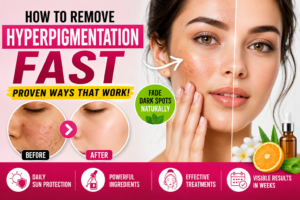

Hyperpigmentation is one of the most common skin concerns affecting millions of people worldwide. Whether it appears as acne scars, sunspots, melasma, or uneven skin tone, these dark patches can impact confidence and make skin look older than it really is.
The good news is that hyperpigmentation can often be improved with the right skincare routine, dermatologist-approved ingredients, and healthy lifestyle habits. While there is no instant overnight cure, many people notice visible improvements within a few weeks when using effective treatments consistently.
In this guide, you’ll learn what hyperpigmentation is, what causes it, and the fastest ways to reduce dark spots while protecting your skin from future damage.
What Is Hyperpigmentation?
Hyperpigmentation is a condition where certain areas of the skin become darker than the surrounding skin due to excess production of melanin, the natural pigment responsible for skin colour.
Melanin protects your skin from ultraviolet (UV) rays, but when the skin produces too much of it in one area, dark spots or patches can develop.
Hyperpigmentation can affect people of every skin tone, although it tends to be more noticeable and sometimes more persistent in medium to darker complexions.
Fortunately, most types of hyperpigmentation are harmless and can be treated with proper skincare and professional treatments.
Types of Hyperpigmentation
Understanding the type of pigmentation you have is the first step toward choosing the right treatment.
1. Post-Inflammatory Hyperpigmentation (PIH)
This occurs after skin inflammation caused by:
- Acne
- Eczema
- Cuts
- Burns
- Insect bites
- Skin injuries
Once the skin heals, it may leave behind brown, grey, or black marks.
2. Melasma
Melasma usually appears as symmetrical brown patches on the:
- Forehead
- Cheeks
- Nose
- Upper lip
It is commonly linked to:
- Pregnancy
- Hormonal changes
- Birth control pills
- Sun exposure
3. Sunspots (Solar Lentigines)
Also called age spots or liver spots, these develop after years of UV exposure.
Common areas include:
- Face
- Hands
- Shoulders
- Neck
- Arms
4. Freckles
Freckles are tiny pigmented spots that become darker after sun exposure. They are largely influenced by genetics and usually harmless.
What Causes Hyperpigmentation?
Several factors can trigger excess melanin production.
Sun Exposure
Ultraviolet rays are the biggest cause of pigmentation. Even a few minutes of unprotected sun exposure each day can make existing dark spots darker.
Daily sunscreen is one of the most important steps in preventing hyperpigmentation.
Acne
Inflamed pimples often leave dark marks behind after they heal.
Picking or squeezing pimples increases the risk of pigmentation and slows the healing process.
Hormonal Changes
Hormones play a significant role in melasma, particularly during:
- Pregnancy
- Menopause
- Hormonal therapy
- Birth control use
Skin Injuries
Any injury that causes inflammation may lead to post-inflammatory hyperpigmentation, including:
- Scratches
- Burns
- Waxing
- Laser treatments
- Chemical peels
- Cosmetic procedures
Certain Medications
Some medicines increase skin sensitivity to sunlight, making pigmentation more likely.
Examples include certain antibiotics, chemotherapy drugs, and hormone treatments.
Always consult your healthcare provider if you suspect medication is affecting your skin.
Can You Remove Hyperpigmentation Fast?
Many websites promise overnight results, but the truth is that fading pigmentation safely takes time.
The speed of improvement depends on several factors:
- Type of pigmentation
- Depth of pigment
- Skin tone
- Daily sun exposure
- Consistency of treatment
- Overall skin health
Generally:
- Mild pigmentation may improve in 4–8 weeks.
- Moderate pigmentation often takes 2–6 months.
- Deep melasma or long-standing pigmentation may require 6–12 months or professional treatment.
The goal is steady improvement rather than instant removal. Trying harsh products or aggressive treatments can irritate the skin and actually worsen pigmentation.
6 Proven Ways to Remove Hyperpigmentation Faster
1. Wear Sunscreen Every Day
If you skip sunscreen, even the best skincare products won’t work as effectively.
Choose a broad-spectrum sunscreen with:
- SPF 30 or higher
- UVA and UVB protection
- Non-comedogenic formula
- Water resistance if spending time outdoors
Reapply every two hours when outside.
Sun protection prevents new pigmentation while allowing existing spots to fade more effectively.
2. Use Vitamin C Serum
Vitamin C is one of the most researched ingredients for brightening the skin.
Benefits include:
- Reduces dark spots
- Protects against free radicals
- Improves skin radiance
- Supports collagen production
- Helps create a more even skin tone
Apply Vitamin C serum in the morning before sunscreen for the best results.
3. Add Niacinamide to Your Routine
Niacinamide (Vitamin B3) is another excellent ingredient for reducing hyperpigmentation.
It helps by:
- Slowing melanin transfer
- Strengthening the skin barrier
- Reducing redness
- Controlling excess oil
- Improving overall skin texture
Many people use niacinamide alongside Vitamin C as part of a comprehensive skincare routine.
4. Try Alpha Arbutin
Alpha arbutin is a gentle brightening ingredient that helps reduce the appearance of dark spots over time.
It works by limiting excess melanin production and is often well tolerated by many skin types, including sensitive skin.
Consistent use is key, and results typically become noticeable after several weeks.
5. Exfoliate Carefully
Gentle exfoliation helps remove dead skin cells and encourages skin renewal, which can gradually improve the appearance of pigmentation.
Look for chemical exfoliants such as:
- Glycolic acid
- Lactic acid
- Mandelic acid
Avoid over-exfoliating, as irritation can trigger more pigmentation, especially in darker skin tones.
6. Stay Consistent
Even the most effective skincare ingredients need time to work. Applying products regularly, protecting your skin from the sun, and avoiding habits like picking at blemishes can make a significant difference over the long term.
Creating a simple routine and sticking with it is often more effective than frequently changing products.
The Best Skincare Routine for Hyperpigmentation
Consistency is the key to fading dark spots. A simple routine using scientifically proven ingredients can deliver better results than using many harsh products.
Morning Routine
Step 1: Gentle Cleanser
- Wash your face with a mild, fragrance-free cleanser.
- Avoid scrubbing, as irritation can worsen pigmentation.
Step 2: Vitamin C Serum
Vitamin C helps:
- Brighten skin
- Reduce dark spots
- Protect against free radical damage
- Improve collagen production
Use a few drops on clean, dry skin.
Step 3: Niacinamide Serum (Optional)
A 5–10% niacinamide serum can:
- Improve uneven skin tone
- Reduce redness
- Strengthen the skin barrier
- Help fade post-acne marks
Step 4: Moisturizer
Choose a lightweight moisturizer containing ingredients like:
- Ceramides
- Hyaluronic acid
- Glycerin
Healthy, hydrated skin heals more efficiently.
Step 5: Broad-Spectrum Sunscreen SPF 30–50
This is the most important step.
Without sunscreen, pigmentation often returns or becomes darker.
Reapply every two hours if you’re outdoors.
Evening Routine
Step 1: Cleanse
Remove makeup, sunscreen, and dirt thoroughly.
Step 2: Treatment Serum
Choose one active ingredient depending on your skin concerns:
- Alpha Arbutin
- Tranexamic Acid
- Azelaic Acid
- Retinol (start slowly)
- Prescription Hydroquinone (only under medical supervision)
Do not layer multiple strong actives at once unless advised by a dermatologist.
Step 3: Moisturizer
A nourishing moisturizer helps reduce irritation caused by active ingredients and supports the skin barrier overnight.
Best Ingredients for Hyperpigmentation
1. Vitamin C
Benefits:
- Brightens skin
- Reduces sun damage
- Boosts collagen
- Fades acne marks
Best for:
- Dull skin
- Sunspots
- Early pigmentation
2. Niacinamide
Benefits:
- Reduces melanin transfer
- Improves skin barrier
- Reduces oil
- Calms inflammation
Best for:
- Acne-prone skin
- Sensitive skin
- Uneven skin tone
3. Alpha Arbutin
Benefits:
- Slows melanin production
- Gentle enough for daily use
- Suitable for most skin types
4. Azelaic Acid
Azelaic acid is often recommended by dermatologists because it:
- Reduces inflammation
- Helps treat acne
- Improves melasma
- Fades post-inflammatory hyperpigmentation
5. Retinol
Retinol speeds up skin cell turnover.
Benefits include:
- Faster skin renewal
- Improved texture
- Reduced fine lines
- Fading dark spots over time
Start with a low concentration and use it only a few nights each week to minimise irritation.
6. Tranexamic Acid
This ingredient has become increasingly popular for stubborn pigmentation, especially melasma.
It works well when combined with sunscreen and other brightening ingredients.
Professional Treatments That Work Faster
If topical skincare isn’t giving you the desired results after several months, a dermatologist may recommend professional procedures.
Chemical Peels
Chemical peels remove damaged surface skin cells and can improve:
- Sunspots
- Acne marks
- Mild melasma
Several sessions are often needed.
Laser Therapy
Laser treatments target excess pigment deep within the skin.
These treatments are usually effective for:
- Stubborn pigmentation
- Sun damage
- Certain birthmarks
They should always be performed by qualified professionals because improper treatment can worsen pigmentation, especially in darker skin tones.
Microneedling
Microneedling stimulates collagen production while helping improve:
- Acne scars
- Uneven skin tone
- Mild pigmentation
Results develop gradually over multiple sessions.
Prescription Treatments
A dermatologist may prescribe stronger medications such as:
- Hydroquinone
- Tretinoin
- Combination creams
These treatments require medical supervision to reduce the risk of side effects.
Home Remedies That May Help
Home remedies are generally less effective than evidence-based skincare, but some may provide mild benefits when used carefully.
Aloe Vera
Aloe vera contains compounds that may help soothe the skin and support healing.
Green Tea
Green tea is rich in antioxidants that may help protect the skin from environmental damage.
Liquorice Root Extract
Liquorice extract contains glabridin, which may help reduce excess pigmentation and brighten the complexion.
Turmeric
Turmeric has anti-inflammatory properties and is commonly used in DIY face masks. However, evidence is limited, and it may temporarily stain the skin.
What to Avoid
Avoid using:
- Lemon juice directly on the skin
- Baking soda
- Toothpaste
- Undiluted apple cider vinegar
- Harsh scrubs
These can damage the skin barrier and make pigmentation worse.
Mistakes That Make Hyperpigmentation Worse
Many people unintentionally slow their progress by making these common mistakes:
- Skipping sunscreen
- Picking pimples
- Using too many active ingredients at once
- Over-exfoliating
- Frequently changing skincare products
- Not moisturising properly
- Expecting overnight results
Patience and consistency are essential for lasting improvement.
How to Prevent Hyperpigmentation
You can reduce the risk of new dark spots by following these habits:
- Wear sunscreen every day.
- Reapply SPF when outdoors.
- Avoid picking acne or scabs.
- Treat acne early.
- Wear hats and seek shade during peak sunlight.
- Introduce new skincare products gradually.
- Maintain a healthy skin barrier with gentle cleansing and moisturising.
Frequently Asked Questions (FAQs)
How long does hyperpigmentation take to fade?
Mild pigmentation may improve within 4–8 weeks, while deeper pigmentation can take several months. Consistent skincare and daily sunscreen use are essential.
Can hyperpigmentation disappear naturally?
Some mild cases fade over time, but many require targeted skincare or professional treatment for significant improvement.
Which ingredient works best for dark spots?
Vitamin C, niacinamide, alpha arbutin, azelaic acid, retinol, and tranexamic acid are among the most effective ingredients supported by research.
Does sunscreen help hyperpigmentation?
Yes. Sunscreen helps prevent existing pigmentation from darkening and reduces the risk of developing new dark spots.
Is hyperpigmentation permanent?
Most forms of hyperpigmentation are not permanent. With appropriate treatment and sun protection, many people see noticeable improvement.
Final Thoughts
Hyperpigmentation can be frustrating, but it is a treatable skin concern. While no product can erase dark spots overnight, combining daily sunscreen with proven ingredients such as Vitamin C, niacinamide, alpha arbutin, azelaic acid, and retinol can produce visible improvements over time.
If your pigmentation is severe, spreading, or not responding to home care after several months, consult a board-certified dermatologist. Professional treatments such as chemical peels, laser therapy, or prescription medications may provide faster and more effective results.
The most important step is consistency. Protecting your skin from the sun, using evidence-based skincare, and maintaining a healthy routine will give you the best chance of achieving a brighter, more even complexion.