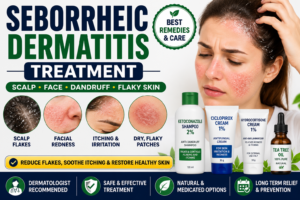

Seborrheic dermatitis is a common inflammatory skin condition that causes red, itchy skin and flaky scales. It often affects areas with many oil-producing glands, such as the scalp, face, ears, eyebrows, chest, and sides of the nose. While it is not contagious, it can be persistent and may flare up from time to time.
Fortunately, there are many effective seborrheic dermatitis treatment options available. These include medicated shampoos, topical creams, prescription medications, and simple home care practices that help manage symptoms and reduce flare-ups.
In this guide, you’ll learn about the causes, symptoms, and the best treatments recommended by dermatologists.
What Is Seborrheic Dermatitis?
Seborrheic dermatitis is a chronic skin condition linked to an overgrowth of a naturally occurring yeast called Malassezia, combined with the skin’s inflammatory response. Genetics, stress, hormones, and weather can also contribute to flare-ups.
Although it can occur at any age, it is especially common in infants (often called cradle cap), teenagers, and adults.
Common Symptoms

Symptoms may vary from person to person but often include:
- White or yellow flaky scales
- Red, inflamed skin
- Itching
- Greasy patches
- Dandruff
- Burning or irritation
- Crusting in severe cases
The scalp is the most commonly affected area, but symptoms may also appear around the eyebrows, eyelids, ears, beard, chest, and nose.
What Causes Seborrheic Dermatitis?
The exact cause is not fully understood, but several factors are associated with the condition.
Common Triggers
- Overgrowth of Malassezia yeast
- Excess oil production
- Stress
- Cold, dry weather
- Hormonal changes
- Family history
- Certain neurological conditions
- A weakened immune system
Knowing your personal triggers can help reduce flare-ups.
Best Seborrheic Dermatitis Treatment
Treatment depends on the severity and the affected area.
1. Medicated Antifungal Shampoos
These shampoos help reduce yeast growth and control flaking.
Common Active Ingredients
- Ketoconazole
- Selenium sulfide
- Zinc pyrithione
- Coal tar
- Salicylic acid
Benefits
- Reduces dandruff
- Relieves itching
- Controls scalp inflammation
- Helps prevent recurring flare-ups
For best results, follow the product instructions or your dermatologist’s advice.
2. Antifungal Creams
For seborrheic dermatitis on the face or body, antifungal creams are often recommended.
Examples include:
- Ketoconazole cream
- Ciclopirox cream
These treatments reduce yeast growth and improve redness and scaling.
3. Topical Corticosteroids
Low-potency corticosteroid creams or lotions may be prescribed for short-term use to reduce inflammation and itching.
Because prolonged use can cause side effects such as skin thinning, they should only be used as directed by a healthcare professional.
4. Calcineurin Inhibitors
For sensitive areas like the face or eyelids, doctors may prescribe non-steroid medications such as:
- Tacrolimus ointment
- Pimecrolimus cream
These help control inflammation while avoiding many of the long-term side effects associated with topical steroids.
Home Remedies for Seborrheic Dermatitis
Home care can help support medical treatment and reduce discomfort.
Tea Tree Oil
Some shampoos contain tea tree oil, which has natural antifungal properties. Because tea tree oil may irritate some people, it should be used with caution and never applied undiluted unless directed.
Aloe Vera Gel
Pure aloe vera may soothe irritated skin and reduce redness in some individuals.
Coconut Oil
Coconut oil has moisturizing properties and may help soften scales. If you notice worsening symptoms after using oils, discontinue use and consult your dermatologist.
Gentle Cleansing
Wash affected areas with a mild cleanser and avoid harsh soaps or vigorous scrubbing.
Lifestyle Tips to Reduce Flare-Ups
Simple daily habits may help keep seborrheic dermatitis under control.
- Wash your scalp regularly with an appropriate shampoo.
- Manage stress through exercise, relaxation techniques, or adequate sleep.
- Avoid harsh skincare products that contain alcohol or strong fragrances.
- Moisturize your skin if it becomes dry.
- Wear breathable fabrics if the chest or back is affected.
- Protect your skin from extreme weather conditions.
Best Treatment for Scalp Seborrheic Dermatitis
The scalp is the area most commonly affected by seborrheic dermatitis. Treatment focuses on reducing inflammation, controlling yeast growth, and removing excess flakes.
Dermatologist-Recommended Treatments
- Ketoconazole shampoo (1% or 2%)
- Selenium sulfide shampoo
- Zinc pyrithione shampoo
- Coal tar shampoo
- Salicylic acid shampoo
How to Use Medicated Shampoo
- Wet your hair thoroughly.
- Massage the shampoo into your scalp.
- Leave it on for 5–10 minutes before rinsing.
- Use it 2–3 times per week, or as directed by your dermatologist.
- Alternate with a gentle shampoo if needed to reduce dryness.
Consistent use is important, as stopping treatment too soon may allow symptoms to return.
Seborrheic Dermatitis Treatment for the Face
Facial skin is more delicate than the scalp, so treatment should be gentle.
Common Treatments
- Ketoconazole cream
- Ciclopirox cream
- Low-strength hydrocortisone (short-term use only if prescribed)
- Tacrolimus ointment
- Pimecrolimus cream
Daily Skincare Routine
- Wash your face with a gentle, fragrance-free cleanser.
- Apply any prescribed medication as directed.
- Use a non-comedogenic moisturizer.
- Wear broad-spectrum sunscreen (SPF 30 or higher) during the day.
Avoid scrubbing, harsh exfoliants, or alcohol-based skincare products, as they can worsen irritation.
Seborrheic Dermatitis in Babies (Cradle Cap)
Seborrheic dermatitis in infants is commonly known as cradle cap.
Symptoms include:
- Thick yellow or white scales
- Oily patches
- Mild redness on the scalp
- Usually no significant itching
Safe Home Care
- Wash the baby’s scalp with a mild baby shampoo.
- Gently loosen scales with a soft baby brush.
- Avoid forcefully picking or scraping off scales.
If the rash spreads, becomes infected, or does not improve, consult a pediatrician or dermatologist.
Foods to Eat
Although no specific diet cures seborrheic dermatitis, eating a balanced diet may support overall skin health.
Choose foods rich in:
- Omega-3 fatty acids (salmon, sardines, walnuts)
- Fresh fruits
- Leafy green vegetables
- Whole grains
- Lean proteins
- Foods containing zinc
- Foods rich in vitamin D
- Probiotic-rich foods such as yogurt or kefir, if tolerated
Staying well hydrated also supports healthy skin.
Foods to Limit
Some people notice that certain foods seem to trigger flare-ups, although this varies from person to person.
Possible triggers include:
- Sugary snacks
- Sweetened beverages
- Highly processed foods
- Excess alcohol
- Trans fats
Keeping a food diary may help you identify any personal triggers.
Possible Complications
Without proper treatment, seborrheic dermatitis may lead to:
- Persistent itching
- Skin irritation
- Secondary bacterial infection from scratching
- Temporary hair shedding associated with scalp inflammation
- Emotional stress due to visible skin changes
Most complications improve when the condition is managed appropriately.
Prevention Tips
Seborrheic dermatitis often comes and goes, but healthy habits can help reduce flare-ups.
Prevention Checklist
- Wash your scalp regularly with a suitable shampoo.
- Follow your dermatologist’s treatment plan.
- Manage stress.
- Sleep 7–9 hours each night.
- Moisturize dry skin.
- Avoid harsh skincare products.
- Wear sunscreen daily.
- Avoid scratching affected areas.
Even after symptoms improve, maintenance treatment may help prevent recurrence.
When to See a Dermatologist
Seek medical advice if:
- Symptoms are severe.
- Home treatments are not helping.
- The rash spreads rapidly.
- There is pain, pus, or signs of infection.
- Symptoms interfere with sleep or daily activities.
- You are unsure whether the rash is seborrheic dermatitis or another skin condition.
A dermatologist can confirm the diagnosis and recommend the most appropriate treatment.
Frequently Asked Questions (FAQs)
Can seborrheic dermatitis be cured permanently?
There is currently no permanent cure, but treatment can effectively control symptoms and reduce flare-ups.
Is seborrheic dermatitis contagious?
No. It is not contagious and cannot be spread from one person to another.
Can stress make seborrheic dermatitis worse?
Yes. Stress is a common trigger and may increase the frequency or severity of flare-ups in some people.
What is the best shampoo for seborrheic dermatitis?
Shampoos containing ketoconazole, selenium sulfide, zinc pyrithione, coal tar, or salicylic acid are commonly recommended. The best option depends on your individual condition and your dermatologist’s advice.
Can seborrheic dermatitis cause hair loss?
Severe scalp inflammation may lead to temporary hair shedding. Hair typically regrows once the inflammation is controlled, provided there is no other underlying cause of hair loss.
Can I wear makeup if I have facial seborrheic dermatitis?
Yes, but choose fragrance-free, non-comedogenic products and remove makeup gently at the end of the day.
Conclusion
Seborrheic dermatitis treatment focuses on controlling symptoms rather than permanently eliminating the condition. With the right combination of medicated shampoos, topical treatments, gentle skincare, and healthy lifestyle habits, most people can successfully manage flare-ups and maintain healthy skin.
If your symptoms persist or become severe, consult a dermatologist for a personalized treatment plan. Early and consistent care can help minimize discomfort and improve long-term skin health.