
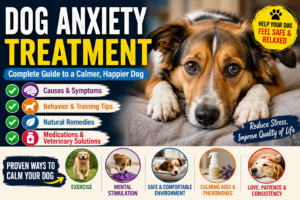

Anxiety is one of the most common behavioral problems in dogs. Just like humans, dogs can experience fear, stress, and nervousness due to changes in their environment, loud noises, separation from owners, or past traumatic experiences.
Fortunately, there are many effective dog anxiety treatment options available, ranging from behavioral training and natural remedies to veterinary-prescribed medications.
This comprehensive guide explains the causes, symptoms, treatment options, and prevention tips to help your furry friend live a happier, calmer life.
What Is Dog Anxiety?
Dog anxiety is a condition in which a dog experiences excessive fear or stress in response to certain situations. While occasional nervousness is normal, persistent anxiety can negatively affect a dog’s health, behavior, and quality of life.
Without proper treatment, anxiety may become worse over time and lead to destructive behaviors or chronic stress.
Common Signs of Anxiety in Dogs
Recognizing anxiety early can make treatment more effective.
Common symptoms include:
- Excessive barking or whining
- Panting when not hot
- Trembling or shaking
- Hiding from people
- Destructive chewing
- Scratching doors or windows
- Pacing back and forth
- Drooling excessively
- Loss of appetite
- Restlessness
- Aggressive behavior caused by fear
- Attempting to escape
If these symptoms occur frequently, consult your veterinarian for an evaluation.
What Causes Anxiety in Dogs?
Many different factors can trigger anxiety.
1. Separation Anxiety
One of the most common forms of anxiety occurs when dogs become distressed after being left alone.
Signs include:
- Barking
- Howling
- Chewing furniture
- Indoor accidents
- Trying to escape
2. Loud Noises
Dogs often fear:
- Thunderstorms
- Fireworks
- Gunshots
- Construction noise
Noise anxiety may cause shaking, hiding, or frantic behavior.
3. Changes in Routine
Dogs thrive on routine.
Major changes such as moving to a new home, a new family member, schedule changes, or losing a companion animal can increase anxiety.
4. Past Trauma
Dogs rescued from neglect, abuse, or abandonment may develop long-term anxiety that requires patience and behavior modification.
5. Aging
Senior dogs can develop anxiety due to cognitive decline, reduced hearing or vision, or other age-related changes.
6. Medical Conditions
Pain, hormonal disorders, neurological disease, or other illnesses may contribute to anxious behavior. A veterinary examination is important to rule out medical causes.
Types of Dog Anxiety
Different dogs experience different forms of anxiety.
Separation Anxiety
Triggered when left alone.
Social Anxiety
Fear of unfamiliar people or animals.
Noise Anxiety
Fear of loud sounds.
Travel Anxiety
Stress during car rides or trips.
Generalized Anxiety
Persistent anxiety without one specific trigger.
Dog Anxiety Treatment Options
Successful treatment often combines environmental changes, training, and veterinary guidance.
1. Behavior Modification
Behavior training is considered one of the most effective long-term treatments.
Training methods include:
- Positive reinforcement
- Counterconditioning
- Desensitization
- Reward-based learning
Avoid punishment, as it can increase fear and anxiety.
2. Daily Exercise
Exercise helps reduce stress hormones while promoting mental well-being.
Good activities include:
- Long walks
- Fetch
- Swimming (if your dog enjoys it)
- Agility exercises
- Hiking
Most healthy adult dogs benefit from regular daily exercise appropriate for their breed, age, and health status.
3. Mental Stimulation
Keeping your dog mentally engaged can reduce boredom-related anxiety.
Examples include:
- Puzzle toys
- Snuffle mats
- Food-dispensing toys
- Basic obedience training
- Nose work games
4. Create a Safe Space
Provide a quiet, comfortable area where your dog can relax.
Include:
- Soft bedding
- Favorite toys
- Fresh water
- A crate if your dog has been positively crate-trained
- Low lighting during stressful events
Never force a frightened dog into a confined space.
5. Calming Music
Research suggests that some dogs relax when listening to gentle classical music or specially designed calming audio.
This may be particularly helpful during thunderstorms or when home alone.
6. Anxiety Wraps
Compression wraps provide gentle pressure that may help some dogs feel calmer during stressful situations such as fireworks or travel.
7. Calming Pheromone Products
Synthetic dog-appeasing pheromone products are available in:
- Diffusers
- Sprays
- Collars
Some dogs may benefit from these products as part of a broader anxiety management plan.
8. Natural Supplements
Some owners use calming supplements that may contain ingredients such as:
- L-theanine
- Alpha-casozepine
- Chamomile
- Melatonin (only if recommended by a veterinarian)
Always discuss supplements with your veterinarian before use, as safety and effectiveness vary.
9. Prescription Medication
For severe anxiety, a veterinarian may prescribe anti-anxiety medication alongside behavior modification.
Medication should never be given without veterinary supervision.
Home Remedies for Dog Anxiety
Simple home strategies include:
- Maintaining a consistent routine
- Providing daily exercise
- Offering enrichment activities
- Avoiding sudden environmental changes when possible
- Using positive reinforcement
- Creating a calm resting area
Foods That Support Overall Brain Health
A balanced, complete diet supports overall health.
Some veterinary diets include nutrients that support cognitive function, but no food alone can cure anxiety.
Fresh water should always be available.
Things You Should Avoid
Avoid these common mistakes:
- Punishing fearful behavior
- Yelling at your dog
- Leaving an anxious dog alone for extended periods without a plan
- Forcing interaction with frightening situations
- Giving human anxiety medication unless specifically prescribed by a veterinarian
Preventing Anxiety in Dogs
Prevention strategies include:
- Early socialization
- Consistent training
- Daily exercise
- Predictable routines
- Positive experiences with new environments
- Regular veterinary checkups
When to See a Veterinarian
Schedule a veterinary visit if your dog:
- Shows severe or worsening anxiety
- Injures themselves trying to escape
- Stops eating
- Becomes aggressive
- Has sudden behavior changes
- Does not improve with home management
A veterinarian can identify underlying medical issues and recommend an appropriate treatment plan.
Frequently Asked Questions (FAQs)
What is the best treatment for dog anxiety?
The best treatment depends on the cause and severity. Many dogs improve with behavior modification, environmental changes, regular exercise, and, in some cases, medication prescribed by a veterinarian.
Can anxiety in dogs be cured?
Some dogs recover completely, while others require ongoing management. Early intervention generally leads to better outcomes.
What helps calm an anxious dog naturally?
Regular exercise, predictable routines, mental enrichment, a quiet safe space, and positive reinforcement can help reduce anxiety naturally.
Do calming treats work?
Some calming treats may help mild anxiety in certain dogs, but they are not a replacement for veterinary care or behavior training.
Can puppies develop anxiety?
Yes. Puppies can experience anxiety, particularly if they have limited socialization or experience stressful events early in life.
Conclusion
Dog anxiety is a manageable condition when recognized early and treated appropriately. Whether your dog struggles with separation anxiety, fear of loud noises, or generalized stress, combining positive training, environmental management, exercise, and veterinary guidance can significantly improve their quality of life.
If your dog’s anxiety is severe or persistent, consult your veterinarian or a qualified veterinary behavior professional. A personalized treatment plan offers the best chance for long-term success.