
Many people assume every pimple is regular acne, but that’s not always true. In fact, fungal acne and regular acne are two completely different skin conditions that require different treatments. Using the wrong skincare products can make your condition worse instead of better.
If you’ve been treating stubborn breakouts without success, it’s possible you may have fungal acne rather than traditional acne.
In this guide, we’ll explain the differences between fungal acne vs regular acne, including their causes, symptoms, appearance, treatment options, and prevention tips.
What Is Fungal Acne?
Despite its name, fungal acne isn’t actually acne. It is a condition called Malassezia folliculitis, caused by an overgrowth of yeast (Malassezia) that naturally lives on the skin.
When this yeast multiplies excessively, it infects hair follicles, leading to small, itchy bumps that resemble acne.
Unlike traditional acne, fungal acne does not involve clogged pores or acne-causing bacteria.
What Is Regular Acne?
Regular acne, also known as Acne Vulgaris, develops when hair follicles become blocked with:
- Excess oil (sebum)
- Dead skin cells
- Bacteria
- Inflammation
This blockage results in pimples, blackheads, whiteheads, cysts, and nodules.
Regular acne is one of the most common skin conditions worldwide and affects teenagers as well as adults.
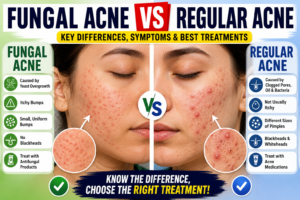
Fungal Acne vs Regular Acne: Quick Comparison
| Feature | Fungal Acne | Regular Acne |
|---|---|---|
| Cause | Yeast overgrowth | Clogged pores and bacteria |
| Itching | Very common | Rare |
| Blackheads | No | Yes |
| Whiteheads | Rare | Common |
| Size | Uniform bumps | Different sizes |
| Pain | Usually mild | Can be painful |
| Best Treatment | Antifungal medication | Acne medication |
What Causes Fungal Acne?
Several factors can trigger fungal acne, including:
Hot and Humid Weather
Warm temperatures encourage yeast growth, making fungal acne more common during summer.
Excessive Sweating
Sweat creates a moist environment where yeast thrives.
Tight Clothing
Clothing that traps heat and sweat can contribute to fungal acne, especially on the chest and back.
Antibiotic Use
Long-term antibiotics may disrupt the balance of bacteria on the skin, allowing yeast to overgrow.
Weak Immune System
People with weakened immune systems may be more susceptible to fungal skin infections.
What Causes Regular Acne?
Regular acne develops due to a combination of factors such as:
- Excess oil production
- Hormonal changes
- Dead skin cell buildup
- Acne-causing bacteria
- Genetics
- Stress
- Certain cosmetics
- High-glycemic diets (in some individuals)
Symptoms of Fungal Acne
Common signs include:
- Small bumps of similar size
- Intense itching
- Red or skin-colored bumps
- Clusters of pimples
- Breakouts on the forehead, chest, shoulders, and back
- Worsening after sweating
Because the bumps look alike, fungal acne often has a “uniform” appearance.
Symptoms of Regular Acne
Regular acne may include:
- Whiteheads
- Blackheads
- Papules
- Pustules
- Cysts
- Nodules
- Oily skin
- Occasional pain or tenderness
Unlike fungal acne, regular acne lesions vary greatly in size.
How to Tell the Difference
You May Have Fungal Acne If:
- The bumps itch.
- Every bump looks almost identical.
- Acne treatments don’t work.
- Breakouts worsen after exercise.
- There are no blackheads.
You May Have Regular Acne If:
- You have blackheads and whiteheads.
- Pimples are different sizes.
- Acne is painful rather than itchy.
- Breakouts occur mainly on the face.
- Standard acne products improve the condition.
Where Does Fungal Acne Usually Appear?
Fungal acne commonly develops on areas that trap heat and sweat, including:
- Forehead
- Hairline
- Chest
- Shoulders
- Upper back
- Neck
These areas create an ideal environment for yeast growth.
Where Does Regular Acne Appear?
Regular acne is most commonly found on:
- Face
- Chin
- Nose
- Jawline
- Chest
- Back
- Shoulders
Hormonal acne often affects the jawline and lower face.
Can You Have Both at the Same Time?
Yes. Some people experience both fungal acne and regular acne simultaneously.
For example, you might have:
- Blackheads on your nose (regular acne)
- Itchy bumps on your forehead (fungal acne)
This makes proper diagnosis important because each condition requires a different treatment approach.
Why Acne Treatments Sometimes Fail
Many over-the-counter acne treatments are designed to target bacteria and clogged pores. They do not eliminate yeast.
If you have fungal acne, products containing ingredients like benzoyl peroxide or salicylic acid may provide little improvement—or even cause irritation—while the underlying yeast overgrowth persists.
Best Treatment for Fungal Acne
Because fungal acne is caused by yeast rather than bacteria, it requires antifungal treatment instead of traditional acne medications.
1. Antifungal Creams
A dermatologist may recommend topical antifungal creams containing ingredients such as:
- Ketoconazole
- Clotrimazole
- Ciclopirox
These products help reduce yeast overgrowth on the skin.
2. Antifungal Shampoos
Many dermatologists recommend using antifungal shampoos as a face or body wash 2–3 times per week.
Common ingredients include:
- Ketoconazole
- Selenium sulfide
- Zinc pyrithione
Always follow the product instructions and consult a healthcare professional if irritation occurs.
3. Oral Antifungal Medication
For severe or persistent fungal acne, a dermatologist may prescribe oral antifungal medication. These medicines should only be taken under medical supervision.
Best Treatment for Regular Acne
Regular acne treatment focuses on reducing excess oil, unclogging pores, and controlling bacteria.
Benzoyl Peroxide
Helps reduce acne-causing bacteria and inflammation.
Salicylic Acid
Exfoliates inside pores and helps remove excess oil.
Retinoids
Topical retinoids help prevent clogged pores and improve skin cell turnover.
Azelaic Acid
Can help reduce acne, redness, and post-acne marks.
Prescription Medications
Depending on the severity of acne, a dermatologist may prescribe:
- Topical antibiotics
- Oral antibiotics (when appropriate)
- Hormonal therapy for some women
- Oral isotretinoin for severe acne
Skincare Routine for Fungal Acne
Morning:
- Gentle cleanser
- Lightweight, oil-free moisturizer
- Broad-spectrum sunscreen (SPF 30+)
Evening:
- Gentle cleanser
- Antifungal treatment (if recommended)
- Non-comedogenic moisturizer
Tips:
- Wash your face after sweating.
- Avoid heavy oils if they worsen your condition.
- Keep pillowcases and towels clean.
Skincare Routine for Regular Acne
Morning:
- Salicylic acid cleanser (if suitable)
- Lightweight moisturizer
- Sunscreen
Night:
- Gentle cleanser
- Retinoid or other acne treatment (as directed)
- Moisturizer
Consistency is important, as noticeable improvement often takes several weeks.
Ingredients That May Help Fungal Acne
Depending on your dermatologist’s recommendations, helpful ingredients may include:
- Ketoconazole
- Zinc pyrithione
- Selenium sulfide
- Clotrimazole
Ingredients That May Help Regular Acne
Common acne-fighting ingredients include:
- Benzoyl peroxide
- Salicylic acid
- Adapalene
- Azelaic acid
- Niacinamide
Ingredients to Be Careful With
Some people with fungal acne find that rich, oily products can worsen breakouts.
Consider avoiding products that feel heavy or greasy if you notice they trigger your symptoms.
For regular acne, avoid:
- Heavy pore-clogging makeup
- Sleeping with makeup on
- Harsh scrubbing that irritates the skin
Prevention Tips for Fungal Acne
You can reduce the risk of fungal acne by:
- Showering after exercise
- Wearing breathable clothing
- Changing sweaty clothes promptly
- Keeping your skin dry
- Avoiding unnecessary antibiotic use unless prescribed
- Using gentle skincare products
Prevention Tips for Regular Acne
To help prevent regular acne:
- Wash your face twice daily with a gentle cleanser.
- Remove makeup before sleeping.
- Use non-comedogenic skincare products.
- Avoid picking or squeezing pimples.
- Clean makeup brushes regularly.
- Follow a consistent skincare routine.
Can Diet Affect Acne?
Research suggests diet may influence acne in some people, although responses vary from person to person.
Some individuals notice improvement by:
- Eating more vegetables and fruits
- Choosing whole grains
- Limiting sugary foods and drinks
- Staying hydrated
There is less evidence linking diet directly to fungal acne than to some forms of acne vulgaris.
Can Home Remedies Help?
Some home remedies are popular online, but evidence for their effectiveness is limited.
Examples include:
- Aloe vera gel for soothing irritated skin
- Green tea extracts in skincare
- Honey masks for mild soothing effects
Home remedies should not replace proven medical treatments, especially for persistent or severe breakouts.
When Should You See a Dermatologist?
Consult a dermatologist if:
- Acne does not improve after several weeks of appropriate treatment.
- Breakouts are painful, severe, or widespread.
- You develop scars or dark spots.
- Your skin becomes increasingly itchy or inflamed.
- You are unsure whether you have fungal acne or regular acne.
A dermatologist can provide an accurate diagnosis and recommend the most effective treatment plan.
Common Myths About Fungal Acne
Myth 1: Fungal acne is contagious.
False. The yeast involved normally lives on human skin and fungal acne is generally not considered contagious.
Myth 2: Toothpaste cures fungal acne.
False. Toothpaste can irritate the skin and is not an appropriate treatment.
Myth 3: Washing your face constantly will cure acne.
False. Overwashing can damage the skin barrier and increase irritation.
Myth 4: All pimples are bacterial acne.
False. Some acne-like bumps are caused by yeast rather than bacteria.
Frequently Asked Questions (FAQs)
Is fungal acne actually acne?
No. Fungal acne is a yeast infection of the hair follicles called Malassezia folliculitis.
Does fungal acne itch?
Yes. Itching is one of the most common symptoms and helps distinguish it from regular acne.
Can salicylic acid treat fungal acne?
Salicylic acid may help remove excess oil, but it does not treat the underlying yeast overgrowth.
Can I have fungal acne and regular acne together?
Yes. Some people experience both conditions at the same time.
How long does fungal acne take to clear?
With proper treatment, many people notice improvement within a few weeks, though recovery time varies.
Is fungal acne permanent?
No. With appropriate diagnosis, treatment, and preventive skincare, it can usually be managed effectively.
Conclusion
Understanding the difference between fungal acne vs regular acne is essential because the two conditions have different causes and require different treatments. Fungal acne is caused by an overgrowth of yeast and often appears as small, itchy bumps of similar size. Regular acne develops from clogged pores, excess oil, inflammation, and bacteria, producing blackheads, whiteheads, and pimples of varying sizes.
If your breakouts are persistent or not responding to standard acne products, seek advice from a dermatologist. An accurate diagnosis can help you choose the right treatment and achieve healthier, clearer skin.