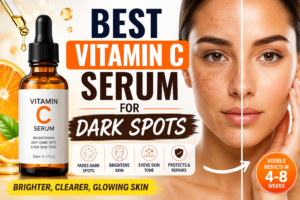

Best Vitamin C Serum for Dark Spots
Dark spots, acne scars, sun damage, and uneven skin tone are among the most common skincare concerns worldwide. Fortunately, one ingredient has consistently proven its effectiveness in reducing pigmentation and brightening the complexion—Vitamin C serum.
Whether your dark spots are caused by acne, aging, or excessive sun exposure, the right Vitamin C serum can significantly improve your skin’s appearance over time. In this comprehensive guide, we’ll explain how Vitamin C works, what ingredients to look for, how to use it correctly, and which serums are considered the best for treating dark spots.
What Are Dark Spots?
Dark spots, also known as hyperpigmentation, occur when excess melanin is produced in certain areas of the skin. They may appear after acne breakouts, prolonged sun exposure, hormonal changes, or skin injuries.
Common types of dark spots include:
- Post-inflammatory hyperpigmentation (PIH)
- Sun spots (Age spots)
- Melasma
- Acne scars
- Freckles
While dark spots are harmless, many people seek treatment to achieve a more even and radiant complexion.
Why Vitamin C Is the Best Ingredient for Dark Spots
Vitamin C is one of the most researched skincare ingredients available today. It is a powerful antioxidant that protects the skin from environmental damage while helping fade existing pigmentation.
Benefits of Vitamin C Serum
- Reduces dark spots and hyperpigmentation
- Brightens dull skin
- Boosts collagen production
- Protects against free radical damage
- Improves skin texture
- Minimizes acne marks
- Promotes youthful-looking skin
Regular use can noticeably improve skin clarity within 8–12 weeks.
How Vitamin C Fades Dark Spots
Vitamin C works by inhibiting tyrosinase, the enzyme responsible for melanin production.
When melanin production decreases:
- Existing pigmentation gradually fades.
- New dark spots become less likely to develop.
- Skin tone becomes brighter and more even.
Because Vitamin C also stimulates collagen production, it helps repair damaged skin while reducing the appearance of acne scars.
Ingredients to Look for in a Vitamin C Serum
Not all Vitamin C serums are created equal. The best products contain stable forms of Vitamin C combined with supporting ingredients.
1. L-Ascorbic Acid
The purest and most effective form of Vitamin C.
Best concentration:
- 10%
- 15%
- 20%
Higher concentrations are not always better, especially for sensitive skin.
2. Vitamin E
Vitamin E enhances Vitamin C’s stability while providing additional antioxidant protection.
Benefits include:
- Improved hydration
- Better skin barrier
- Enhanced effectiveness
3. Ferulic Acid
Ferulic Acid stabilizes Vitamin C and increases its antioxidant power.
Together, Vitamin C + Vitamin E + Ferulic Acid create one of the most effective brightening combinations.
4. Hyaluronic Acid
Keeps skin hydrated while reducing irritation.
Perfect for:
- Dry skin
- Sensitive skin
- Mature skin
5. Niacinamide
Niacinamide works alongside Vitamin C to improve:
- Uneven skin tone
- Enlarged pores
- Redness
- Pigmentation
Best Vitamin C Serum for Dark Spots
Here are some of the most popular and dermatologist-recommended Vitamin C serums.
1. SkinCeuticals C E Ferulic
Best Overall
Pros:
- 15% L-Ascorbic Acid
- Vitamin E
- Ferulic Acid
- Clinically proven
Cons:
- Expensive
2. La Roche-Posay Pure Vitamin C10 Serum
Best for sensitive skin.
Benefits:
- Gentle formula
- Smooth texture
- Brightens dull complexion
3. TruSkin Vitamin C Serum
Best budget option.
Features:
- Vitamin C
- Hyaluronic Acid
- Vitamin E
Ideal for beginners.
4. Timeless 20% Vitamin C + E + Ferulic
Excellent value for money.
Benefits:
- High potency
- Lightweight formula
- Brightening effects
5. CeraVe Vitamin C Serum
Perfect for dry skin.
Contains:
- 10% Vitamin C
- Ceramides
- Hyaluronic Acid
How to Apply Vitamin C Serum Correctly
Following the correct routine ensures maximum results.
Morning Routine
- Cleanser
- Vitamin C Serum
- Moisturizer
- Sunscreen (SPF 30+)
Always apply sunscreen after Vitamin C because UV exposure can worsen dark spots.
How Long Does Vitamin C Take to Fade Dark Spots?
Results vary depending on skin type and pigmentation severity.
Typical timeline:
- 2 weeks: Brighter skin
- 4 weeks: Improved texture
- 8 weeks: Noticeable fading
- 12 weeks: Significant reduction in pigmentation
Consistency is the key.
Can Vitamin C Remove Acne Marks?
Yes.
Vitamin C is particularly effective against post-inflammatory hyperpigmentation (PIH) caused by acne.
It helps by:
- Reducing melanin production
- Supporting collagen formation
- Accelerating skin repair
Vitamin C vs Niacinamide for Dark Spots
| Vitamin C | Niacinamide |
|---|---|
| Brightens skin | Controls oil |
| Boosts collagen | Reduces redness |
| Fades pigmentation | Minimizes pores |
| Antioxidant | Repairs skin barrier |
Many dermatologists recommend using both ingredients in the same skincare routine.
Tips to Maximize Results
For the best outcome:
- Use sunscreen every day.
- Apply Vitamin C consistently.
- Store the serum away from sunlight.
- Avoid touching the dropper directly to your skin.
- Don’t overuse exfoliating acids initially.
- Patch-test before first use.
Common Mistakes to Avoid
Avoid these errors:
- Skipping sunscreen
- Using expired Vitamin C
- Applying too much product
- Expecting overnight results
- Mixing with irritating products without guidance
Who Should Use Vitamin C Serum?
Vitamin C serum is suitable for:
- People with acne scars
- Uneven skin tone
- Sun damage
- Aging skin
- Hyperpigmentation
- Dull complexion
Even people with sensitive skin can use lower concentrations like 10%.
Frequently Asked Questions (FAQs)
Is Vitamin C serum good for dark spots?
Yes. Vitamin C is one of the most effective skincare ingredients for reducing hyperpigmentation and improving skin brightness.
Can I use Vitamin C every day?
Absolutely. Most dermatologists recommend daily morning use.
Which percentage is best?
10–20% Vitamin C is generally considered ideal for most skin types.
Should I use Vitamin C in the morning or at night?
Morning application is preferred because it protects against environmental damage throughout the day.
Can Vitamin C irritate sensitive skin?
Some people may experience mild irritation. Start with a lower concentration and use it every other day if needed.
Final Thoughts
Finding the best Vitamin C serum for dark spots can transform your skincare routine. A high-quality serum containing L-Ascorbic Acid, Vitamin E, Ferulic Acid, and Hyaluronic Acid offers the best chance of fading pigmentation, reducing acne marks, and achieving a brighter, healthier complexion.
Remember that skincare takes time. With consistent daily use, proper sun protection, and a well-formulated Vitamin C serum, you can gradually reduce dark spots and enjoy smoother, more even-toned skin.
If you’re just starting, choose a gentle formula with 10–15% Vitamin C. As your skin builds tolerance, you can explore stronger formulations for even better results. The key to success is patience, consistency, and protecting your skin from UV damage every day.