

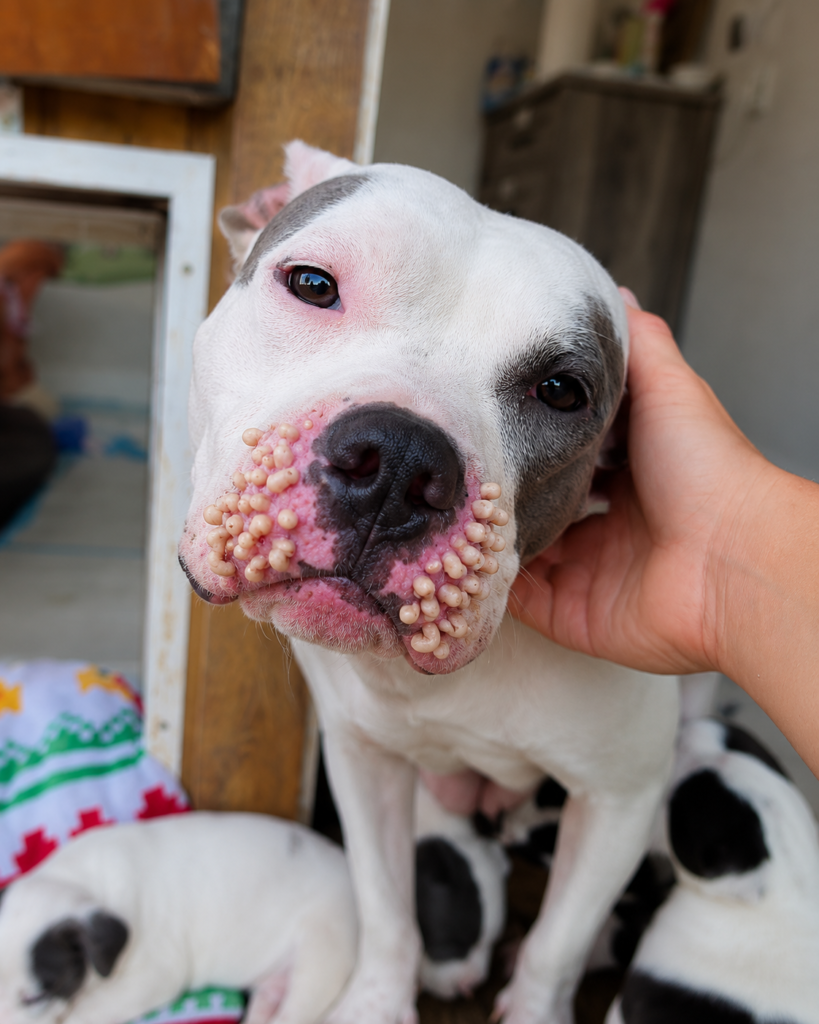
The hot afternoon sun burned the dusty streets as people hurried through the crowded marketplace. Vendors shouted to attract customers, motorcycles passed by, and children played nearby. Amid all the noise and activity, a suffering dog lay quietly in a corner, almost invisible to everyone around him.
The brown stray dog looked weak and exhausted. His body was thin, and his eyes showed signs of pain and hopelessness. What made his condition even more heartbreaking was the severe wound around his mouth. The area was swollen, infected, and crawling with maggots. Every movement caused him agony, yet he remained silent, as if he had already accepted his fate.
Most people walked past him without noticing. Some looked briefly and turned away. Others felt sorry but did not know how to help. The dog had likely been suffering for weeks.
No one knew exactly how the injury started. It may have begun with a small wound, a broken tooth, or an untreated infection. Over time, bacteria invaded the damaged tissue. Flies were attracted to the wound and laid eggs there. When the eggs hatched, maggots began feeding on the infected flesh, making the situation much worse.
As the days passed, the dog became weaker. Eating was nearly impossible because opening his mouth caused extreme pain. Hunger and dehydration slowly drained his strength. He wandered through the streets searching for scraps of food but could barely chew anything.
One morning, a local animal rescuer named Sarah was driving through the area when she noticed the dog lying near a wall. Something about his condition caught her attention. She stopped her vehicle and carefully approached him.
The moment she got closer, she saw the terrible wound around his mouth. Her heart sank. The infection was severe, and dozens of maggots were visible inside the damaged tissue. Despite the pain, the dog looked at her with gentle eyes, almost as if he was asking for help.
Sarah immediately called her rescue team.
Within an hour, volunteers arrived with medical supplies and a transport crate. The dog was frightened at first, but he was too weak to resist. They carefully wrapped him in a blanket and took him to a veterinary clinic.
At the clinic, the veterinary team quickly examined him. The diagnosis was serious. The dog was suffering from a severe oral infection complicated by maggot infestation. He was also dehydrated, malnourished, and running a high fever.
The treatment began immediately.
The veterinarian sedated the dog to reduce his pain and allow the team to work safely. One by one, the maggots were removed from the infected tissue. It was a slow and delicate process that took several hours. The wound was then cleaned thoroughly with antiseptic solutions to eliminate bacteria and prevent further infection.
The medical team administered antibiotics, pain medication, and fluids to stabilize him. Although the situation was critical, they believed he still had a chance to survive.
The first few days were difficult.
The dog remained weak and barely moved. Volunteers stayed close to him, offering soft food and fresh water. They spoke gently and gave him the comfort he had likely never experienced before.
Gradually, small signs of improvement appeared.
His fever decreased. The swelling around his mouth began to shrink. The wound started healing, and healthy tissue slowly replaced the damaged areas. Most importantly, he began eating again.
The rescue team named him Lucky because they believed he was fortunate to have been found in time.
Over the following weeks, Lucky continued his recovery. Daily wound cleaning, medication, and nutritious meals helped him regain his strength. His coat became shinier, his eyes brighter, and his energy slowly returned.
For the first time in a long time, Lucky wagged his tail.
The volunteers celebrated every small victory. Seeing him walk, eat comfortably, and interact with people reminded everyone why animal rescue work is so important.
As his health improved, Lucky’s personality began to emerge. He was friendly, gentle, and surprisingly affectionate despite everything he had endured. He enjoyed being around people and loved receiving attention from the clinic staff.
Months later, the transformation was remarkable.
The once-suffering dog who had been abandoned on the street was now healthy and full of life. The wound around his mouth had healed significantly, leaving only minor scars as reminders of his painful past.
Photos of Lucky’s recovery were shared online. His story touched thousands of people. Many were shocked by the severity of his condition but inspired by his incredible resilience.
The story also raised awareness about a serious issue faced by stray animals around the world. Untreated wounds can quickly become life-threatening, especially in hot environments where flies are common. Maggot infestations are not only painful but can lead to severe infections and even death if left untreated.
Animal welfare organizations often encounter similar cases. Many stray dogs suffer silently because they lack access to medical care. Early treatment can prevent unnecessary suffering and greatly improve survival rates.
Lucky’s journey became a powerful reminder that compassion can change lives.
Eventually, a loving family saw his story and decided to adopt him. They were moved by his courage and wanted to give him the happy life he deserved.
The day Lucky left the rescue center was emotional for everyone involved. Volunteers who had cared for him from the beginning hugged him goodbye and wished him well.
At his new home, Lucky experienced things he had never known before—a comfortable bed, regular meals, toys, and a family that loved him unconditionally.
He spent his days playing in the yard, going on walks, and enjoying the safety of a permanent home. The fear and pain that once dominated his life were replaced by happiness and security.
Lucky’s story proves that even the most heartbreaking situations can have hopeful endings. A dog once abandoned with a mouth full of maggots and little chance of survival was given a second chance because someone cared enough to stop and help.
His journey reminds us that every animal deserves kindness, medical care, and respect. Sometimes a single act of compassion can mean the difference between suffering and survival.
For Lucky, that act of compassion changed everything. His scars remain as a reminder of his difficult past, but they also symbolize strength, hope, and the incredible impact that human kindness can have on a life in need.
